The Peak-End Rule: How Disney Engineers The Last Moment You'll Remember Forever (And Why Your Business Should Too)
Right then. Let me tell you about the single most valuable piece of psychological real estate in your entire customer experience.
It's not your welcome. It's not your product. It's not even that fancy coffee machine you installed in the waiting room.
It's the last thing your customer experiences before they walk out the door.
And here's the kicker: most businesses treat this moment like yesterday's rubbish. They've spent thousands on marketing, obsessed over the first impression, trained staff to greet customers with the enthusiasm of a golden retriever meeting its owner after a ten-minute absence… and then they let the whole thing fizzle out at the end like a damp firework on Bonfire Night.
Disney doesn't do this. Disney has understood for decades what psychologists Daniel Kahneman and Barbara Fredrickson confirmed in the 1990s: people don't remember experiences as a smooth average of every moment. They remember the peak (the most intense point) and the end.
That's it. The peak and the end. Everything else gets compressed, averaged, or forgotten entirely.
As Walt Disney himself put it: "Do what you do so well that they will want to see it again and bring their friends."
And how do you get people to want to see it again? You make sure the last thing they remember is absolutely magical.
In my book Walt's Way, I dedicate an entire chapter to this principle because it's one of the most overlooked profit generators in business. Today, we're going to unpack it completely — and by the end, you'll know exactly how to engineer your own "peak-end" moment, no matter what industry you're in.
Let's get on with it, shall we? 🪄
Key Takeaways From This Article:
- The Peak-End Rule is a psychological fact: Customers judge their entire experience based primarily on the most intense moment and the final moment — not the average of all moments.
- Disney engineers endings deliberately: From fireworks finales to cast member farewells, nothing about a Disney ending is accidental.
- Most businesses fumble the exit: They invest heavily in first impressions and neglect last impressions — which is backwards, because the last impression determines whether customers return.
- The final 60 seconds matter more than the previous 60 minutes: What happens in your customer's last minute with you disproportionately shapes their memory of the whole experience.
- Great endings don't require big budgets: A handwritten note, a genuine thank-you, a small unexpected gift, or simply walking someone to the door can transform a forgettable exit into a memorable one.
- The goodbye is your last chance to create an advocate: Word-of-mouth is generated by peak moments and endings — rarely by "consistently adequate" service.
- Disney creates "emotional bookends": They're intentional about how experiences begin AND end, treating both as strategic opportunities rather than logistics.
- Your competitors probably aren't doing this: Which means engineering your ending is a low-cost, high-impact way to differentiate.
- The peak-end principle applies everywhere: Retail, professional services, hospitality, healthcare, online businesses — every customer journey has an ending that can be designed.
- Staff training on endings pays dividends: When your team understands WHY the final moment matters, they'll protect and enhance it instinctively.
A Tale of Two Exits (Or: How Disney Made My Wife Cry Happy Tears in a Car Park)
It was October 2019, and my wife and I were leaving Walt Disney World after a five-day trip.
Now, I should tell you: I'd been to Disney more than 150 times by this point. I thought I'd seen everything. I thought I was immune to the magic. I thought — quite foolishly, as it turns out — that I understood all their tricks.
I did not.
We were driving out of the Magic Kingdom car park after the fireworks. It was late. We were exhausted. My feet hurt. I was doing that thing where you mentally calculate how many hours until you need to be at the airport and whether it's worth sleeping at all. (It wasn't.)
And then I saw the cast members.
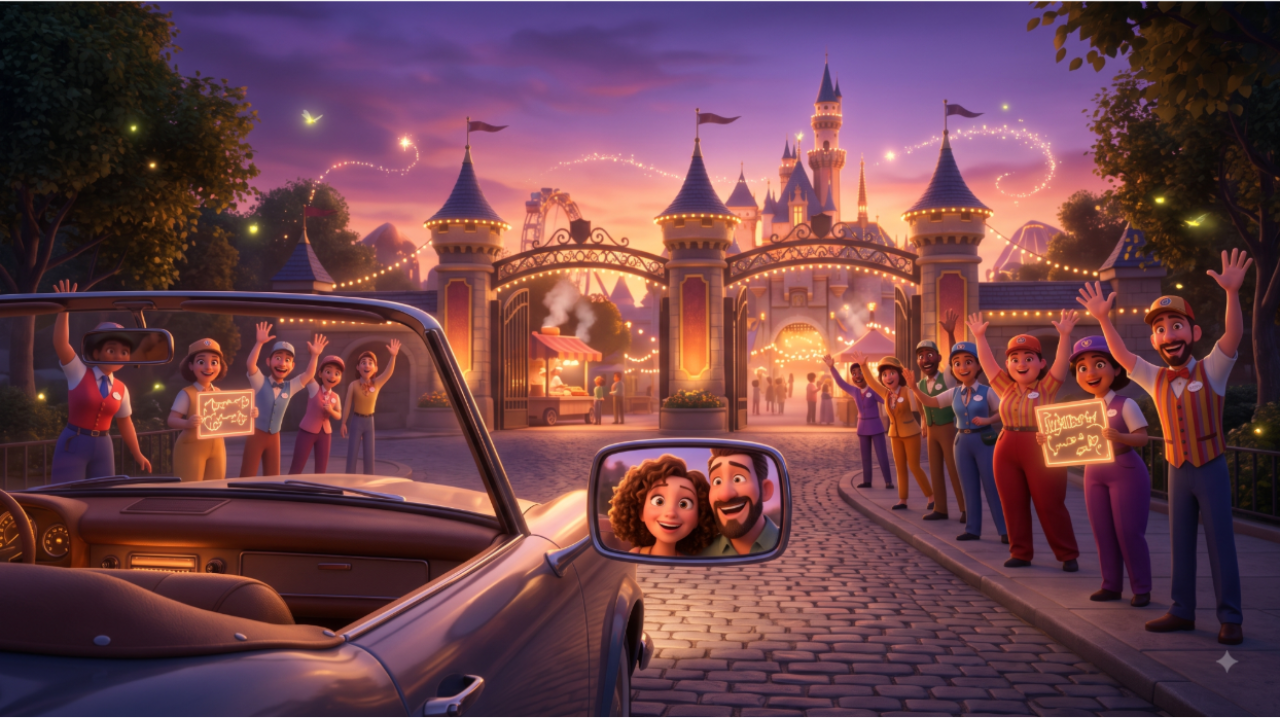
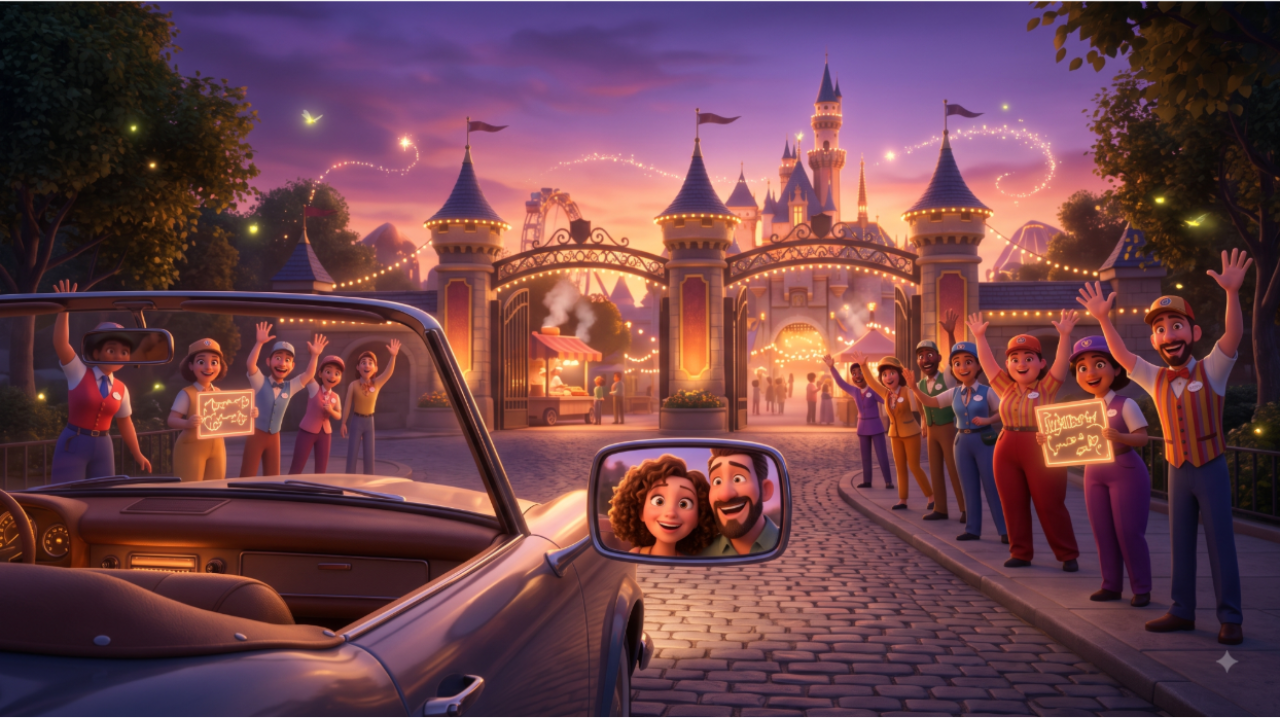
They were stationed at the exit of the parking lot. Not one or two — a whole line of them. And as each car drove past, they were waving. Not the half-hearted "I'm contractually obligated to move my hand" wave. No. These were full-body, both-arms-overhead, grinning-like-they-genuinely-meant-it waves.
One of them held a sign that said: "SEE YA REAL SOON!"
Another was doing a little dance.
A third — a woman who had to be on hour eleven of her shift — caught my eye, gave me a thumbs up with her huge over-sized Mickey glove, and mouthed "See You Soon!"
My wife — who is not, shall we say, prone to public displays of sentimentality — started crying.
"Why am I crying?" she said, dabbing at her eyes with a napkin from the glove box. "We're in a car park. This is ridiculous."
But here's the thing: it wasn't ridiculous at all. It was calculated. Those cast members weren't there by accident. Someone at Disney had thought very carefully about the last moment guests would experience as they left the property — and had decided it would NOT be a toll booth, or a speed bump, or a dark road with no signage.
It would be a celebration. A send-off. A final burst of warmth to carry with you all the way home.
And you know what? When someone asks my wife about our Disney trips, she doesn't talk about Space Mountain. She doesn't mention the Dole Whip or the fireworks or that time I got hopelessly lost in Epcot looking for a toilet in Morocco.
She talks about the cast members waving goodbye in the car park.
That's the peak-end rule in action. Disney understands that the last moment isn't just a moment — it's the anchor for everything that came before it. Get the ending right, and everything feels more magical in retrospect. Get it wrong, and even a wonderful experience can sour.
So let me ask you: What's the last thing YOUR customers experience before they 'leave'?
The Disney Principle in Action: Engineering the Perfect Goodbye
Imagine the scene...
You're standing on Main Street, U.S.A. at 10:47 p.m.
The fireworks have just ended. Cinderella Castle is still glowing with projected colors. The crowd is slowly shuffling toward the exit, tired children draped over parents' shoulders like little exhausted koalas.
This is the moment most businesses would think: "Right, show's over, everyone out, we've got to clean up."
Disney by contrast, thinks: "This is the moment that will live in their memory forever. Let's make it count."
Here's what they do:
The music continues. As you walk down Main Street after the fireworks, they pipe in the farewell music — sweeping, moving, nostalgic orchestral pieces that make you feel like you're at the end of a film about your own life. You're not being herded out. You're having a moment, filled with powerful emotions.
The lighting is magical. Main Street's lights come on in a warm, golden glow. The lamp posts twinkle. The shop windows are beautifully illuminated. It feels cosy, not harsh. You're not being shown the door — you're being gently ushered through a storybook.
Cast members are positioned throughout. They're saying goodnight to their guests. They're offering to take photos. They're thanking you for visiting. "Have a magical evening!" isn't a script — it's a carefully considered strategy about the last words guests will hear.
The Disney Institute — which has trained thousands of executives from companies like Delta, Coca-Cola, and the Cleveland Clinic — calls this approach "Guestology." It's the systematic study of guest behaviour and experience design. And one of their core principles is that every touchpoint is an opportunity — especially the last one.
Lee Cockerell, who spent a decade running Walt Disney World operations, puts it brilliantly in his book Creating Magic: "The goal is to make sure that every guest who leaves is already planning their next visit."
Think about that. The goal isn't just to make the exit pleasant. It's to make it so good that customers are already anticipating their return.
This is the difference between an ending that happens TO your customers and an ending you CREATE FOR them. It's the difference between a story that trails off mid-sentence and one that lands with a satisfying final line.
It's the difference between Eeyore (who would probably mutter "Well, I suppose that's that, then") and Tigger (who would bounce you to the exit singing about how wonderful it all was).
Which character is YOUR business channelling at checkout time? 🤔
Quick Quiz Time!
Your customer has just finished their appointment/purchase/meal. What should happen next?
A) They find their own way out while your staff updates spreadsheets in the back office. (Efficiency! Productivity! Alienation!)
B) Someone calls out "Thanks, bye!" from across the room without making eye contact, like a teenager being forced to say goodbye to their grandmother.
C) A team member walks them to the door, thanks them genuinely, and creates a warm final moment they'll remember — like a Disney cast member sending them off with a smile and a wave.
If you chose A or B, I have bad news: your customers are leaving with the emotional equivalent of finding a parking ticket on their windscreen. It doesn't matter how good the rest was.
The Key Principles Behind Engineering Memorable Endings
Right, let's dig into the mechanics. Because Disney doesn't just "try to be nice at the end" — they have a system. And if you understand the system, you can build your own.
Principle 1: The Final Moment Must Be Intentionally Designed
At Disney, nothing about the ending is accidental. The music, the lighting, the cast member positioning, the words they use, the way the exit is physically laid out — all of it has been thought through.
Most businesses let their ending happen by default. The customer pays, collects their stuff, and… leaves. Maybe someone says bye. Maybe they don't. It's chaos dressed up as normality.
Disney's approach is to ask: "If this were a show, how would the final scene play out?" Because in Disney's philosophy — "Everything Speaks" — every detail sends a message. The question is whether you're controlling the message or leaving it to chance.
Principle 2: The Ending Must Feel Different From Everything That Came Before
Think about the structure of a Disney fireworks show. It builds. It has quiet moments and loud moments. And then comes the finale — which is unmistakably, overwhelmingly, pyrotechnically BIGGER than everything else.
Why? Because the peak-end rule requires that the ending be noticeable. If your goodbye feels the same as every other moment of the experience, it won't register. It'll blur into the average.
Your ending needs to feel like an ending. It needs a touch of ceremony. It needs to be special enough that the customer thinks, "Oh, this is different."
Principle 3: Make It Personal
Cast members don't say "Goodbye, valued guest." They make eye contact. They use names when they have them. They reference something specific: "I hope you enjoyed Pandora!" or "Did you get to ride Rise of the Resistance?"
The ending is your last chance to make them feel something. Make it personal.
Principle 4: The Exit Is Part of the Experience, Not Separate From It
Disney's Quality Standards hierarchy — Safety, Courtesy, Show, Efficiency — applies everywhere, including the exit. Note that "Show" comes before "Efficiency." Getting people out the door quickly is not the priority. Getting them out feeling wonderful IS.
This is why Disney resorts have elaborate checkout processes. Why cruise ships have farewell events. Why even the bus ride back to the resort car park has entertainment piped through the speakers.
The experience doesn't end when the product is delivered. It ends when the customer is truly, fully, emotionally gone.
Principle 5: Train Your Team That the Goodbye IS the Job
At Disney University — their legendary training programme — cast members learn that every interaction matters. But the final interaction? That's special. That's the one that will be remembered.
Your team needs to understand this. The goodbye isn't something you do after the job is done. The goodbye IS part of the job.
"But Andrew," I hear you thinking, "my team is busy. We can't have them spending five minutes on elaborate farewells."
And I hear you. But here's what I've learned working with businesses over three decades: the best goodbyes don't take more time. They just take more intention. A genuine smile. A specific compliment. Walking someone to the door instead of pointing. Thirty seconds, done with meaning, beats five minutes of robotic procedure.
Quick Quiz Time!
Which of these endings will create the strongest positive memory?
A) "Receipt's in the bag. Next!"
B) An automated email that arrives six hours later saying "Thank you for your purchase" in the same font every other business uses.
C) "It was lovely meeting you, Sarah. I really hope that necklace makes your anniversary special. If there's anything at all you need, you know where to find us."
If you chose A or B, congratulations: you've achieved the memorable status of a supermarket self-checkout. Beep. Boop. Forgotten.
Disney vs. Traditional Approaches: The Ending Gap
Let me paint two pictures for you.
Picture One: A Coffee Shop in Any Town, England
You've had a perfectly acceptable latte. The barista was friendly enough when you ordered. The table was clean. The Wi-Fi worked. Nothing wrong.
You finish your drink, pick up your things, and walk toward the door.
Nothing happens.
The staff are wiping tables, restocking cups, chatting with each other. You leave. The door closes behind you. Your experience officially ends with… nothing.
Two weeks later, someone asks: "How was that coffee shop?" You say: "Fine. Yeah, it was fine." (And then you probably can't remember the name.)
Picture Two: A Coffee Shop That Understands The Peak-End Rule
Same coffee. Same table. Same Wi-Fi.
But as you stand to leave, the barista looks up and catches your eye.
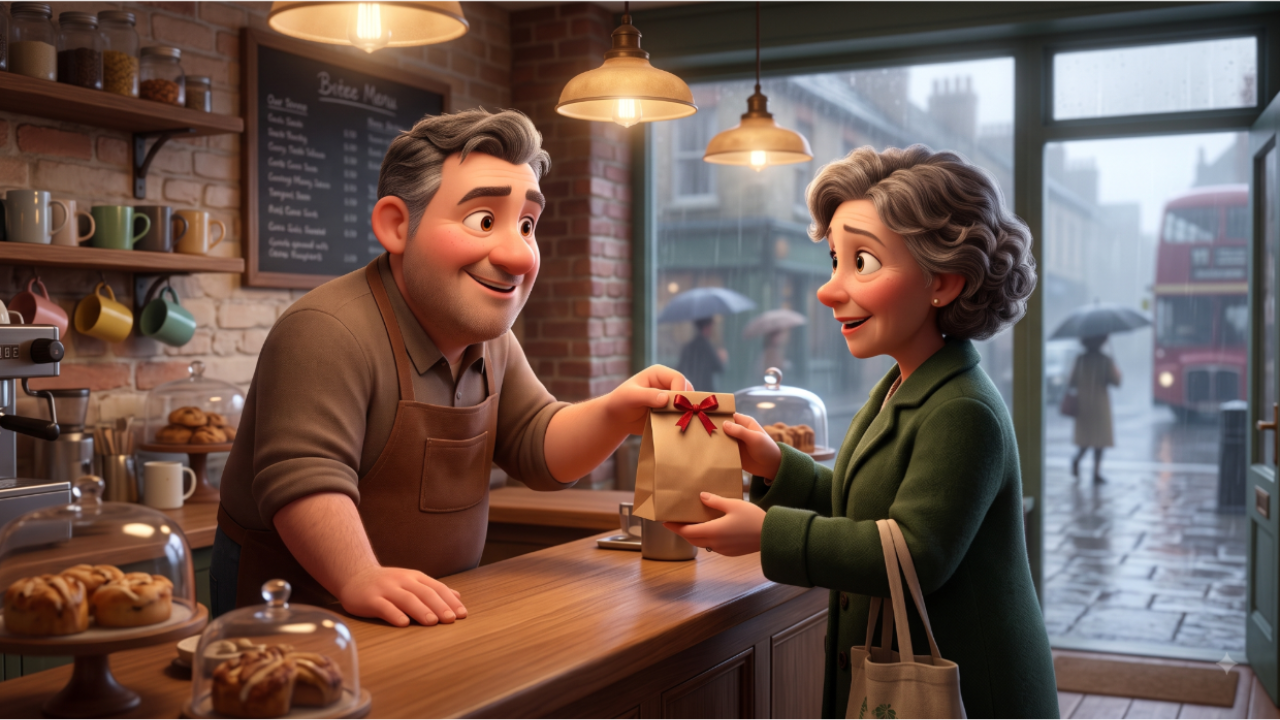
"Thanks for coming in today! Hope you have a great day."
You're slightly startled. "Oh! Thanks. You too."
"Come back soon — I'll have your usual ready."
You smile. You leave. You feel noticed.
Two weeks later, someone asks: "Know any good coffee shops?" You say: "Actually, there's this place… the staff are really lovely. You should try it."
That's the difference. One business let the ending happen. The other created it.
And here's what's wild: Zappos — the online shoe company now owned by Amazon — built a billion-dollar business partly on this principle. Their customer service reps were famous for endings: staying on calls as long as needed, sending handwritten thank-you cards, occasionally overnighting flowers to customers who mentioned they were having a tough time. Tony Hsieh, their late CEO, understood that the ending of an interaction was marketing gold.
The Ritz-Carlton has their "Three Steps of Service," and step three is about the farewell: "Give a warm goodbye and use the guest's name." It's non-negotiable.
Four Actions You Can Implement This Week
1. Audit Your Current Ending. Be a customer in your own business (or have a friend do it). What happens in the last 60 seconds? Is it magical, forgettable, or actively unpleasant? Be honest.
2. Script Your Goodbye. Not word-for-word robotic scripts, but give your team a framework: What must be included? Eye contact. A thank-you. Use of the customer's name if known. An invitation to return. A specific compliment or reference if possible.
3. Add One "Unexpected Touch." Disney does this constantly — the extra sprinkle of pixie dust. For you, it might be walking the customer to the door, a handwritten note tucked into the bag, a small sweet offered at checkout, a compliment on something they're wearing. Something that signals "this isn't just a transaction to us."
4. Train, Reinforce, Celebrate. Make the ending part of your team training. Share stories when someone does it brilliantly. Recognise and reward great goodbyes publicly.
You don't need magic. You need mindset. You need to decide that the ending matters — and then treat it like it does.
Quick Quiz Time!
Your receptionist is on the phone when a customer finishes and heads for the door. What should happen?
A) Nothing. The receptionist is busy. The customer is an adult. Doors aren't complicated.
B) The receptionist waves vaguely while continuing the call, in a gesture that could mean "goodbye" or "I've got something in my eye."
C) Another team member steps in to offer a warm farewell, or the receptionist puts the caller on a brief hold to deliver a genuine goodbye — because the exit moment is too important to let slip.
If you chose A or B, I admire your commitment to efficiency. But your customer is walking out feeling like an afterthought. And afterthoughts don't leave five-star reviews.
Real-Life Case Study: The Dental Practice That Made Goodbyes Their Secret Weapon

I worked with a dental practice in Manchester back in 2021. They were doing fine — decent patient retention, good reviews, nothing catastrophic. But the owner had this nagging sense that they weren't building real loyalty.
"Patients come, they get their teeth sorted, they leave," she told me. "It's all very… functional."
We walked through the entire patient experience. And you know what we found? The ending was atrocious.
After treatment, patients would sit in the chair while the dentist disappeared. Eventually, someone would usher them to reception. They'd pay — often to a receptionist who was simultaneously checking in the next patient, answering the phone, and filing paperwork. They'd be handed an appointment card. And they'd leave through a door that led to a dingy corridor with a fire extinguisher and a poster about gum disease.
Peak-end rule? This ending was practically engineered to make people forget they'd ever been there — or remember only the dodgy corridor.
So we redesigned it.
Here's what we changed:
The dentist now walks patients to reception personally — even if just a few steps — and hands them over with a warm introduction: "Sarah's all sorted and ready for her next visit."
The receptionist stands up to greet the departing patient. Actual standing. Shocking, I know. But it signals "you have my full attention."
They added a "farewell moment": a small bowl of sugar-free mints at the desk, and a genuine conversation about how the visit went. "How are you feeling? Any questions I can answer before you go?"
The exit route was changed. Now patients leave through a pleasant, well-lit area with comfortable chairs and friendly signage: "We love your smile — see you next time!"
A follow-up text goes out the same evening: "Hi Sarah! Just checking in after your visit today. If you have any questions or concerns, we're here. Have a lovely evening!"
Result? Within six months, their patient retention rate increased by 23%. Online reviews (which they actively requested at that farewell moment) jumped from 4.1 stars to 4.8. And referrals — the ultimate sign of an ending done right — went up by over 30%.
All because they paid attention to the last 90 seconds.
Key Lessons From This Case:
- The ending was fixable without a massive budget. Mints. Standing up. Walking a few steps. A better exit route. A same-day text. None of this cost serious money — it just required intention.
- The dentist's involvement in the handover mattered. It signalled "you're not just a file number to me." Personal touch from the authority figure elevated the ending.
- Following up the same day extended the ending. The "experience" now ended with a warm text message, not a corridor and a car park. The last impression became "they care about me even after I've left."
- Asking for reviews at the farewell moment worked brilliantly. When people feel positive, they're willing to share it. The ending was the perfect time to ask.
What about your business? What would happen if you redesigned the last 90 seconds?
Cross-Industry Application: Your Ending Is Waiting To Be Designed
I know what you might be thinking: "That's lovely, Andrew, but my business isn't a dental practice or a Disney park."
And that's true. But the peak-end rule doesn't care what industry you're in. It's a psychological fact about how human memory works. Which means it applies to everyone.
Let me give you some specifics:
Retail: Instead of a perfunctory "receipt's in the bag," train staff to walk customers to the door, offer to carry bags to their car for heavy purchases, or include a handwritten "thank you for shopping with us" card. John Lewis built a reputation partly on this — their staff's warmth at checkout is legendary.
Hospitality: Hotels should treat checkout with as much care as check-in. A farewell drink. A handwritten note from the manager. Staff remembering your name as you leave. The Ritz-Carlton does this. So does the tiny bed-and-breakfast owner who waves you off from the front step. Both understand the same principle.
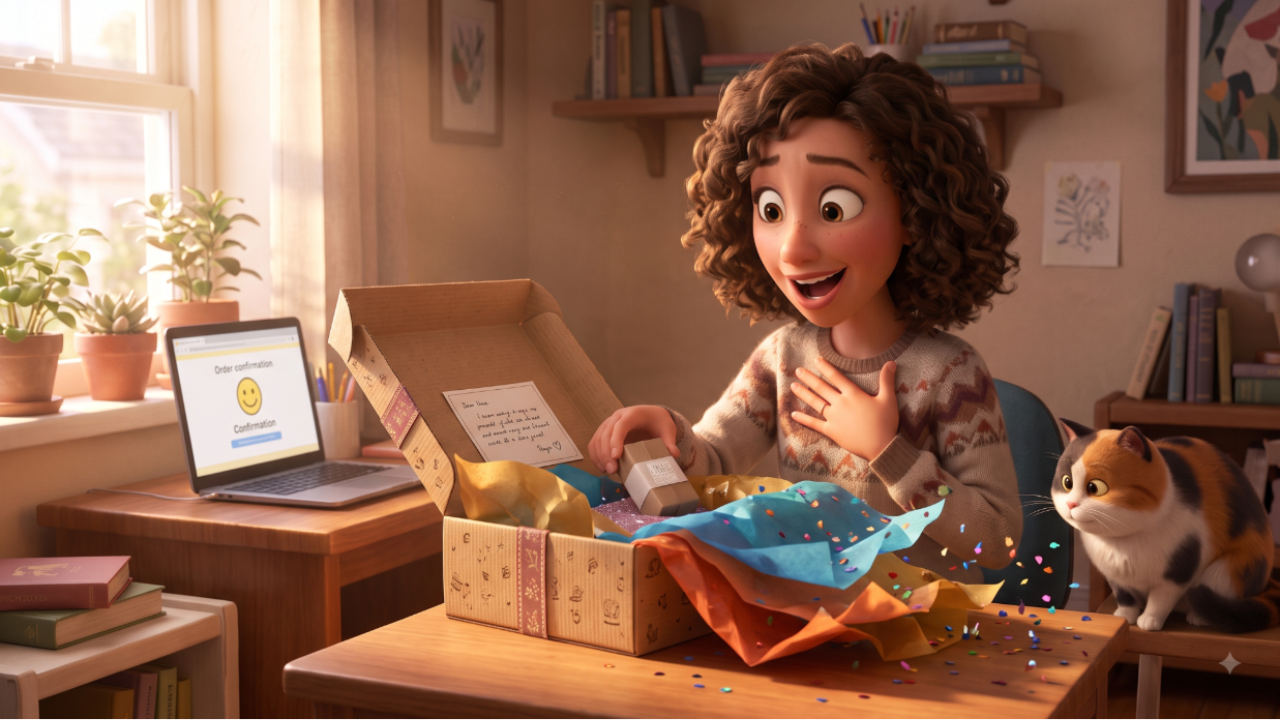
Online Businesses: The "order confirmation email" is your ending moment — and most businesses waste it with corporate jargon. Instead, make it warm, personal, and memorable. Consider a surprise follow-up: a small bonus, a discount for next time, or a genuine thank-you video from the founder.
Trades (Plumbers, Electricians, Builders): The job isn't done when the pipe is fixed. The job is done when you've walked the customer through what you did, cleaned up immaculately, handed over a clearly written invoice, and said goodbye with warmth. Leave a small gift — a chocolate bar, a branded pen, a referral card with a genuine "call me if you ever need anything." That's how you become the tradesperson they recommend to everyone.
Professional Services (Accountants, Lawyers, Consultants): After a meeting, walk the client to the lift or front door. Send a same-day email summarising next steps and thanking them for their time. Include a specific reference to something personal they mentioned. "Hope Sophie's football tournament goes well this weekend!" The ending isn't just professional — it's human.
Health & Wellness (Gyms, Spas, Physios): The farewell is the perfect moment to book the next appointment — but do it with care. "How are you feeling? Let's get you back in before that tension returns." A small gesture — a hot towel, a bottle of water for the road, a genuine "you did brilliantly today" — transforms a routine visit into a memorable experience.
As Walt Disney said: "It's kind of fun to do the impossible."
Engineering a perfect ending isn't impossible. It's just unusual. Which is exactly why it works.
Quick Quiz Time!
An online customer has just completed their purchase. What's the ideal ending?
A) A robotic confirmation email that looks like every other confirmation email ever sent since the dawn of e-commerce. "Your order #47829573 has been received."
B) Nothing. They bought the thing. They'll get the thing. What more do they want, a parade?
C) A warm, personal confirmation message that feels like it was written by a human who is genuinely delighted they ordered. Maybe a surprise small bonus. A follow-up email a few days later asking how everything arrived. An ending that makes them think "I like this company."
If you chose A or B, you are currently indistinguishable from approximately forty-seven million other online businesses. C is how you stand out.
The Long-Term Benefits: Why Getting The Ending Right Pays Forever
Let's talk about the business case. Because I know some of you are thinking: "This sounds lovely, Andrew, but I need results, not feelings."
Fair enough. Let's look at the numbers.
Customer Retention: A famous Bain & Company study found that increasing customer retention by just 5% can boost profits by anywhere from 25% to 95%. Not a typo. 25-95%. Disney doesn't need to read that study — they've been living it since 1955. The ending is where retention is won or lost.
Word-of-Mouth: According to Nielsen research, 92% of consumers trust recommendations from friends and family over any form of advertising. What do people tell their friends about? Not the average, forgettable experience. They talk about peaks and endings. Give them a great ending, and you've given them a story to tell.
Walt Disney World welcomes roughly 58 million visitors a year — and the majority of them are repeat visitors. That's not an accident. That's the result of decades of obsessing over every moment, especially the final one.
Emotional Connection Drives Lifetime Value: A study by Gallup found that customers who feel emotionally connected to a brand have a 306% higher lifetime value. The ending is your last — and often best — chance to create that emotional connection.
Reviews and Reputation: When people write reviews, they don't describe every moment of their experience. They describe how they feel about it. And that feeling is disproportionately shaped by the ending. A warm goodbye can rescue a mediocre experience; a cold one can sabotage an excellent one.
The lesson? Disney magic isn't about deep pockets. It's about deep caring. And nowhere is caring more visible — or more impactful — than in the final moment.
Quick Quiz Time!
You want to improve word-of-mouth referrals. Where should you focus?
A) Spend more on advertising. If you shout louder, more people will hear you. (Never mind that they're covering their ears.)
B) Add more features to your product or service. More features = more value = more referrals. (This is a myth, by the way.)
C) Engineer the peak and end of your customer experience to be so memorable that customers can't help but tell others. Give them a story worth sharing.
If you chose A or B, you're working harder instead of smarter. C is where the leverage is.
Challenges & Reality Check: The Spoonful of Sugar
I'm not here to rain on your magical parade. But I would be doing you a disservice if I pretended this was easy or without challenges.
So let's talk about reality.
Challenge 1: Consistency Is Hard
It's one thing to deliver a beautiful ending when you're fully staffed on a slow Tuesday. It's another thing entirely at 5 p.m. on a Friday when you're understaffed, overwhelmed, and the phone won't stop ringing.
Disney isn't perfect at this either. I've experienced rushed or mediocre goodbyes at Disney parks, usually on the busiest days or at the most crowded attractions. Even the masters slip sometimes.
The solution? Make the ending part of your system, not reliant on individual heroics. Designate specific moments. Assign specific responsibilities. Create fail-safes so that even on the worst days, the core elements of the ending still happen.
Challenge 2: Staff Buy-In Takes Time
Some team members will immediately embrace this. Others will think it's fluffy nonsense. "We're a law firm, not a theme park," they'll say, entirely missing the point.
The solution? Share the why. Explain the peak-end rule. Show them the research. Share customer feedback when great endings generate great reviews. Make it about business results, not just being nice.
Challenge 3: You Can't Force Genuine Warmth
A scripted, robotic "Have a magical day" is worse than nothing. It reeks of corporate mandate rather than human connection.
The solution? Hire for warmth. Train on technique, but select for attitude. Give staff the framework, but let them find their own authentic voice within it. The goal is genuine care, expressed naturally — not theatrical performance.
Challenge 4: Some Customers Are… Difficult
What about the customer who's been rude, unreasonable, or outright unpleasant? Are you supposed to give them a warm, magical goodbye too?
Honestly? Yes. Because you never know what's going on in their life. And because the way you treat difficult customers says more about you than it does about them. Disney cast members are trained to remain gracious even when guests are not. It's not about being a doormat — it's about professionalism and taking the high road.
Plus, sometimes a warm goodbye is the thing that turns a disgruntled customer into a changed one.
Challenge 5: Measuring Impact Is Indirect
Unlike advertising, you can't easily measure the ROI of a great goodbye. It shows up in retention, in reviews, in referrals — but there's no direct tracking pixel.
The solution? Accept that some of the most important business investments don't come with spreadsheets. Pay attention to the indirect metrics. And trust the psychology — the peak-end rule has been validated in hundreds of studies.
Five Strategies for Overcoming These Challenges:
- Start small. Don't try to redesign everything overnight. Pick one element of your ending to improve this week. Test it. Refine it. Then add more.
- Invest in your team. Training on the WHY is as important as training on the HOW. People do better when they understand the purpose.
- Be smart about scale. Not every business needs a grand farewell. A warm, genuine goodbye — even just a smile, a thank-you, and eye contact — can be enough. Do what's authentic to your brand.
- Set realistic expectations. You won't achieve Disney-level consistency overnight. Progress, not perfection. Every improvement in your ending compounds over time.
- Keep the long-term benefits in mind. When your team is tired or stretched, remind them (and yourself) what's at stake: the customer's memory, their likelihood to return, their willingness to refer. The ending is an investment, not a cost.
As Mary Poppins would say, a spoonful of sugar helps the medicine go down. The sugar here is remembering why this matters. The ending isn't just a nice-to-have. It's the thing your customers will carry with them forever.
Quick Quiz Time!
It's a chaotic Friday afternoon. Staff are overwhelmed. What happens to your carefully designed ending?
A) It gets abandoned entirely. Survival mode. Every person for themselves.
B) One heroic staff member tries to maintain it alone and burns out by 4 p.m.
C) You've built the ending into your system, so even on the worst days, the core elements still happen — because they're assigned, expected, and part of the process, not reliant on individual memory or effort.
If you chose A or B, you've built a fair-weather ending that disappears when you need it most. C is how you build something sustainable.
Frequently Asked Questions
Q. Does the peak-end rule mean I should neglect the rest of the experience and just focus on the ending?
Absolutely not. Think of it like a meal — if every course except dessert was terrible, even a spectacular pudding won't save you. The peak-end rule means the ending carries disproportionate weight in memory, but it doesn't erase everything else. Disney obsesses over the entire journey; they just recognise that the finale needs special attention. Like the closing number of a West End show, it needs to be your best work — not your only work.
Q. We're a small business with limited staff. How can we create "Disney-level" endings?
Here's a secret: Disney-level endings aren't about budget. They're about intention. A genuine thank-you. Eye contact. Using someone's name. Walking them to the door. A small unexpected gesture — even a wrapped chocolate or a handwritten note. My dentist — a two-person practice — ends every appointment by handing me a small bag with a new toothbrush and a "Thanks for choosing us, Andrew. See you soon!" It's simple, inexpensive, and utterly effective. You don't need Cinderella's castle. You need to care, visibly.
Q. What if my business is online and there's no physical "goodbye"?
Every customer journey has an ending — even if it's digital. Your checkout confirmation page. Your order confirmation email. Your packaging when the product arrives. Your follow-up message a few days later. Each of these is an "ending moment" you can design. Zappos built a legendary brand partly on their order confirmation emails and their surprise overnight shipping upgrades. Think about where your customer's journey truly ends — and make that moment special.
Q. Some of my team think this is fluffy nonsense. How do I get them on board?
Show them the data. Share the Bain & Company study on retention. Show them reviews that specifically mention how they felt leaving. Point to Disney's repeat visitor rates. Make it about business results, not about being "nice." Goofy might be fluffy; the peak-end rule is scientifically validated psychology. And if they still don't buy in after seeing the evidence? Perhaps they're better suited to a business that doesn't care about customer experience. (There are plenty of those.)
Q. How do I handle endings with difficult or upset customers?
This is where the ending matters most. A Harvard Business Review study found that customers who have a problem that's handled well often become MORE loyal than customers who never had a problem at all. The ending is your recovery moment. Even if the visit was rocky, a warm, genuinely apologetic, human goodbye can salvage the relationship. "I'm really sorry today didn't go as smoothly as we'd like. Thank you for your patience, and I hope you'll give us another chance." Graciousness in difficulty is the ultimate professionalism. And it's pure Jiminy Cricket energy — doing the right thing even when it's hard.
Q. How quickly can I expect to see results from improving our endings?
Some results are immediate — online reviews, same-day customer feedback, staff morale. Others take longer — repeat business, referrals, reputation shifts. The Manchester dental practice I mentioned saw measurable improvements within three to six months. But here's the thing: even if you can't measure it instantly, you know when an ending is right. You can feel it. And so can your customers. Trust the process, and the numbers will follow.
Putting It All Together: Your Farewell Tour
We've almost come to the end of our magical journey. (See what I did there?)
Let's recap what we've covered:
The peak-end rule is a psychological fact: customers judge their entire experience based primarily on the most intense moment and the final moment. Disney has understood this for decades and engineers both with obsessive care.
Most businesses fumble the ending — investing heavily in first impressions and letting the exit happen by default. This is backwards. The ending is what customers carry with them. It's the memory that shapes whether they return and what they tell others.
Great endings don't require huge budgets — they require intention. A genuine thank-you, a walk to the door, a small unexpected gesture, a warm smile. Thirty seconds, done with care, can transform a forgettable exit into a story customers share.
The ending is your last chance to create an emotional connection, to generate word-of-mouth, to turn a customer into an advocate. Miss it, and you've wasted everything that came before.
Applying this to your business requires auditing your current ending, designing a new one intentionally, training your team on the WHY, and building it into your system so it happens consistently — even on chaotic days.
Here's your challenge:
This week, be a customer in your own business. Pay attention to the last 90 seconds. What happens? How does it feel? Is it magical — or is it a car park without the waving cast members?
Then ask yourself: "How can I make my customer's final moment not just satisfactory, but truly unforgettable?"
Because Disney magic isn't about having a castle or a talking mouse. It's about creating moments of wonder in the everyday. And the everyday moment that matters most?
It's the goodbye.
As Walt Disney himself said: "We keep moving forward, opening new doors and doing new things, because we're curious and curiosity keeps leading us down new paths."
Let the path you go down next be the one that leads to better endings.
Now go sprinkle some pixie dust on that exit. 🌟
About the Author
Andrew Lock is a renowned business coach, consultant, and author with over three decades of experience helping entrepreneurs and business leaders achieve extraordinary success. As the founder of 'Help My Business!', Andrew has empowered thousands of business owners worldwide through his unique coaching, mastermind groups, 10 best-selling books, and engaging keynote presentations.
Known as the "The Yoda of marketing," (without the green pointy ears), Andrew brings a refreshing blend of humor and practical insights to his work. His expertise spans customer experience, pricing, sales, marketing, employee management, and operations, with a special focus on applying Walt Disney's business principles to modern enterprises.
Andrew is the author of ten books, including the popular "Walt's Way" and "Big Lessons from Big Brands." His work has been featured in major media outlets, and he's shared stages with business luminaries like Sir Richard Branson, Donald Trump, Daymond John, Dan Kennedy, The Dalai Lama, and Michael Gerber.
When he's not helping businesses transform their customer service, Andrew enjoys traveling with his family and indulging in his passion for all things Disney and chocolate (though not necessarily in that order).
For more insights and resources, visit www.AndrewLock.com.
Sources & Further Reading
Want to go deeper? Here are a few of the books and resources I referenced (or shamelessly stole ideas from) while writing this:
- Be Our Guest — Disney Institute (the closest thing to a Disney customer service bible)
- Creating Magic — Lee Cockerell (the man who ran Walt Disney World operations knows a thing or two about endings)
- The Power of Moments — Chip and Dan Heath (brilliant exploration of why certain moments matter more than others)
- Walt's Way — Andrew Lock (yes, that's my book — but it genuinely covers this topic in depth)
- Delivering Happiness — Tony Hsieh (Zappos' legendary approach to customer experience, including endings)
