Everyone Is Part of the Show: How Disney Turns Every Employee Into a Brand Ambassador (And How You Can Too)
Right, then. Let me tell you about the time a custodian at Magic Kingdom changed the way I think about business.
It was October 2019, and my wife and I were standing near Cinderella Castle, watching the sunset paint the spires in shades of pink and gold. I'd dropped my park map — the paper one, because I'm old-fashioned like that — and before I could even bend down, a cast member with a broom appeared, scooped it up with one fluid motion, and handed it back to me with a smile.
"Dropped your treasure map, sir," he said. "Can't have you getting lost in the Kingdom."
Now, here's the thing. This wasn't a "Guest Relations" specialist. This wasn't a manager. This was a chap whose job description presumably involved sweeping up spilled popcorn and keeping Main Street spotless. And yet, in that ten-second interaction, he made me feel like a valued guest, reinforced the magic of the park, and gave me a story I'm still telling years later.
That, my friends, is the Disney principle of "Everyone Is Part of the Show" in action.
It's the radical idea that every single person in your organisation — from the CEO to the person who empties the bins — is a performer in an ongoing production. Not a worker. Not an employee. A cast member with a role to play in creating customer magic.
And here's what makes this genuinely useful for YOUR business: Disney figured out that you can't control every customer touchpoint through marketing, policies, or manager supervision. There are simply too many moments, too many interactions, too many opportunities for things to go brilliantly right or horribly wrong. So instead of trying to control it all, they did something clever.
They turned every employee into a brand ambassador.
As Walt Disney himself once said: "You can design and create, and build the most wonderful place in the world. But it takes people to make the dream a reality."
In this article, I'm going to show you exactly how Disney does this, why it works, and — most importantly — how you can apply the same principles to your business, even if you don't have a castle or a talking mouse. Let's get on with it, shall we? 🪄
Key Takeaways From This Article:
- Every employee is a brand touchpoint. Whether they realise it or not, every person in your organisation shapes customer perception — not just the "customer-facing" ones.
- The language you use matters. Disney calls employees "cast members" because words shape identity. What you call your team influences how they see their role.
- "Onstage" and "backstage" isn't just for theme parks. Every business has customer-visible moments where employees are "performing" — and moments where they can relax and recharge.
- Empower employees to create magic without permission. Disney cast members don't need manager approval for small acts of kindness. The same principle transforms any business.
- Consistent culture beats comprehensive rules. You can't write a policy for every situation, but you can create a culture where employees intuitively know what to do.
- Disney's Quality Standards hierarchy is non-negotiable: Safety, Courtesy, Show, Efficiency. Notice that efficiency comes LAST. Most businesses get this backwards.
- "Everything Speaks" — every detail communicates something. The cleanliness of your bathroom, the tone of your hold music, the way your team answers the phone. Nothing is neutral.
- The "show" metaphor works for any industry. You don't need to be in entertainment. Reframe every customer touchpoint as a "scene" and watch your team's mindset shift.
- Training values matters more than training skills. Disney's "Traditions" programme teaches heritage and purpose before job tasks. Skills can be taught; caring cannot.
- Leaders must model the behaviour. Walt Disney picked up litter. Today's Disney executives do too. If leaders don't live it, employees won't believe it.
- Small moments create big loyalty. Research shows emotionally connected customers have 306% higher lifetime value. Cast members create those connections.
- This isn't expensive — it's a mindset shift. The "Everyone Is Part of the Show" philosophy costs nothing to implement. It requires commitment, not cash.
The Moment I Realised My Team Wasn't Part of the Show
I need to confess something embarrassing.
Years ago — long before I wrote Walt's Way, long before I'd visited Disney parks more than 150 times — I ran a business where I made a colossal mistake. I treated my "frontline" staff as one thing and my "back office" staff as another. The receptionist? Customer-facing, important to train on service. The accounts person? Just does numbers, doesn't need the customer stuff.
Then one day, a client mentioned — quite casually — that they almost didn't sign with us.
"Really?" I said, genuinely surprised. "What nearly put you off?"
"Well," they said, "I called with a question about an invoice, and the woman who answered seemed annoyed that I was bothering her. Made me wonder what you'd be like to work with."
Ouch.
My accounts person — who was brilliant at her actual job, mind you — had no idea she was "part of the show." She thought her role was processing invoices, not creating customer impressions. And honestly? That was my fault, not hers. Nobody had ever told her otherwise.
Contrast that with what happened to my wife and me at Disney's Contemporary Resort a few years later. We'd arrived early, room wasn't ready, and we were dragging suitcases through the lobby looking a bit bedraggled. A housekeeper — pushing a cart of cleaning supplies — stopped, asked if we were okay, and then personally escorted us to a quiet lounge area, brought us water, and assured us she'd make sure our room was prioritised.
A housekeeper.
She wasn't the general manager. She wasn't Guest Relations. She was someone whose job involved fresh towels and tiny shampoo bottles. And yet she saw us, she acted, and she created a magical moment that had nothing to do with her "job description."
That's the difference between a company where everyone is part of the show and a company where most people think the show is someone else's responsibility.
So here's my question for you, you magnificent business owner in training: Does everyone in your organisation know they're part of the show? Or are some of them — like my old accounts person — performing backstage while accidentally being visible to the audience?
The Disney Principle in Action: When the Custodian Becomes the Star
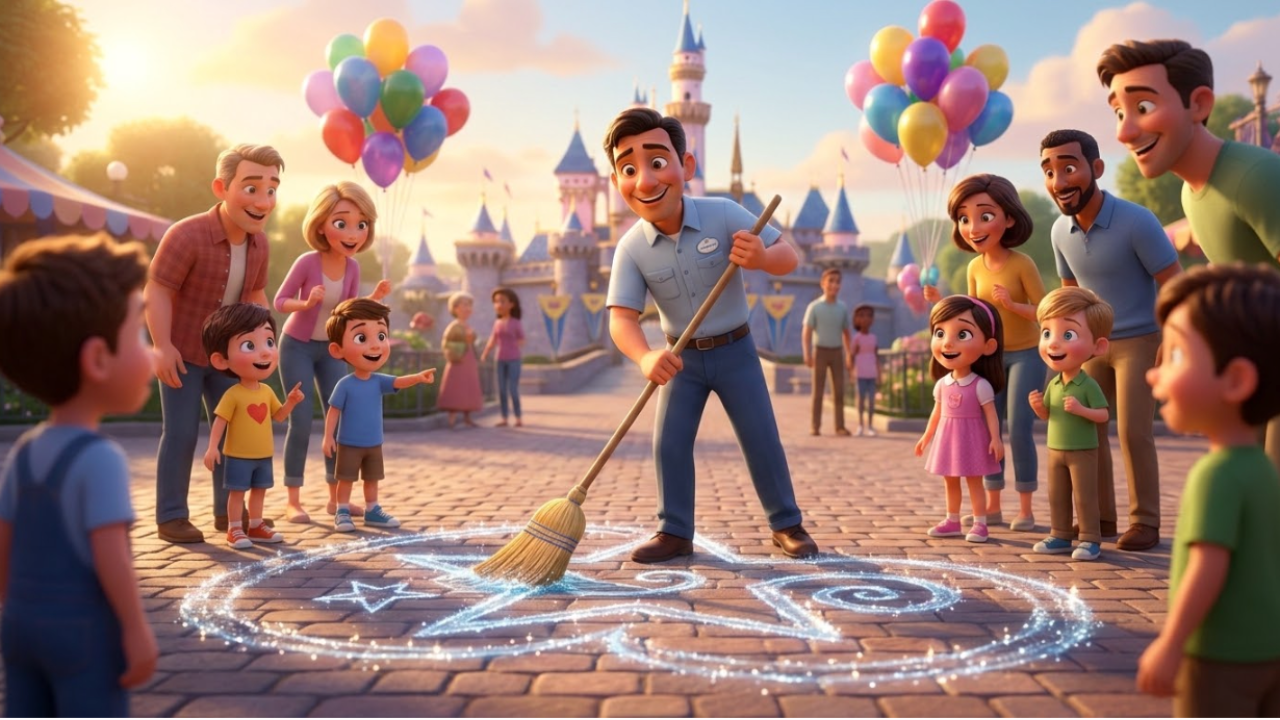
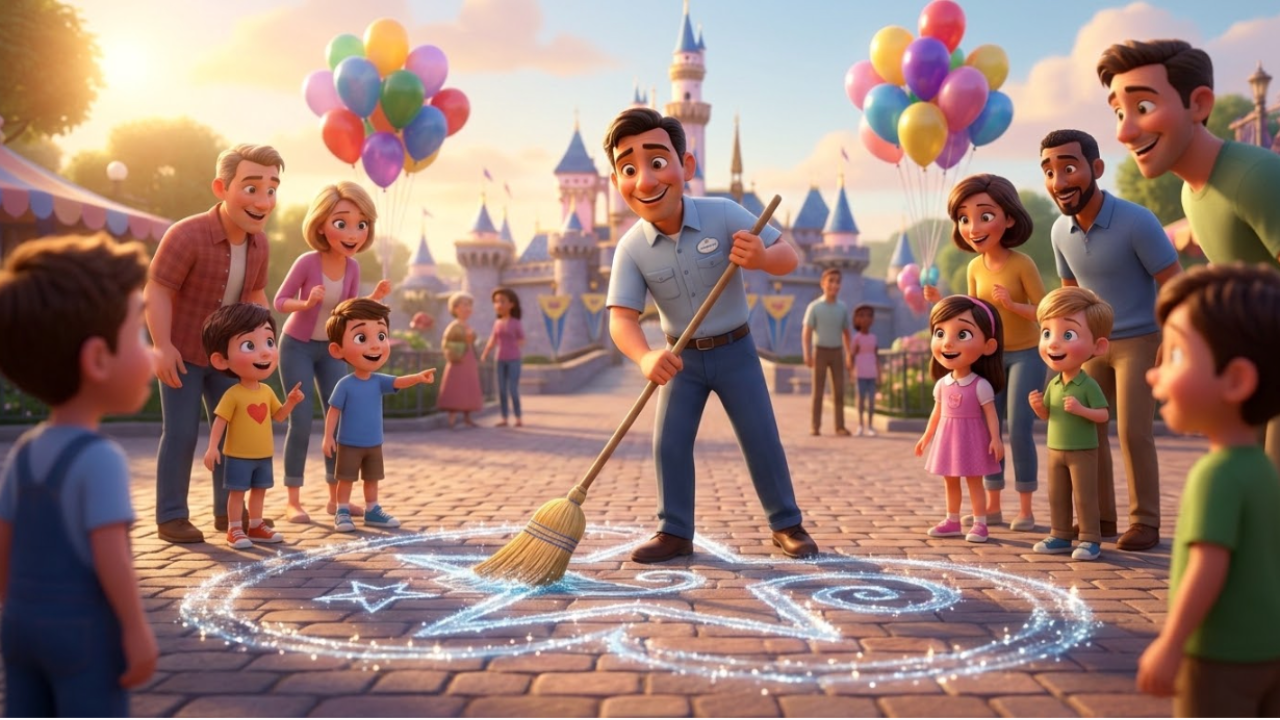
You're strolling through Tomorrowland on a sweltering August afternoon. The Florida humidity is doing unspeakable things to your hair. Your feet ache. Your toddler is three minutes away from a nuclear meltdown. And then you notice a custodian doing something peculiar.
He's not just sweeping. He's painting.
With a wet broom and a bucket of water, he's drawing Mickey Mouse on the pavement. A small crowd has gathered. Children are delighted. Parents are filming. The meltdown-imminent toddler is momentarily hypnotised.
This isn't in anyone's job description. There's no "pavement art" checkbox on the custodian's task list. And yet, it happens constantly at Disney parks. Cast members at all levels — custodians, food service workers, retail staff — create spontaneous magical moments because they understand they're performers in an ongoing show, not workers completing tasks.
The Disney Institute — which trains thousands of business leaders every year — calls this approach "Guestology." It's their fancy word for studying guest behaviour and designing every element of the experience around what guests need and feel. But here's the crucial insight: Guestology only works if every cast member is empowered to practise it.
You can have the most sophisticated customer research in the world, but if the person actually interacting with your customer sees their job as "task completion" rather than "experience creation," all that research is worthless.
As Lee Cockerell — the chap who ran Walt Disney World operations for a decade — puts it in his book Creating Magic: "Everyone is important. Everyone's role is important. And everyone must know how their role contributes to the overall purpose."
Think about that. The custodian with the water and broom understands that his role isn't "keep the pavement clean." His role is "contribute to guest happiness." Cleanliness is one tool. Pavement art is another. Guest directions are another. Picking up a dropped ice cream and replacing it without being asked is another.
When your employees understand the PURPOSE behind their tasks, they can improvise correctly. When they only understand the tasks themselves, they become task-robots who miss opportunities for magic.
It's a bit like Buzz Lightyear, isn't it? When he thinks he's just a toy, he's limited. When he realises he's part of something bigger — Andy's childhood, the mission of the toys — he can fly. Well, fall with style. Same principle.
Quick Quiz Time! ✨
Your employee sees a customer looking confused near a product display. What should they do?
A) Avoid eye contact and continue with their assigned task. Confusion is a personal journey, and who are we to interfere?
B) Point vaguely in the direction of customer service and mumble "they'll sort you out" before fleeing the scene.
C) Approach warmly, ask if they can help, and either answer the question or personally escort them to someone who can — because they understand they're part of the show and every interaction matters.
If you chose A or B, I admire your commitment to customer alienation. Very thorough. The rest of us will be over here choosing C and building businesses people actually want to return to.
The Key Principles Behind It: Why Disney's Approach Actually Works
Now, you might be thinking, "But Andrew, this sounds lovely in theory. Disney has a massive training budget and a culture that's been building for seventy years. How does this help my plumbing business in Leeds?"
Excellent question. Let me break down the actual principles that make "Everyone Is Part of the Show" work — because they're surprisingly transferable to any business, including yours.
Principle 1: Language Creates Identity
Disney doesn't call people "employees." They're "cast members." This isn't marketing fluff — it's psychological engineering.
When you call someone a cast member, you're telling them they have a role in a performance. When you call them an employee, you're telling them they're a resource to be deployed. The language shapes how they see themselves, and how they see themselves shapes how they behave.
What do you call your team? "Staff"? "Workers"? "The people"? Consider what that language implies about their role in your customer experience.
Principle 2: The Onstage/Backstage Distinction
Disney parks are designed with literal backstage areas — utilitarian corridors, break rooms, the famous "utilidors" (underground tunnels) beneath Magic Kingdom. Cast members can drop character in these spaces. They can complain about their feet hurting, eat a sandwich, or just be human for ten minutes.
But the moment they step "onstage" — any guest-visible area — they're performing. The smile goes on. The helpful posture activates. The "I don't know" becomes "I'll find out for you."
Most businesses have accidental "onstage" moments they haven't recognised. The warehouse that customers can see from the car park. The phone call that happens in an open-plan office. The email that's forwarded to someone outside the organisation. Your employees might be "backstage" in their minds while actually being visible to your audience.
Principle 3: The Quality Standards Hierarchy
Disney's Four Keys — their quality standards — are prioritised in this exact order: Safety, Courtesy, Show, Efficiency.
This hierarchy is non-negotiable. A cast member will sacrifice efficiency to maintain courtesy. They'll sacrifice show elements to maintain safety. They'll never sacrifice courtesy for efficiency.
Most businesses do this backwards. Efficiency comes first, and courtesy gets whatever time is left over. No wonder customer experiences feel mechanical.
Principle 4: Empowerment Without Permission
Disney cast members are empowered to create magical moments without seeking manager approval. They can replace a dropped ice cream. Upgrade a disappointed guest. Spend an extra five minutes with a child who's frightened. Small acts of kindness don't require a supervisor's signature.
The Ritz-Carlton takes this even further — every employee is famously empowered to spend up to $2,000 per guest to solve problems without approval. That's not a typo. Two thousand dollars. Because Ritz-Carlton understands that the cost of a service recovery is almost always less than the cost of a lost customer.
Maya Angelou said it beautifully: "People will forget what you said, people will forget what you did, but people will never forget how you made them feel."
Your employees are creating feelings in every interaction. Are they empowered to create GOOD feelings without having to ask permission first?
Principle 5: "Everything Speaks"
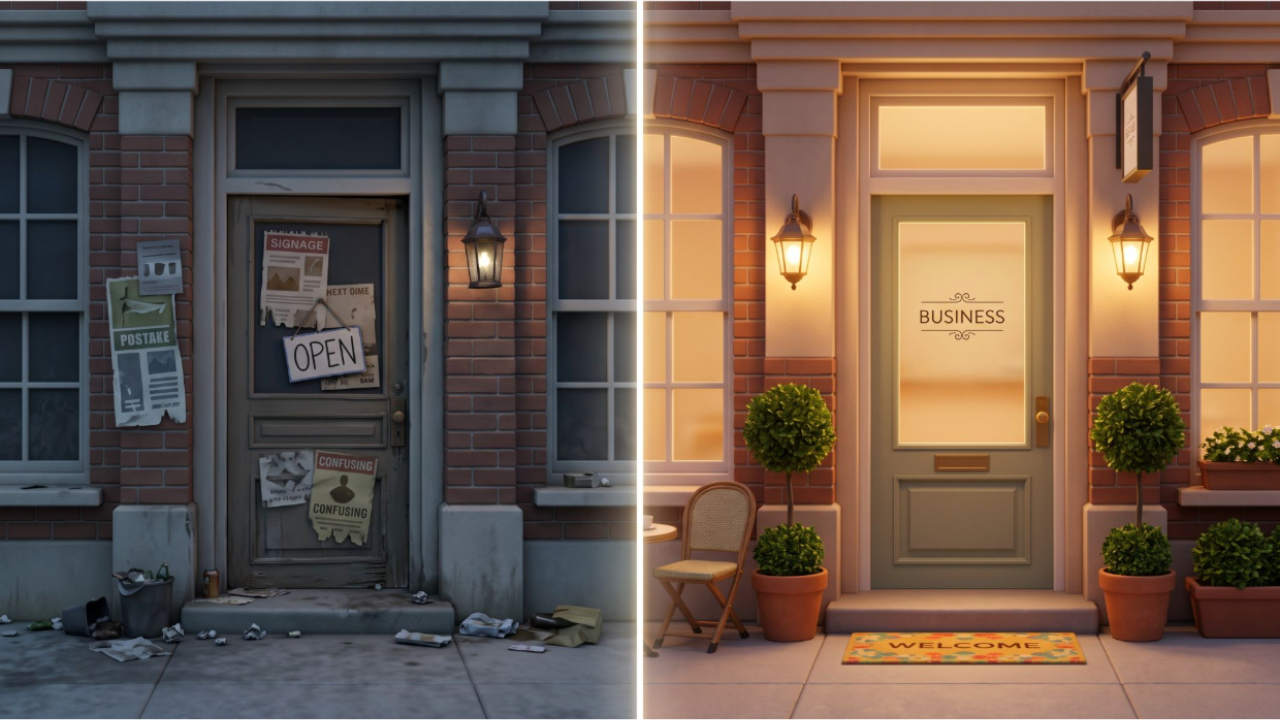
Disney operates on the principle that every single detail communicates something to guests. The cleanliness of the restrooms. The temperature of the queue area. The smell of fresh cookies piped onto Main Street. The cast member's body language. The paint condition on a fence that 90% of guests will never consciously notice.
Nothing is neutral. Everything is either enhancing or diminishing the show.
This is what Disney Imagineers call "bumping the lamp" — a reference to a scene in Who Framed Roger Rabbit where animators painstakingly adjusted shadows to match a swinging lamp, even though most viewers would never notice. The details matter because they add up. They create an overall impression of care that guests FEEL even if they can't articulate why.
What is your business accidentally "saying" through details you haven't consciously designed? The hold music. The email signature. The state of your parking area. The tone of your invoice. Everything speaks.
Quick Quiz Time! 🎩✨
You want to create a culture where employees feel empowered. What's the first step?
A) Write a 47-page policy document outlining exactly what employees are permitted to do, under what circumstances, with which forms to fill out, and featuring a flowchart that would make NASA jealous.
B) Tell everyone "just use your best judgment" and then publicly criticise anyone whose judgment differs from yours. Mixed messages build character!
C) Define the VALUES and PURPOSE clearly, set reasonable boundaries for independent action, celebrate people who use their empowerment well, and coach (privately) those who misstep — so employees understand the spirit, not just the letter, of what you're trying to create.
If you chose A, congratulations on creating a bureaucracy that will slowly crush all joy and initiative. If you chose B, enjoy the confusion and resentment. The rest of us are choosing C and building teams that actually care.
Disney vs. Traditional Approaches: The Coffee Shop Test
Let me paint two scenarios for you.
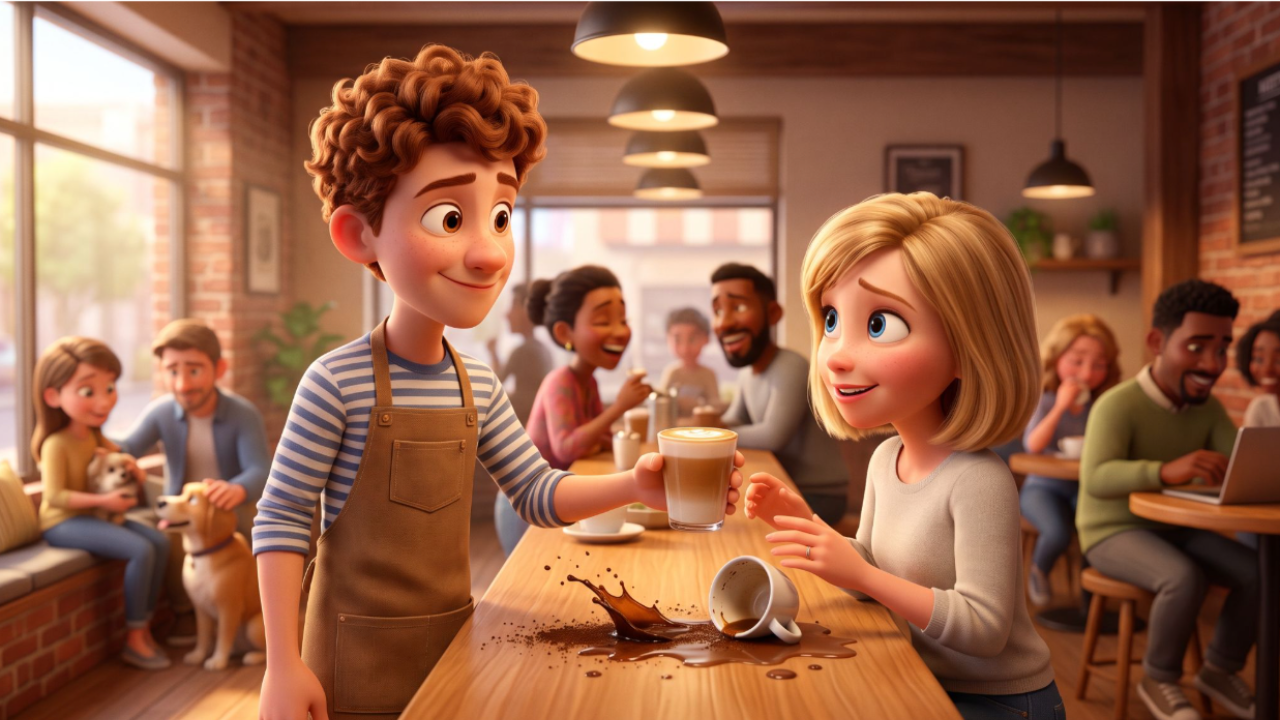
Coffee Shop A: You walk in. The person behind the counter is having a conversation with a colleague about their weekend plans. You stand there. They finish their sentence, sigh, and turn to you with the enthusiasm of someone being asked to defuse a bomb. "What do you want?" No eye contact. They take your order, make your drink, slide it across the counter, and return to their conversation before you've even picked it up.
The coffee might be excellent. The prices might be fair. But you leave feeling like an inconvenience.
Coffee Shop B: You walk in. The person behind the counter makes eye contact immediately and smiles. "Morning! What can I get you?" While making your drink, they ask if you've tried their new seasonal blend. They notice the book you're carrying and mention they loved it too. They hand you your coffee directly — not slide it — and say, "Enjoy! Hope the rest of your day is brilliant."
Same coffee. Same price. Completely different experience.
The difference? Coffee Shop B understands that every employee is part of the show. The person making coffee isn't just "making coffee" — they're creating a moment in someone's day. Coffee Shop A treats employees as task-completers. Coffee Shop B treats them as experience-creators.
Now, here's what's important: Coffee Shop B doesn't necessarily have better employees. They might have the SAME employees, just with different training, different expectations, and different leadership.
Disney figured this out decades ago with something called "Disney University," created by a visionary named Van France in 1955. Van France understood that Disney wasn't hiring employees — they were casting performers. And performers need to understand the production they're part of.
His insight: "We don't train people how to be friendly. We hire friendly people and teach them to channel that friendliness into the Disney show."
The training at Disney University (now called Disney Traditions) doesn't start with job tasks. It starts with heritage, values, and purpose. Cast members learn about Walt Disney's vision, the history of the company, and the philosophy behind the parks BEFORE they learn how to operate a cash register or clean a hotel room.
Values first. Skills second.
Here are four action steps you can implement this week:
1. Audit Your "Accidental Onstage" Moments. Walk through your customer journey and identify every moment where an employee might be visible or audible to customers — including moments you haven't consciously designed. The overheard phone call. The visible back office. The delivery driver's vehicle condition. These are all part of your show.
2. Change Your Language. What do you call your team? Consider adopting language that emphasises their role in the customer experience. "Team members," "associates," "brand ambassadors" — anything that signals "you're part of something bigger than task completion."
3. Define Your Version of the Four Keys. What are your priority values, and in what order? Write them down. Make them explicit. When values conflict, which one wins? Your team can't make good judgment calls if they don't know the hierarchy.
4. Create One Empowerment Policy. Give your employees permission to do ONE thing without asking approval. Maybe it's giving a 10% discount to solve a complaint. Maybe it's spending up to £20 on a gesture of goodwill. Start small. Watch what happens. Expand from there.
Quick Quiz Time! 🌟
You want your team to understand they're part of the show. What's the most effective approach?
A) Put up motivational posters with vague slogans like "Teamwork Makes the Dream Work!" and assume the message will somehow penetrate their consciousness through sheer repetition.
B) Send a company-wide email explaining the new initiative using at least 47 corporate buzzwords, then wonder why nothing changes.
C) Start by modelling the behaviour yourself (leaders are always onstage), create a clear training moment where you explain the philosophy and WHY it matters, then recognise and celebrate examples of employees who get it right.
If you chose A or B, well, at least your walls will look nice. The rest of us are choosing C because culture change requires leadership, not lamination.
Real-Life Case Study: The Dental Practice That Discovered Its Hidden Show
Last year, I worked with a dental practice in Birmingham that was struggling with patient retention. Their clinical work was excellent — genuinely first-rate dentistry. But patients weren't coming back, and they couldn't figure out why.
I spent a day just observing. Watching the patient journey from arrival to departure. And I spotted the problem within the first hour.
The receptionist — lovely woman, very efficient — barely looked up when patients walked in. She was busy with paperwork, phone calls, insurance forms. When she did acknowledge patients, it was with a quick "name?" followed by "take a seat."
The dental nurses were warm and chatty... with each other. In the corridor. Where patients could hear them complaining about the schedule.
The dentists themselves were brilliant once you were in the chair. But the journey TO the chair felt cold, clinical, and impersonal.
Here's the thing: nobody in that practice thought they were "part of the show." The receptionist thought her job was admin. The nurses thought their job was assisting procedures. The dentists thought their job was fixing teeth. Customer experience was everyone's job and therefore nobody's responsibility.
We made three changes:
First, we redefined roles. Everyone — reception, nurses, dentists, even the person who cleaned the surgery — was now responsible for "patient comfort," not just their technical tasks. We talked about what that meant in practical terms.
Second, we identified the "onstage" areas. The reception desk, the corridor, the waiting room, the surgery itself. When in these areas, you're performing. We created a small break room where staff could be "backstage" and human.
Third, we empowered the receptionist. She could now offer a complimentary cup of tea to anxious patients, give small gifts to children, and spend an extra minute or two chatting with nervous new patients. Without asking permission.
Within six months, patient retention had improved by 34%. New patient referrals increased by 28%. And the staff reported feeling more engaged and purposeful in their work.
The clinical quality hadn't changed at all. The equipment was the same. The prices were the same. What changed was that everyone understood they were part of the show.
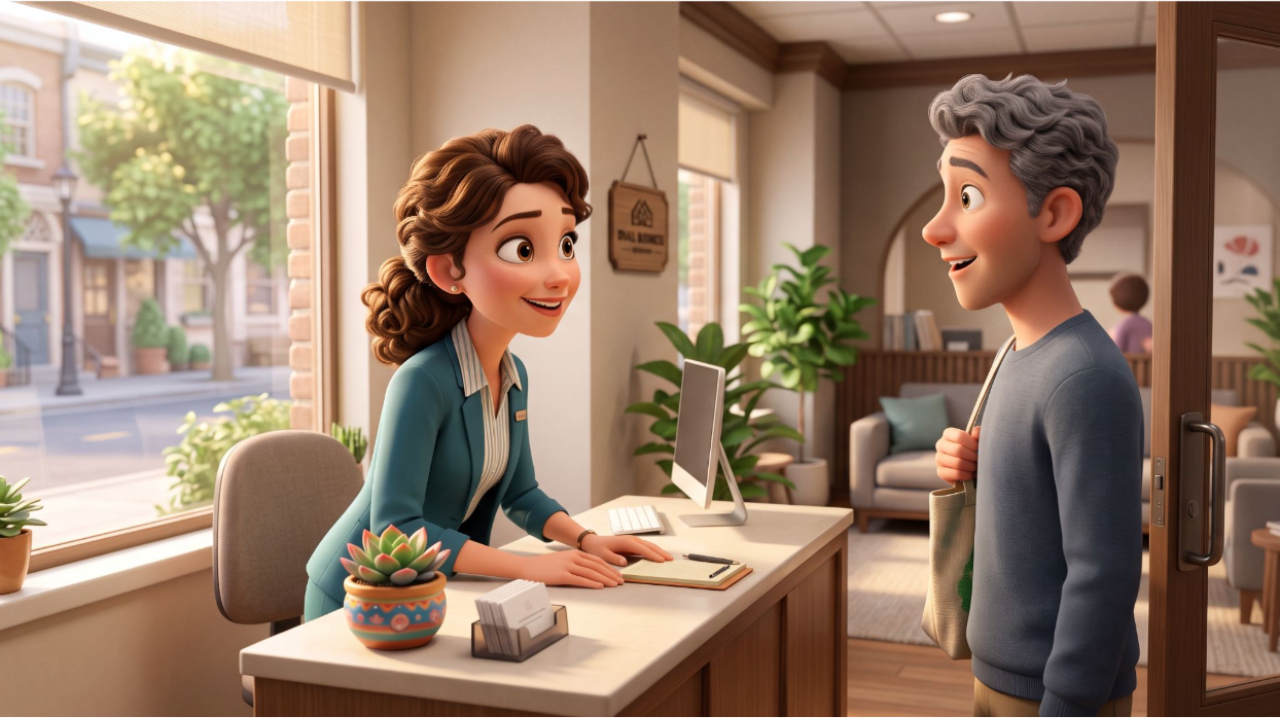
Lessons from this case study:
1. Technical excellence isn't enough. If the journey to your excellence feels impersonal, customers notice — even if they can't articulate why.
2. Identify your hidden "onstage" moments. The Birmingham practice had accidental performances happening in corridors and reception that nobody had consciously designed.
3. Small empowerments create big shifts. The receptionist's ability to offer tea and spend an extra minute changed the entire entry experience.
4. Culture change improves employee satisfaction too. When people feel their work has purpose beyond task completion, they enjoy it more. Engagement and customer experience rise together.
Cross-Industry Application: The Show Goes On Everywhere
Now, I can already hear some of you thinking: "Andrew, that's all very well for dental practices and Disney parks. But MY business is different."
Is it, though?
Let me show you how "Everyone Is Part of the Show" applies across wildly different industries:
Retail: Your stock room staff who occasionally step onto the shop floor? They're onstage whether they realise it or not. Train them in customer acknowledgment. A simple "let me know if you need any help" from someone clearly busy with other tasks actually impresses customers MORE than the same offer from sales staff — it feels more genuine.
Hospitality: Your kitchen porters, your cleaners, your maintenance team — they all encounter guests in corridors, lifts, and public areas. John Lewis has figured this out; they call everyone "Partners" and train everyone in customer care. A warm "good morning" from someone clearly not in a customer-facing role creates a distinctive impression.
Online Business: Your developers, your accountants, your warehouse packers — they shape customer experience through the code they write, the invoices they send, and the care they take with packaging. Amazon's "customer obsession" philosophy applies to every department, not just customer service. Everyone is part of the show, even when the show is digital.
Trades (Plumbers, Electricians, Builders): Your apprentices, your suppliers, your office administrators — they all interact with customers in some way. The apprentice who answers a customer's question respectfully, the supplier's van that parks courteously, the admin who sounds warm on the phone. These are all show moments.
Professional Services (Accountants, Lawyers, Consultants): Your junior staff who prepare documents, your PA who manages diaries, your IT support person who occasionally helps a client. Every email, every phone call, every in-person interaction — all part of the show. The paralegal's tone matters as much as the senior partner's expertise.
Health and Wellness: Beyond clinical staff, consider your receptionists, your cleaners, your billing department. A chiropractor I know trained his billing clerk to call patients by name, ask how they're feeling, and thank them for being part of the practice. Billing calls went from dreaded interruptions to warm touchpoints.
As Walt Disney said: "It's kind of fun to do the impossible."
Turning every employee into a brand ambassador might feel impossible. But it's really just a series of small, deliberate choices. And those choices, compounded over time, create something remarkable.
Quick Quiz Time! 🤔
You run an accounting firm. Who should be trained on customer experience?
A) Just the partners who meet with clients. Everyone else can be as grumpy as they like — clients will never see them anyway. (Narrator: They will.)
B) The receptionist only, because first impressions matter. What happens after that is someone else's problem.
C) Everyone — from the junior bookkeepers to the admin team to the person who sends invoices — because every interaction shapes how clients perceive your firm, and a warm experience makes people more likely to pay promptly and recommend you to others.
If you chose A or B, enjoy the mysterious one-star reviews that mention "unfriendly atmosphere" without specifics. The rest of us are choosing C and building firms where every touchpoint reinforces our brand.
Long-Term Benefits: Why This Investment Pays Off Forever
Let me give you some numbers that should make your accountant sit up straight.
According to research from Bain & Company, increasing customer retention by just 5% can boost profits by 25-95%. That's not a typo. Twenty-five to ninety-five percent.
But here's what makes Disney's "Everyone Is Part of the Show" approach so powerful: cast member interactions are the primary driver of guest loyalty. According to Disney Institute, roughly 70% of the guest experience is influenced by cast member interactions — more than rides, attractions, or entertainment combined.
Think about that. The most expensive part of building a Disney park is the attractions. Hundreds of millions of dollars for a single ride. And yet, the thing that matters most to whether guests come back is how they're treated by the people.
A Harvard Business Review study found that emotionally connected customers have a 306% higher lifetime value than merely satisfied customers. They spend more, stay longer, recommend more, and forgive more.
And who creates those emotional connections? Not your marketing department. Not your website. Your people. Every single one of them.
Here's what happens when "Everyone Is Part of the Show" becomes your culture:
Word-of-mouth accelerates. People don't tell stories about "adequate service." They tell stories about moments — the custodian who drew Mickey on the pavement, the receptionist who remembered their name, the delivery driver who noticed they were struggling and helped carry boxes. Moments come from empowered employees, and stories bring new customers.
Employee engagement increases. Gallup research consistently shows that employees who feel their work has meaning outperform those who don't. When your warehouse worker understands they're part of the customer experience — not just "the person who packs boxes" — their engagement rises. And engaged employees deliver better work.
Your brand becomes consistent. Marketing can promise anything. But if the experience doesn't match the promise, customers feel cheated. When every employee is part of the show, your brand becomes something customers can rely on. Same experience every time. That consistency builds trust, and trust builds loyalty.
Complaints become recovery opportunities. Research shows that customers who have a problem WELL-HANDLED are actually more loyal than customers who never had a problem at all. When every employee is empowered to solve problems, complaints become opportunities to deepen relationships.
Disney magic isn't about deep pockets. It's about deep caring. And caring can be taught, modelled, and multiplied — if you're willing to treat every employee as a cast member with a role to play.
Quick Quiz Time! 🧙♂️
What's the primary benefit of turning every employee into a brand ambassador?
A) Your marketing team can finally take a holiday because the employees are doing all the work. (Narrator: The marketing team will not be taking a holiday.)
B) You can fire all your managers because employees will just... sort themselves out. Anarchy is a valid business strategy!
C) Every customer touchpoint reinforces your brand promise, emotional connections multiply, word-of-mouth accelerates, and you build the kind of loyalty that competitors can't easily steal — even if they match your prices.
If you chose A or B, I admire your optimism. It's misplaced, but charming. The rest of us are choosing C because we understand that culture is the ultimate competitive advantage.
Challenges and Reality Check: The Medicine With a Spoonful of Sugar
Right, I'm not here to rain on your magical parade, but let's be honest about the challenges. Because if I pretended this was easy, I'd be doing you a disservice.
Challenge 1: Culture Change Takes Time
Disney's culture has been building since 1955. They've had seven decades to refine their approach, embed it in their hiring, and pass it down through generations of cast members. You're starting from scratch. Expect the shift to take 12-24 months of consistent effort before it truly "takes." There will be setbacks. There will be employees who don't get it. That's normal.
Challenge 2: Some People Won't Get It
Let's be blunt. Some people see work as a transaction: hours for money, nothing more. The idea of being "part of a show" will make their eyes roll so hard they might injure themselves. You have three options: coach them patiently, move them to truly backstage roles, or eventually part ways. Not everyone belongs in every culture, and that's okay.
Challenge 3: Consistency Is Hard
It's easy to be "onstage" when things are going well. It's much harder when you're tired, stressed, or dealing with your fifteenth difficult customer of the day. Disney invests heavily in "backstage" areas — break rooms, recognition programmes, wellness support — so cast members can recharge before returning to the show. If you don't give your team permission and space to be human occasionally, they'll burn out.
Challenge 4: Disney Isn't Perfect Either
Let's not pretend Disney gets this right 100% of the time. During our visit in August 2022, we encountered a cast member at a quick-service restaurant who was visibly miserable and barely acknowledged us. It happens. The system isn't foolproof, even at Disney. What Disney does well is recover quickly, coach consistently, and make the magic more common than the mediocrity. Perfection isn't the goal. Consistent excellence is.
Challenge 5: Empowerment Can Go Wrong
If you empower employees without clear values and boundaries, some will abuse it. Others will be paralysed by uncertainty. The solution isn't less empowerment — it's clearer principles. Disney's Quality Standards (Safety, Courtesy, Show, Efficiency) give cast members a framework for decision-making. They don't need a rule for every situation because they have VALUES for every situation.
Practical Strategies for Overcoming These Challenges:
1. Start small. Pick one team, one department, or one location. Prove the concept works there before rolling out company-wide. Small wins build momentum.
2. Invest in "backstage." Create physical and psychological space where employees can be off-duty. Break rooms, quiet moments, recognition that people are human. The show can only go on if the performers can rest.
3. Hire for attitude, train for skill. Van France said Disney hires friendly people and teaches them the show. You can teach processes, but you can't teach caring. Weight your hiring toward attitude and character.
4. Set clear expectations, then trust. Define your values, your priorities, your boundaries. Then trust people to operate within them. Check in, coach, and course-correct — but don't micromanage away the empowerment.
5. Keep the long game in mind. Culture change is an investment, not an expense. The returns compound over years, not weeks. Stay committed even when progress feels slow.
As Mary Poppins would say, a spoonful of sugar helps the medicine go down. The medicine here is honest work, consistent effort, and the patience to let culture take root. The sugar is the knowledge that it works — brilliantly, measurably, sustainably.
Quick Quiz Time!
You've launched the "Everyone Is Part of the Show" initiative, but one senior employee is openly cynical about it. What do you do?
A) Publicly shame them at the next team meeting. Nothing builds culture like humiliation!
B) Ignore them completely and hope their negativity somehow doesn't affect anyone else. Denial is a river in Egypt, and also a valid management strategy.
C) Have a private, honest conversation. Find out what's behind the cynicism — it might be valid concerns worth addressing. If they're genuinely not a fit for the culture you're building, help them transition elsewhere. Culture is too important to let one person undermine it, but so is treating people with respect.
If you chose A or B, well, at least you're consistent in your approach to poor decision-making. The rest of us are choosing C because leadership means having difficult conversations with dignity.
Frequently Asked Questions
Q: We're a small business with just five employees. Is this relevant for us?
A: It's arguably MORE relevant for you. In a small business, every employee has proportionally more customer contact. If you have five employees and one of them creates a bad impression, that's 20% of your workforce undermining your brand. The good news? Culture change is faster with fewer people. You can shift the mindset of five people in weeks, not years. Start by having a genuine conversation about what kind of experience you want to create, and how everyone contributes to it. Disney magic scales up, but it starts small.
Q: What if some of my employees genuinely never interact with customers?
A: First, are you sure? Think carefully about accidental touchpoints — the warehouse visible from the car park, the phone call overheard by a visitor, the email that gets forwarded. But even for genuinely "backstage" roles, the principle still applies. Their work AFFECTS the customer experience even if they never meet a customer. The accountant's speed affects invoice accuracy. The developer's care affects website usability. Help them see the connection between their work and customer outcomes. Like Woody and the toys in Toy Story, everyone has a role in making Andy happy — even if he never sees them move.
Q: How much does this cost to implement?
A: The core shift — changing mindsets, defining values, reframing roles — costs nothing but time and intention. You don't need expensive training programmes or consultants (though they can help). What you need is consistent leadership modelling, clear communication about expectations, and regular recognition when people get it right. Disney's Traditions programme is essentially storytelling and values transmission — something any business can do. The ROI comes from improved retention, stronger word-of-mouth, and reduced service recovery costs. This isn't an expense; it's an investment with measurable returns.
Q: What do I do when an employee empowered to "create magic" makes a bad call?
A: First, don't publicly criticise them. Nothing kills empowerment faster than public punishment for trying. Instead, have a private conversation. Understand their reasoning. Often, "bad calls" come from good intentions with incomplete information — that's a coaching opportunity, not a disciplinary issue. Then use it as a learning moment for everyone: "Here's a situation that came up, here's how it was handled, here's what we learned." Disney cast members don't get it right 100% of the time either. The culture survives because mistakes are treated as learning, not crimes.
Q: How do I get skeptical employees on board?
A: Some skepticism is healthy — it means people are thinking critically. Start by addressing their concerns honestly. If they worry this is "just another corporate initiative," prove them wrong through sustained action, not announcements. Show them examples of the principle working — ideally from your own business, or from companies they respect. And give them ownership: "I'd love your input on how we make this real, not just words." Often the biggest skeptics become the biggest champions once they feel genuinely included. Even Scrooge McDuck eventually learned that money isn't everything (though it did take a few ghosts).
Q: My industry is very serious (medical, legal, financial). Doesn't this "show" language trivialise what we do?
A: I understand the concern, but I'd reframe it. The "show" metaphor isn't about entertainment — it's about intentionality. It means recognising that every interaction creates an impression, and that impression matters. A patient entering a medical clinic is anxious. A client meeting a lawyer is stressed. A customer consulting a financial advisor is worried about their future. In these contexts, the "show" is about creating calm, confidence, and trust — not fun. The Ritz-Carlton isn't a theme park, but they absolutely understand that every employee is part of the guest experience. Seriousness and intentional experience design aren't opposites.
Putting It All Together: Your Curtain Call
We've almost come to the end of our magical journey, and if you've made it this far, I suspect you're not the kind of person who treats this as just another business article to skim and forget.
Let me bring it all together.
Disney's "Everyone Is Part of the Show" philosophy rests on a simple but profound insight: you cannot control every customer touchpoint through rules, policies, or managerial oversight. There are too many moments, too many interactions, too many opportunities for magic or disaster.
So instead of trying to control everything, Disney does something smarter. They create a CULTURE where every cast member — from executives to custodians — understands they're performers in an ongoing production. They use language that reinforces this identity. They define clear values that guide decision-making. They empower people to create magic without seeking permission. And they relentlessly model the behaviour they expect.
The result? A brand experience so consistent, so emotionally engaging, that people fly across oceans and spend thousands of pounds to experience it. Year after year. Decade after decade.
And here's what I want you to understand: this isn't because Disney has unlimited money or some secret technology. It's because they take seriously something most businesses leave to chance — the quality of every human interaction.
You can do this too.
Not tomorrow. Not perfectly. But step by step, choice by choice, you can shift your culture toward one where everyone understands they're part of the show. Where every interaction reinforces your brand promise. Where your employees become your most powerful marketing channel.
So here's my challenge to you: How can you make YOUR customer experience not just satisfactory, but truly memorable? What's one small thing you could change this week that would make someone feel seen, valued, and cared for?
Disney magic isn't about having a castle or a talking mouse. It's about creating moments of wonder in the everyday. And that's something any business can do — if they're willing to treat every employee as a cast member with a role to play.
As Walt Disney himself said: "Do what you do so well that they will want to see it again and bring their friends."
That's the goal. That's the prize. And it's within your reach.
Now go sprinkle some pixie dust. 🪄
About the Author
Andrew Lock is a renowned business coach, consultant, and author with over three decades of experience helping entrepreneurs and business leaders achieve extraordinary success. As the founder of 'Help My Business!', Andrew has empowered thousands of business owners worldwide through his unique coaching, mastermind groups, 10 best-selling books, and engaging keynote presentations.
Known as the "The Yoda of marketing," (without the green pointy ears), Andrew brings a refreshing blend of humor and practical insights to his work. His expertise spans customer experience, pricing, sales, marketing, employee management, and operations, with a special focus on applying Walt Disney's business principles to modern enterprises.
Andrew is the author of ten books, including the popular "Walt's Way" and "Big Lessons from Big Brands." His work has been featured in major media outlets, and he's shared stages with business luminaries like Sir Richard Branson, Donald Trump, Daymond John, Dan Kennedy, The Dalai Lama, and Michael Gerber.
When he's not helping businesses transform their customer service, Andrew enjoys traveling with his family and indulging in his passion for all things Disney and chocolate (though not necessarily in that order).
For more insights and resources, visit www.AndrewLock.com.
Sources & Further Reading
Want to go deeper? Here are a few of the books and resources I referenced (or shamelessly stole ideas from) while writing this:
- Be Our Guest — Disney Institute (the closest thing to a Disney customer service bible — essential reading on Guestology and the Quality Service Cycle)
- Creating Magic — Lee Cockerell (ten leadership strategies from the chap who ran Walt Disney World operations for a decade)
- The Ride of a Lifetime — Bob Iger (fascinating memoir on Disney leadership and the acquisitions that built modern Disney)
- Walt's Way — Andrew Lock (yes, that's my book — but it genuinely covers how to apply Disney principles to any business)
- The Disney Institute Blog: disneyinstitute.com (regularly updated insights from Disney's professional development arm)
