
The Disney Principle: Disney University and Creating a Training Culture That Outlasts Any Individual
What Disney University Can Teach You About Building a Training Culture That Outlasts You
Because your business shouldn't fall apart the moment someone hands in their notice
Right, let me ask you something slightly uncomfortable.
If you got hit by a bus tomorrow — or, let's be optimistic, won the lottery and decided to spend the rest of your days on a beach in Barbados — would your business survive?
I mean really survive. Not limp along in a panicked state of managed chaos for six months before collapsing into a heap of angry customers and confused employees. I mean actually carry on, delivering the same quality, the same service, the same experience you've spent years building.
If your honest answer involves nervous laughter and a vague hope that "someone would figure it out," then congratulations — you've built a job for yourself, not a business.
Don't feel bad. Most business owners have done exactly the same thing. The knowledge lives in their heads, the standards exist in their intuition, and the culture depends entirely on their physical presence hovering over everyone like a well-meaning but slightly exhausting helicopter parent.
Walt Disney had the same problem in 1955. Disneyland was about to open, and he realised something terrifying: he couldn't personally greet every guest, train every employee, and fix every detail himself. The man was obsessive, but he wasn't immortal.
So he did something rather clever. He hired a chap named Van France and gave him an impossible brief: bottle Walt's instincts and teach them to thousands of people who've never met him.
The result was Disney University — and nearly seventy years later, it's still the reason a nineteen-year-old cast member in Orlando can deliver the same experience Walt himself would have wanted.
As Walt Disney himself once said: "You can design and create, and build the most wonderful place in the world. But it takes people to make the dream a reality."
This article is about how to make sure your people can make your dream a reality — even when you're not there to remind them what the dream is.
Let's get into it.
Key Takeaways From This Article:
- Your business culture shouldn't depend on you being in the room. If standards slip the moment you leave, you don't have a culture — you have a surveillance system.
- Van France's genius was training identity, not just tasks. Disney University doesn't teach people how to operate rides; it teaches them how to be Disney.
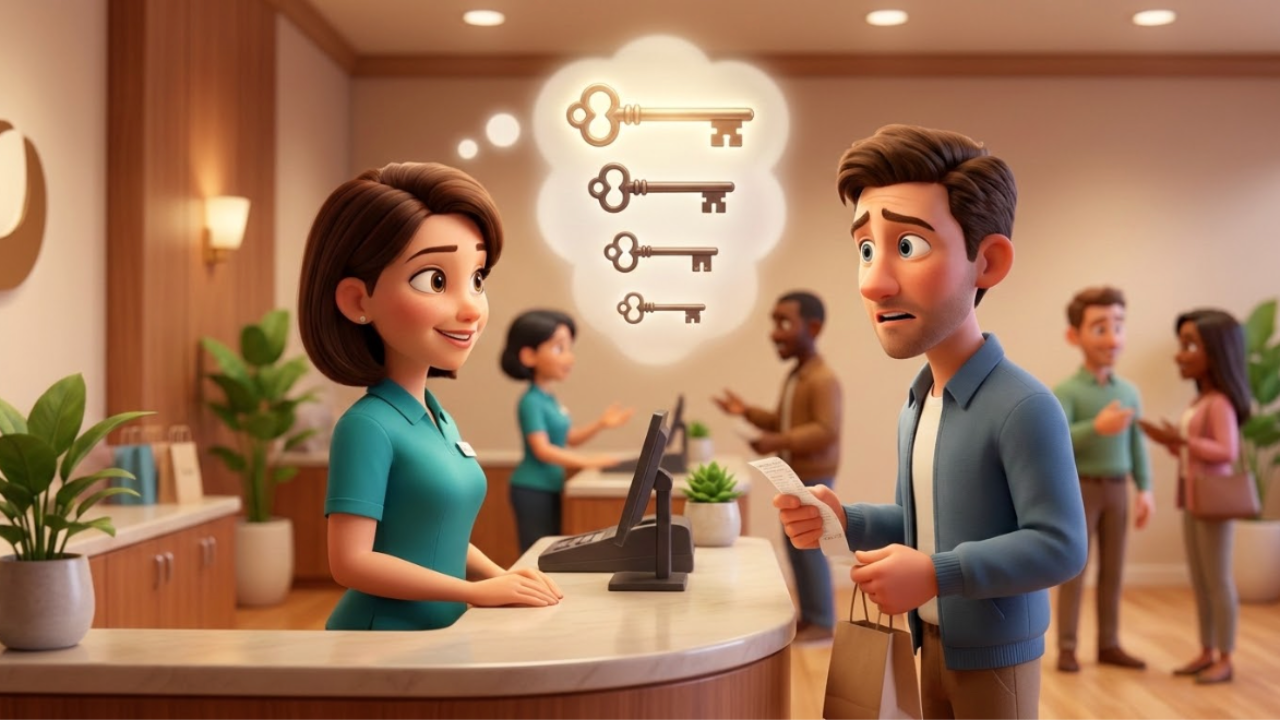
- The Four Keys framework (Safety, Courtesy, Show, Efficiency) gives employees a decision-making hierarchy that works without management intervention.
- Language shapes behaviour. "Cast members" act differently than "employees." "Guests" get treated differently than "customers." Terminology isn't fluff — it's identity engineering.
- Document your standards, or watch them evaporate. Undocumented culture dies with the people who remember it.
- Train trainers, not just trainees. A cascading training model creates self-perpetuating culture that scales without bottlenecks.
- History and heritage create emotional investment. Connecting new hires to your founding story transforms employment into membership.
- Every detail communicates something. Disney's "Everything Speaks" philosophy means nothing is too small to matter — and that philosophy must be taught, not assumed.
- "Bumping the lamp" — going above and beyond on details nobody notices — is a cultural value, not a task requirement. You can't mandate excellence; you have to transmit it.
- The best training investment you'll ever make is time spent on values before skills. Technical abilities can be taught in weeks; cultural alignment takes dedicated effort.
- Good training reduces turnover, increases engagement, and pays for itself many times over. The question isn't whether you can afford to train properly; it's whether you can afford not to.
- Your business should be able to outlive you. That's not morbid — it's the definition of having built something real.
The Time Disney Saved My Anniversary (And Taught Me Something About Systems)
So there I was, standing in the middle of EPCOT's World Showcase on a sweltering October afternoon, watching my wife's face fall approximately three storeys.
We were celebrating our anniversary — because nothing says "romance" quite like sweating through your shirt while a bloke dressed as Goofy photobombs your selfie — and I had made a reservation at one of Disney's signature restaurants. Le Cellier, the Canadian steakhouse. Romantic, right? Candlelit atmosphere, excellent wine, steaks the size of a small continent.
One small problem: I'd booked it for the wrong day.
Not a day early, mind you. A day late. Which is rather useless when you're standing outside the restaurant on the correct day with no reservation and a wife who has just walked approximately fourteen miles in the Florida humidity on the promise of an air-conditioned steak dinner.
My marriage, I felt, was entering dangerous territory.
Now, here's what would happen at most restaurants in the world. The host would apologise, explain that they're fully booked, suggest perhaps we try again tomorrow, and that would be that. Policy is policy. The computer says no. Good luck, cheerio, mind the door on your way out.
But this was Disney.
The cast member at the host stand — her name was Jennifer, and she had the patient expression of someone who'd seen many foolish husbands in her time — didn't miss a beat. She didn't check with a manager. She didn't consult a policy manual. She just said: "Let me see what we can do."
Fifteen minutes later, we were seated at a corner table with a complimentary glass of champagne and a handwritten note wishing us happy anniversary.
Now, Jennifer didn't know us. She had no idea if we were "important" guests or first-time visitors. She certainly had no financial incentive to go out of her way — she wasn't working on commission. And yet she treated our idiotic scheduling error like it was her personal mission to fix.
Why?
Because someone had trained her to think that way. Not just to follow a script, but to instinctively prioritise the guest experience over the easy answer of "computer says no."
That's not natural human behaviour. Most of us, if given a chance to avoid extra work, will take it. Jennifer's response wasn't about her personality — it was about her training. Someone had deliberately installed that mindset into her head.
And whoever trained Jennifer? They'd been trained by someone else. And that person had been trained by someone else. All the way back to a system that Van France built in 1955.
Nearly seventy years of cascading training, and it still works well enough to save the anniversary dinners of disorganised British men.
Here's the question for you: If one of your new employees faced a similar situation — a customer with a problem that's technically not your fault — what would they do? Would they know, without asking, how you'd want them to handle it? Or would they just shrug and follow the rules?
The Principle in Action: How Disney University Actually Works
You're walking through the utilidors — those legendary underground tunnels beneath Magic Kingdom that most guests never see. It's your first day as a Disney cast member, and you've just finished a session on something called "Traditions."
You haven't learned how to operate a single ride. You don't know how to work the till at a merchandise shop. You couldn't tell a FastPass from a PhotoPass if your job depended on it.
But you can already recite the Four Keys in order: Safety, Courtesy, Show, Efficiency. And you understand — really understand — why that order matters.
This is the genius of Disney University, and it's almost comically counterintuitive. Most businesses train tasks first and culture second (if at all). Disney does the opposite.
Every single cast member — from the executives in the boardroom to the teenagers scooping ice cream on Main Street — goes through the same foundational training programme. It doesn't matter if you're going to be managing a department of five hundred people or operating the spinning teacups. You start in the same place.
The Disney Institute calls this approach "Guestology" — which sounds like something you'd study at Hogwarts, but is actually their term for systematically understanding and anticipating guest needs. It's not a buzzword; it's a discipline. And it's taught before anyone learns their specific job.
Think about that for a moment. Disney hires approximately seventy-five thousand cast members at Walt Disney World alone. That's roughly the population of a mid-sized town. And every single one of them gets the same cultural download before they're allowed to interact with guests.
Van France, the man who designed this system, had a guiding question that shaped everything: "What would Walt expect?"
Walt Disney had been dead for barely a decade when France refined this system, but the question kept the founder's vision alive. It wasn't about what the policy manual said. It wasn't about what the manager wanted. It was about what Walt — the person who cared more about guest experience than anyone in history — would have wanted.
That's culture transmission. That's making sure a vision survives the person who had it.
In business terms, this is like installing an operating system into every employee's brain before loading any applications. The applications (job skills) can vary, but the operating system (culture, values, decision-making framework) is identical.
If you think about it, Disney cast members are rather like the Incredibles — each one has their own specific superpower (running a ride, serving food, maintaining costumes), but they all share the same heroic values. Bob Parr might have super strength while Violet has invisibility, but they both know why they're fighting.
Your employees might have different job titles, but do they share the same values? Do they all know what you'd want them to do when you're not watching?
Quick Check: What Would You Do?
A new employee finishes their first week. What happens next?
A) They're handed a policy manual thicker than a Game of Thrones novel and wished the best of luck.
B) They shadow someone for a day, absorb approximately 12% of what's happening, and wing it from there.
C) They've already completed a structured onboarding programme that explains your company values, service standards, and the "why" behind how you do things — before they learned the specifics of their role.
If you answered A or B, don't worry — you're in the majority. Unfortunately, the majority is wrong. 🤔
The Key Principles Behind Disney University (And How to Steal Them)
Right, let's break down exactly what Van France figured out. Because once you see the principles, you'll realise they apply to every business — whether you're running a dental practice, a plumbing company, or a boutique hotel.
Principle 1: Train Identity, Not Just Tasks

Disney doesn't teach people to be "employees who work at a theme park." They teach people to be cast members in a show.
This isn't semantic fluff. Language shapes thought. When you're an "employee," you do what you're told, collect your paycheque, and go home. When you're a "cast member," you're performing. You're part of something larger than yourself. You have a role in an ongoing production that millions of people come to experience.
Disney's terminology reinforcement is relentless: - Employees → Cast Members - Customers → Guests - Uniforms → Costumes - Working → Onstage - Break rooms → Backstage - The job → The Show
This creates what psychologists call "identity-based motivation." People behave according to who they believe they are. If you believe you're a cast member in a show, you'll perform. If you believe you're just someone who punches a clock, you'll do the minimum.
"But Andrew," I hear you saying, "my business isn't a show. We're accountants. We fix boilers. We sell office supplies."
Every business is a show. Every customer interaction is a performance. The question is whether you're putting on a West End production or a half-hearted school nativity where the donkey keeps forgetting his lines.
What identity are you training your people to adopt?
Principle 2: Create a Decision-Making Framework
Disney's Four Keys — Safety, Courtesy, Show, Efficiency — aren't just values. They're a priority hierarchy.
This is crucial. Most companies have values, but values don't help when two values conflict. What do you do when "efficiency" means rushing a guest, but "courtesy" means taking your time? What happens when "the show" requires a cast member to stay in character, but "safety" requires breaking character to help someone?
Disney's answer: the Keys are ranked. Safety trumps everything. Courtesy beats Show. Show beats Efficiency. When in doubt, consult the hierarchy.
This means a cast member can make decisions without a manager. If there's a safety issue, everything else stops. If a guest needs help, efficiency can wait. If maintaining the illusion of the show conflicts with basic human kindness, kindness wins.
Lee Cockerell, who ran Walt Disney World operations for sixteen years, writes about this in Creating Magic. He describes how the Four Keys eliminated thousands of management decisions because cast members already knew the right answer. They didn't need to ask permission; they had a framework.
Think of it like Jiminy Cricket serving as Pinocchio's conscience — except instead of a cricket, your employees have a ranked list of values that tells them what to do when things get complicated.
Does your team have a clear priority hierarchy for decision-making? Or do they have to check with you every time two good things conflict?
Principle 3: Connect Everyone to the Origin Story
Disney Traditions doesn't just teach policies. It teaches history.
Cast members learn about Walt Disney's vision, his struggles, his obsessive attention to detail. They hear about how Disneyland was built in just one year on a converted orange grove. They understand that they're not just working at a company — they're continuing a legacy that started with a man who was told his ideas were impossible.
This matters because humans are narrative creatures. We make meaning through stories. When work is just a transaction (labour for money), people do the minimum. When work is part of a story they believe in, people bring discretionary effort.
Maya Angelou put it perfectly: "People will forget what you said, people will forget what you did, but people will never forget how you made them feel."
Disney University makes people feel like they're part of something with meaning and history. That feeling doesn't happen by accident.
Your business has a story too. Why did you start? What problem were you trying to solve? What do you believe about how your work should be done? Are you telling that story to your new hires, or just handing them a procedures manual?
Principle 4: Train the Trainers

Here's where most businesses fail. They train new employees, but they don't train the people doing the training.
Disney uses a cascading model: Senior cast members become "Disney University Leaders" who train the next generation. But — and this is important — the trainers are themselves trained on how to train. They don't just demonstrate tasks; they learn how to transmit culture.
This creates a self-perpetuating system. The culture doesn't depend on any individual manager or trainer. It regenerates itself through a process that's been refined over decades.
Marty Sklar, the legendary Imagineer who worked directly with Walt, created "Mickey's Ten Commandments" for designing attractions. One of those commandments applies perfectly here: "Keep it up." Meaning: maintenance isn't glamorous, but without it, everything falls apart.
Training culture is no different. You build it once, but you maintain it forever. And that maintenance requires trained trainers, not just trained employees.
Principle 5: Everything Speaks
Disney's "Everything Speaks" philosophy is taught in Traditions as a foundational mindset.
The idea is simple: every single detail in your environment communicates something to your guests. The cleanliness of your bathrooms speaks. The tone of your hold music speaks. The weeds in your car park speak. The way your team members greet (or don't greet) someone who walks in the door speaks.
Most businesses focus only on the "big" stuff — the product, the price, the obvious service interactions. Disney trains cast members to see that there is no small stuff. It all adds up to an experience, and that experience is either magical or forgettable.
This connects to Disney's famous "bumping the lamp" culture — named after a scene in Who Framed Roger Rabbit where animators painstakingly animated shadows on Roger's face as a lamp swung above him. Most viewers would never consciously notice. But unconsciously? It adds to the feeling that everything is right.
Are you training your people to see everything that speaks? Or just the obvious things?
Quick Check: What's Your Training Priority?
When you hire someone new, what do you focus on first?
A) Task competence — can they do the job without breaking anything?
B) Speed — how quickly can we get them productive?
C) Cultural alignment — do they understand our values, our standards, and our "why" before we teach them the "how"?
If you chose A or B, you're optimising for the short term and paying for it in the long term. Just like Kronk in The Emperor's New Groove, you might mean well, but you're accidentally pulling the wrong lever. 🎩✨
Disney vs. Most Businesses: A Training Comparison

It's a Tuesday afternoon at a local café. You've just hired a new barista. She seems nice enough. You show her where the coffee machine is, demonstrate how to make a flat white, explain the till system, and point to the schedule on the wall.
"Any questions?" you ask, already thinking about the seventeen other things on your to-do list.
She shakes her head.
"Great. You start tomorrow. Sarah will show you anything else you need to know."
And that's it. Training complete. Good luck, new barista. Try not to burn anyone.
Now, let's compare that to Disney's approach.
A new cast member at a Disney resort — even one whose job is essentially making coffee at a counter service location — goes through multiple days of Traditions before they learn anything about espresso machines. They learn the Four Keys. They learn about Walt. They learn what it means to be a cast member. They learn how to spot a guest who needs help, how to give directions in Disney's distinctive pointing style (two fingers, never one), how to handle complaints, how to maintain "show" even when they're exhausted.
Then they learn how to make coffee.
The difference isn't time or money. It's philosophy. Most businesses train like the café: tasks first, culture maybe, values if there's time, heritage never. Disney trains like this: culture first, values always, heritage religiously, tasks after the foundation is laid.
The result? The café barista does her job competently. The Disney cast member creates an experience. And here's the kicker — when something goes wrong (and something always goes wrong), the café barista waits for a manager to tell her what to do. The Disney cast member already knows.
Four Things You Can Do This Week
Let's make this practical. Here are four actions you can take immediately:
1. Write down your "Four Keys." What are the 3-5 values that should guide every decision in your business? More importantly, rank them. Which one trumps which when they conflict? If you don't know the hierarchy, neither will your team.
2. Create a "Heritage" document. Why did you start this business? What do you believe about how your work should be done? What standards are non-negotiable? Write it down. Seriously — write it down. Undocumented culture evaporates the moment you leave the room.
3. Change your language. Audit the terminology you use internally. Are your people "employees" or something with more identity? Are you serving "customers" or "clients" or "members" or "guests"? Language isn't decoration; it's architecture. Build something that elevates.
4. Train someone to train. Pick one person on your team — your best culture-carrier — and formally teach them how to onboard new hires. Not just "show them the ropes," but deliberately transmit your values, standards, and heritage. Make them your Van France.
You don't need magic. You need mindset.
Quick Check: What Happens When You're Not There?
Be honest. When you're on holiday, what happens to your service standards?
A) They slip noticeably. Things that would never happen on your watch suddenly become acceptable.
B) They mostly hold, but only because one or two reliable people carry the team.
C) Standards remain consistent because the culture is embedded in how people think, not just in your personal presence.
If you answered A or B, you've built a business that depends on surveillance, not culture. That's exhausting for you and fragile for the business. Time to Disnify. 🪄
The Accountancy Firm That Became a Cast
Let me tell you about a coaching client of mine — an accountancy practice in Manchester, about fifteen people, specialising in small business accounts.
When I started working with them, they had a culture problem. Not a "toxic workplace" problem — everyone was perfectly pleasant. But they had no cohesive culture. Every accountant did things their own way. Client interactions varied wildly depending on who you spoke to. Some accountants called clients back within the hour; others let voicemails sit for days. Some sent detailed explanations with their work; others sent bare numbers.
The founder, Rachel, was exhausted. She spent half her time firefighting inconsistencies and the other half personally handling any client who expected the level of service she wanted the whole firm to deliver.
"I feel like I can't take a day off," she told me. "The moment I leave, standards slip."
Sound familiar?
We didn't start by fixing processes. We started by building their version of Disney University.
First, we documented Rachel's values. Not vague corporate platitudes like "excellence" and "integrity" — everyone claims those. Real, specific beliefs about how clients should be treated. Things like: "Every client question gets an initial response within two hours — even if the full answer takes longer" and "We explain our work in plain English, assuming the client knows nothing about tax code."
We ranked these values into a hierarchy. Client clarity beat efficiency. Responsiveness beat thoroughness (for initial contact — the thorough answer could follow). Relationship beat transaction.
Then we created a Traditions-style onboarding programme. Every new hire — whether junior bookkeeper or senior accountant — spent their first three days learning about Rachel's story, the firm's values, and what "good" looked like before they touched a single client file.
We trained two senior accountants to deliver this onboarding. They became the firm's Van Frances — culture transmitters who could indoctrinate new hires without Rachel's involvement.
Finally, we changed the language. Staff became "team members" (not groundbreaking, but intentional). Clients became "partners" — a deliberate choice that emphasised collaboration over service.
Six months later, Rachel went on her first proper holiday in four years. Nothing fell apart.
Client satisfaction scores went up 23%. Staff turnover — which had been high for an accountancy firm — dropped significantly. And Rachel finally felt like she'd built a business, not a job.
The Lessons:
1. Culture doesn't scale through osmosis. Rachel had tried "leading by example" for years. It wasn't enough. You have to document, systematise, and deliberately transmit culture.
2. Small businesses need this more than big businesses. When you only have fifteen people, every hire has enormous impact on culture. You can't afford to skip the foundational training.
3. Training trainers is the unlock. Once Rachel trained her senior accountants to transmit culture, she removed herself as a bottleneck. The culture became self-perpetuating.
4. Language matters more than you think. Calling clients "partners" changed how the team thought about them. Small shift, big impact.
How Different Industries Can Build Their Own Disney University
Let's get specific. Here's how this principle applies across various business types:
Retail
Create a "Store Traditions" day for every new hire. Teach your brand story before teaching the till system. Define your version of the Four Keys — what matters most when you're on the shop floor? Train every employee to spot the customer who needs help but isn't asking.
Hospitality
You're already in the experience business, so you have no excuse. Develop a formal culture programme that every employee — front of house, back of house, housekeeping, management — goes through together. Shared language and shared training creates shared culture.
Professional Services (Legal, Accounting, Consulting)
Your "show" is how you communicate with clients. Train everyone on your firm's communication standards — response times, tone of voice, level of explanation — before training on technical skills. Most professional services firms assume "professionalism" is self-evident. It isn't.
Trades (Plumbing, Electrical, Construction)
Your cast members often work alone at customer sites. That means cultural alignment is MORE critical, not less. Create a "This Is How We Show Up" training that covers everything from punctuality to cleanup to how you explain the work. Your apprentices are watching — what are they learning?
Online / E-commerce
Your "cast" is everyone who touches the customer experience: customer service agents, social media managers, fulfilment team. Create a unified training programme that connects all of them to your brand values. An inconsistent tone of voice across channels is like Disney cast members dropping character randomly.
Healthcare / Wellness
The Ritz-Carlton's "Ladies and Gentlemen serving Ladies and Gentlemen" credo is worth studying. Create a similar identity statement for your practice. Train everyone — from receptionist to practitioner to billing — on patient experience before training on clinical or administrative tasks.
As Walt Disney himself once said: "Do what you do so well that they will want to see it again and bring their friends."
The "it" isn't your product. It's your experience. And experience is created by trained people, not accidents.
Quick Check: What's Your Industry Equivalent?
Think about the best experience you've ever had as a customer in your industry. What made it memorable?
A) Nothing — the bar is so low that I've genuinely never had a great experience.
B) One standout person who seemed to actually care, surrounded by mediocrity.
C) A consistent, high-quality experience where everyone I interacted with seemed aligned to the same standard.
If you answered A or B, that's actually good news — there's massive opportunity to differentiate by simply training your people properly. If you answered C, study that company. They've built their own Disney University. 🌟
Why Training Culture Pays Off (Even When Accountants Scream)
I know what some of you are thinking. "Andrew, this sounds lovely, but training takes time. Time costs money. I need people productive now."
Fair point. Let me counter with some numbers.
According to Gallup's research on workplace engagement, only about 23% of employees globally are actively engaged at work. The rest are either passively disengaged (showing up but not really present) or actively disengaged (actually undermining the business).
That disengagement costs money. Gallup estimates it costs the global economy approximately $8.8 trillion annually in lost productivity. In a single company, the difference between a highly engaged workforce and a disengaged one can mean 21% higher profitability.
What creates engagement? People understanding why their work matters. People feeling connected to something larger than their job description. People having the training and tools to succeed.
In other words: exactly what Disney University delivers.
There's also the turnover equation. Replacing an employee typically costs between 50% and 200% of their annual salary when you factor in recruitment, training, lost productivity, and the mistakes new people inevitably make.
Disney's cast member turnover is significantly lower than the hospitality industry average. Why? Because people who feel like valued members of a culture don't leave as quickly as people who feel like interchangeable workers.
And then there's the customer side. A Bain & Company study — the one that every customer service consultant loves to quote — found that increasing customer retention by just 5% can boost profits by anywhere from 25% to 95%.
Disney doesn't need to read that study. They've been living it since 1955. Walt Disney World welcomes roughly 58 million visitors a year, and the vast majority of them are repeat visitors. That's not because the rides change dramatically each year. It's because the experience — created by trained cast members — is reliably excellent.
So yes, training costs time. And time costs money. But undertrained employees cost more. Much more.
Lee Cockerell puts it simply in Creating Magic: "Training costs money, but so does ignorance — and ignorance costs a lot more."
Like Carl from Up, you might want to protect your house (your budget, your time, your existing way of doing things) from change. But eventually, you have to let go of the balloons and embrace the adventure. Training culture is that adventure.
Quick Check: What's Your Training ROI?
Think about your last bad hire — someone who didn't work out. How much did it really cost?
A) No idea — I try not to think about it because it's too depressing.
B) A lot — recruitment fees, time spent training, customer issues they caused, the mess someone else had to clean up.
C) Less than it could have, because we caught the cultural mismatch early thanks to our thorough onboarding process.
If you answered A or B, that money has already been spent. The question is whether you spend it again — or invest in training that prevents it. 🧙♂️
The Challenges (Because I'm Not Here to Sell You Magic Beans)
Right. I've spent several thousand words telling you how wonderful Disney University is and how you should build your own version. Time for some honesty.
This is hard. It takes effort. And Disney itself doesn't always get it right.
Remember the MagicBand rollout? The technology was brilliant, but the initial cast member training was spotty. For months, some cast members could help guests with MagicBand issues while others looked confused and directed people to Guest Relations. The system — the training culture — eventually caught up, but it took time.
Or consider the challenges Disney faces with seasonal workers. Maintaining a consistent culture when a significant portion of your workforce is temporary requires constant effort. It's not automatic, and slip-ups happen.
Here are the real challenges you'll face when building a training culture:
1. The Time Investment Feels Painful
Taking someone off productive work for training feels expensive. Every minute they're in "Traditions" is a minute they're not serving customers. This is why most businesses skip it.
Strategy: Start small. You don't need a week-long programme. Even a single day of focused culture training before task training makes a difference. Build from there.
2. You Haven't Documented Your Own Standards
Many business owners have strong instincts about how things should be done — but those instincts exist only in their heads. You can't train what you haven't articulated.
Strategy: Record yourself explaining your standards to a new hire. Transcribe it. Edit it. Now you have documentation. Imperfect documentation is infinitely better than none.
3. Your Existing Team May Resist
If your current employees were trained the old way (badly or not at all), they may resent new hires getting "special treatment." Or they may not like being held to newly articulated standards.
Strategy: Involve your existing team in creating the training programme. They become co-authors, not subjects. Their buy-in increases dramatically when they have ownership.
4. Consistency Is Exhausting
Culture erodes. Training gets shortened when you're busy. Standards slip when no one's watching. Maintaining a training culture requires ongoing commitment, not a one-time effort.
Strategy: Build in refreshers. Disney doesn't train people once and forget. Regular touchpoints — team meetings that revisit values, recognition for culture-aligned behaviour, periodic retraining — keep the culture alive.
5. You'll Want Results Immediately (And They Take Time)
Training culture is a long game. You won't see ROI in the first month. You might not see it in the first quarter. This is where many businesses abandon the effort.
Strategy: Set realistic expectations. Measure leading indicators (new hire confidence, customer feedback on service consistency) not just lagging indicators (retention, revenue). And remember: you're building something that lasts, not something that performs this quarter.
As Mary Poppins would say, a spoonful of sugar helps the medicine go down. The medicine here is the discipline of building and maintaining training systems. The sugar is knowing that it creates a business that doesn't require your constant presence to function.
Quick Check: What's Your Biggest Barrier?
Be honest about what's stopped you from creating systematic training before:
A) I don't have time. I'm already working sixty hours a week.
B) I've tried before and it didn't stick. People went back to old habits.
C) I've been treating training as optional — something nice to have but not essential — and I now realise that's the problem.
If you answered A, you don't have time because you haven't built systems. The solution to "no time" is training people properly so they don't need you for everything.
If you answered B, you probably tried once and stopped. Culture requires maintenance, not just installation.
If you answered C, you're ready to start. Let's go.
Frequently Asked Questions
Q: My business is tiny — just me and two other people. Do I really need formal training systems?
Especially if you're tiny. When you only have two other people, each one represents 33% of your customer-facing culture. If one of them doesn't understand your standards, a third of your customer interactions are off-brand. Disney didn't wait until they had thousands of employees to build training systems — Van France was hired before Disneyland even opened. The smaller you are, the more each person matters. Like Remy in Ratatouille, you might be small, but your standards shouldn't be. Start simple: document your values, create a one-day onboarding, and build from there.
Q: How do I train people on "culture" when culture feels so intangible?
Culture isn't intangible — it's just undocumented. Every time you correct someone, praise someone, or get frustrated with someone, you're revealing what you actually value. Start by writing down those moments. What specifically did they do right or wrong? What would the ideal response have been? Your culture exists; you just haven't articulated it yet. Disney doesn't train "magic" — they train specific behaviours (greet guests within 10 feet, point with two fingers, etc.) that add up to feeling magical. Make your culture concrete and it becomes trainable.
Q: What if I train someone well and they leave for a competitor?
What if you don't train them and they stay? The research is clear: good training reduces turnover, not increases it. People leave jobs where they feel unsupported and confused, not jobs where they feel invested in and developed. Yes, some trained employees will leave. That's life. But undertrained employees who stay cost you more in mistakes, poor service, and damage to your reputation. Besides, if your training is so good that competitors want to poach your people, that's a competitive advantage — it means you're known for developing talent. Like Woody in Toy Story, let go with grace and know you've done your job.
Q: How long should training take before someone is "productive"?
Disney's Traditions programme runs multiple days before cast members learn their specific roles. That might sound excessive, but consider: would you rather have someone who's "productive" on day two but constantly making cultural mistakes for the next six months? Or someone who's "productive" on day five but aligned with your values permanently? The question isn't how quickly you can get someone productive — it's how quickly you can get someone productive and culturally aligned. Front-load the culture, and the productivity becomes more valuable.
Q: We've tried training before and people just go back to old habits. How do we make it stick?
Training isn't an event — it's an ongoing conversation. Disney doesn't train people once and hope for the best. They have regular touchpoints: team meetings that revisit the Four Keys, recognition programmes for exemplary guest service, refresher training throughout the year. If your training didn't stick, you probably treated it as a one-time download rather than an ongoing process. Create regular moments where culture is discussed, reinforced, and celebrated. Make heroes of people who embody your values. Culture is maintained, not installed.
Q: How do I train "soft skills" like attitude and customer service?
The same way you train hard skills: with specific, observable behaviours. "Be friendly" is untrained. "Greet every customer within 10 seconds of them entering, make eye contact, and ask how you can help" is trainable. "Have a good attitude" is vague. "When a customer complains, respond first with empathy before offering solutions" is concrete. Break soft skills down into specific actions, then train and role-play those actions until they become habit. Disney cast members aren't naturally magical — they're trained on specific behaviours that create the feeling of magic. Like Dory says, just keep swimming — except in this case, just keep training.
Putting It All Together: Your Culture Outlasting You
We've covered a lot of ground, so let me bring us home.
Van France had one job: figure out how to make Walt Disney's vision survive without Walt Disney hovering over everyone's shoulder. He built a system — Disney University — that transmits culture from generation to generation of cast members, ensuring that the experience remains consistent across decades, across continents, across millions of employees who never met Walt.
That's not magic. That's systems.
The principles are transferable to any business:
Train identity, not just tasks. Give people a sense of who they are in your organisation, not just what they do. Language matters — choose it deliberately.
Create a decision-making framework. Your version of the Four Keys. A ranked hierarchy of values that lets people make good decisions without asking you.
Connect everyone to your origin story. Why does this business exist? What do you believe about how the work should be done? Make new hires feel like they're joining something with history and meaning.
Train your trainers. Build a cascading system where culture transmits itself. Remove yourself as a bottleneck.
Document everything. Undocumented culture dies with the people who remember it. Write it down. Even imperfectly.
The goal isn't to create a training programme. The goal is to create a business that doesn't depend on your constant presence to function at its best. A business that could survive you winning the lottery, getting hit by a bus, or simply deciding you'd quite like a holiday without checking your phone every twenty minutes.
A business where the culture outlasts any individual — including you.
As Walt Disney himself once said: "We keep moving forward, opening new doors, and doing new things, because we're curious and curiosity keeps leading us down new paths."
The path I'm pointing you toward leads to freedom. Freedom from being the irreplaceable centre of everything. Freedom to grow without sacrificing standards. Freedom to know that what you've built will last.
That's what Van France gave Disney. A seventy-year-old training system that still works, still transmits culture, still creates cast members who save the anniversary dinners of disorganised British men.
Now go build yours.
To infinity and beyond — or at least to a business that doesn't fall apart when you take a week off. 🪄
About the Author
Andrew Lock is a renowned business coach, consultant, and author with over three decades of experience helping entrepreneurs and business leaders achieve extraordinary success. As the founder of 'Help My Business!', Andrew has empowered thousands of business owners worldwide through his unique coaching, mastermind groups, 10 best-selling books, and engaging keynote presentations.
Known as the "The Yoda of marketing," (without the green pointy ears), Andrew brings a refreshing blend of humor and practical insights to his work. His expertise spans customer experience, pricing, sales, marketing, employee management, and operations, with a special focus on applying Walt Disney's business principles to modern enterprises.
Andrew is the author of ten books, including the popular "Walt's Way" and "Big Lessons from Big Brands." His work has been featured in major media outlets, and he's shared stages with business luminaries like Sir Richard Branson, Donald Trump, Daymond John, Dan Kennedy, The Dalai Lama, and Michael Gerber.
When he's not helping businesses transform their customer service, Andrew enjoys traveling with his family and indulging in his passion for all things Disney and chocolate (though not necessarily in that order).
For more insights and resources, visit www.AndrewLock.com.
Sources & Further Reading
Want to go deeper? Here are a few of the books and resources I referenced (or shamelessly stole ideas from) while writing this:
- Be Our Guest — Disney Institute (the closest thing to a Disney customer service bible, with detailed coverage of the Four Keys and Guestology)
- Creating Magic — Lee Cockerell (the bloke who ran Walt Disney World operations for sixteen years — his chapters on training are worth the price alone)
- The Ride of a Lifetime — Bob Iger (fascinating insight into how Disney's culture scales across acquisitions)
- Walt's Way — Andrew Lock (yes, that's my book — but it genuinely covers Disney's training philosophy in depth)
- The Disney Institute: disneyinstitute.com (their professional development programmes are excellent if you want to see Disney's training principles in action)
