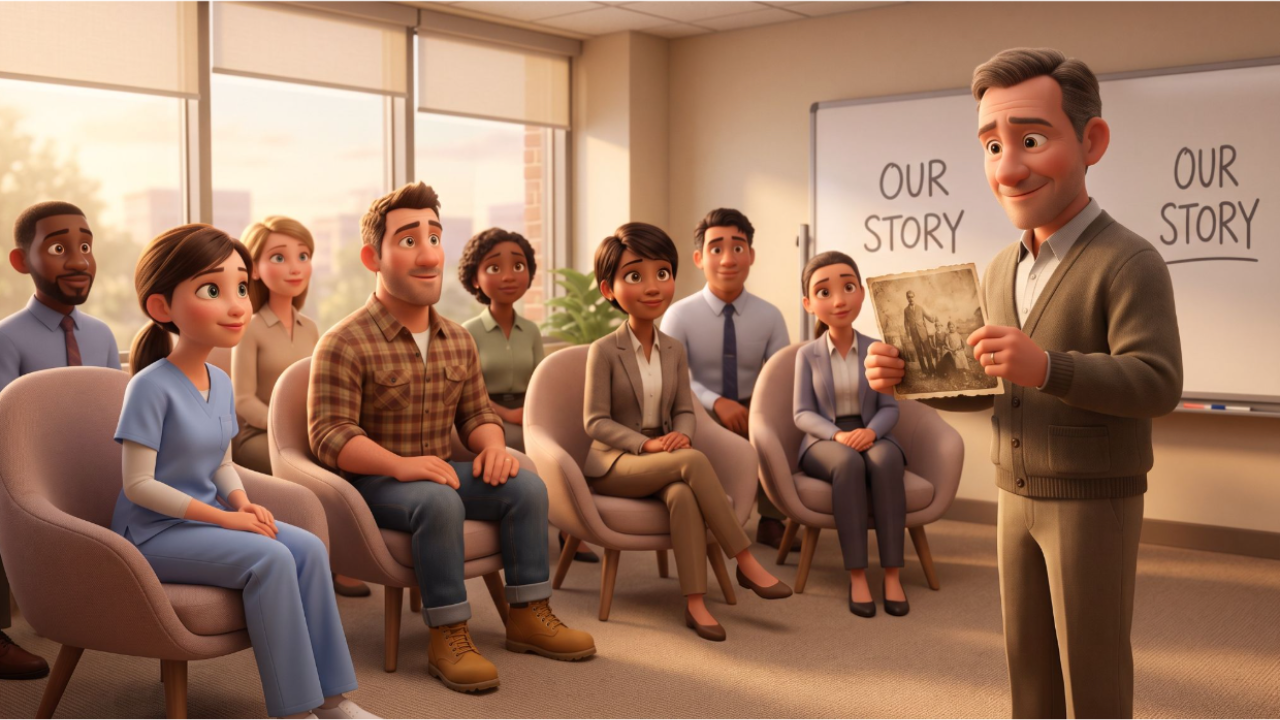
What Disney's "Traditions" Program Can Teach You About Training Employees Who Actually Care.
Right, then. Let's talk about new employee training.
I can already feel you tensing up. You're picturing a conference room with fluorescent lighting, a stack of HR forms thicker than a phone book (remember those?), and some poor soul from Human Resources droning on about the company's harassment policy while everyone's eyes glaze over like donuts at a Krispy Kreme.
Delightful stuff.
But what if I told you there's a company that has figured out how to make new employees weep with joy on their first day? A company where people don't just learn their job — they fall in love with their purpose? A company that takes everyone from the CEO to the person sweeping the pavement and puts them through the exact same orientation experience?
You've already guessed it's Disney. (The title rather gave it away.)
Disney's orientation programme is called "Traditions." And it's not just clever branding. It's a masterclass in how to transform a random collection of new hires into a tribe of true believers — before they've learned a single thing about their actual job.
Here's the thing most businesses get catastrophically wrong about training: they start with the what and the how. How to use the till. What to do when a customer complains. Where the fire exits are. (Important, admittedly. Fire is unpleasant.)
Disney starts with the why.
As Walt Disney himself once said: "You can design and create, and build the most wonderful place in the world. But it takes people to make the dream a reality."
So grab a coffee, settle in, and let me show you how to steal Disney's onboarding magic — without needing a castle, a mouse, or a budget that would make a finance director faint.
Key Takeaways From This Article:
- Culture before competence: Disney trains every new employee in company values, history, and philosophy before teaching them their specific job. The "why" comes before the "how."
- Everyone gets the same foundation: From executives to custodians, every Disney Cast Member goes through identical Traditions training. Shared values create shared standards.
- Heritage creates belonging: Disney tells Walt's story — including his failures — to help employees feel like custodians of a legacy, not just workers with a job.
- Give employees a decision-making framework: Disney's "Four Keys" (Safety, Courtesy, Show, Efficiency) provide a prioritised hierarchy for making choices when situations aren't in the manual.
- Language shapes behaviour: Calling employees "Cast Members" and customers "Guests" isn't wordplay — it fundamentally changes how people see their role.
- The "Everything Speaks" principle: Every detail communicates something to customers. Train employees to see through customer eyes.
- Immersion beats instruction: Having new employees experience your business as a customer creates empathy that no training manual can match.
- You don't need Disney's budget: The most powerful elements of Traditions cost almost nothing — a story, a philosophy, and someone who believes in it.
- First impressions stick: How you welcome a new employee shapes their entire tenure. Make it meaningful or watch them mentally check out within weeks.
- Alignment reduces the need for rules: Employees who understand your values can make good decisions without a 400-page policy manual.
The Day I Watched a Grown Man Cry About Trash Cans
During a visit to Walt Disney World in March of 2018, my wife and I were wandering through EPCOT's World Showcase when I spotted something that stopped me dead in my tracks.
A Cast Member — custodial role, broom in hand — was explaining to a small group of guests why the trash cans at Disney parks are positioned exactly 27 steps apart.
Twenty-seven steps.
Not 25. Not 30. Twenty-seven.
Apparently, Walt Disney himself once sat on a bench at an amusement park, eating a hot dog, and counted how many steps people would take before dropping their rubbish on the ground if there wasn't a bin nearby. The answer was about 30 steps. So Walt positioned Disney's trash cans at 27 steps — just inside the "I can't be bothered" threshold.
This Cast Member — this chap whose job title was essentially "person who empties bins" — was telling this story with the kind of passion and pride you'd expect from someone announcing they'd just won the lottery.
My wife looked at me. "He knows more about trash can placement than most CEOs know about their own company's founding."
She wasn't wrong.
Later, I got chatting with a different Cast Member — a young woman working at a quick-service restaurant in Magic Kingdom. I asked her what her first day was like.
Her eyes actually lit up.
"Traditions was amazing," she said. "We learned about Walt — not just the successful stuff, but his failures. Did you know he went bankrupt multiple times? And lost his first successful character to a business partner who screwed him over? By the time we got to the parks, I didn't just want a job. I wanted to protect what he built."
Protect what he built.
This wasn't corporate indoctrination. This was belonging.
I thought about the training I'd received at various jobs over the years. Mostly it had involved someone showing me where the toilet was and handing me a binder of policies written in language only a lawyer could love. At one job, I wasn't even introduced to the person sitting three feet away from me. I spent two weeks thinking his name was "Dave" before discovering it was actually "Steve." (Sorry, Steve.)
Disney doesn't do that. Disney tells you a story. They tell you their story. And then they invite you to become part of it.
So here's my question for you: When someone joins your business, do they leave their first day feeling like they've started a job — or like they've joined a mission?
How Disney's Traditions Program Actually Works (And Why Your "Orientation" Probably Doesn't)
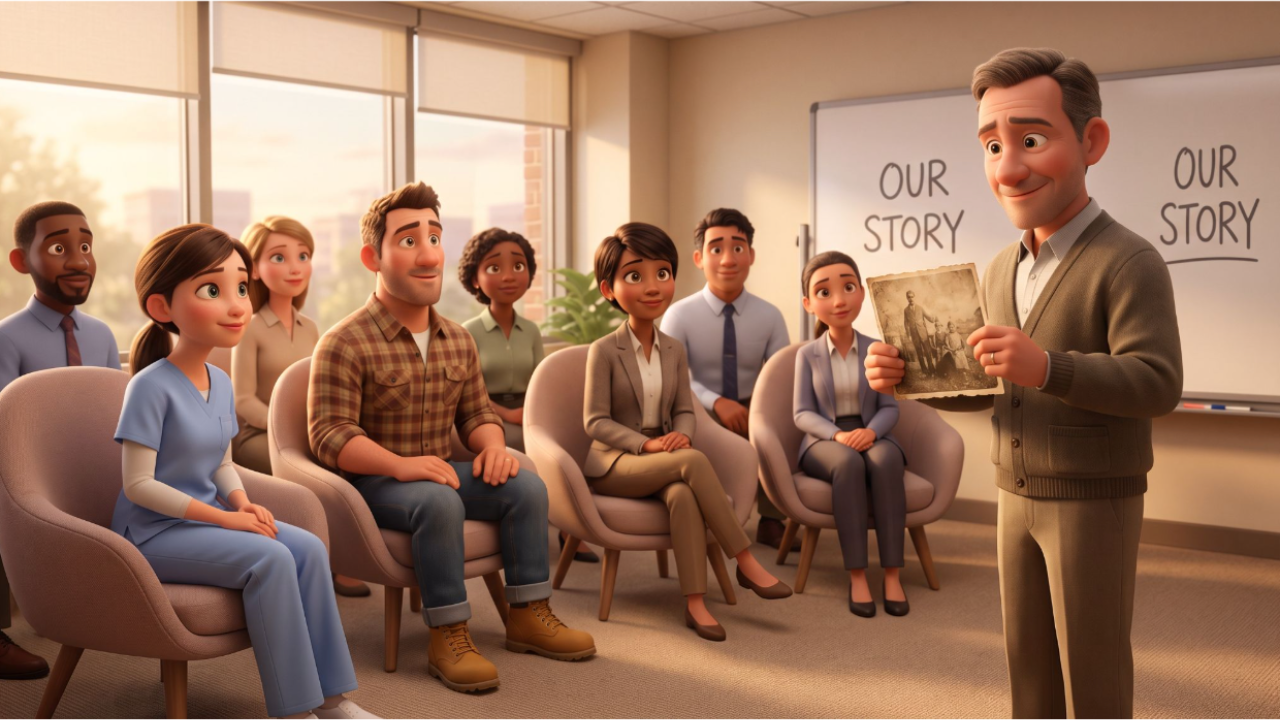
You're standing at the entrance to Walt Disney World's casting centre in Orlando. It's your first day. You're nervous. You've got your sensible shoes on and you're ready to learn how to operate a till or drive a boat or whatever your specific job requires.
Except that's not what's about to happen.
For the entire first day — sometimes longer — you won't learn a single thing about your actual role. You won't touch equipment. You won't memorise procedures. You won't even visit your work location.
Instead, you'll sit in a room with a diverse group of new hires — future executives sitting next to future custodians, future chefs next to future bus drivers — and you'll all learn the same thing:
Why Disney exists.
This is the genius of Traditions. It's not job training. It's identity formation.
The Disney Institute — which trains thousands of business leaders every year in Disney's methods — calls this "Guestology." It's their fancy word for understanding your customers so deeply that serving them becomes instinctive rather than procedural.
But before you can understand your guests, you have to understand yourself. And by "yourself," I mean your company's soul.
Traditions was created by a chap named Van France back in 1955, when Disneyland was about to open and Walt realised he had a problem. He'd hired thousands of people from dozens of different industries — amusement parks, hotels, restaurants, transportation — and they all had different standards, different languages, different assumptions about how to treat customers.
Walt didn't just want a park. He wanted a feeling. And feelings don't come from policy manuals.
So Van France created what would become one of the first corporate universities in America, and the Traditions programme became its foundation. Every single Disney employee — from the person selling popcorn to the person running the company — starts with the same experience.
Think about that for a moment. The same foundation. The same values. The same language.
It's like teaching everyone in your company to speak the same emotional language before teaching them to do their specific jobs.
Compare this to what most businesses do. New hire shows up. HR hands them a stack of forms. Someone shows them their desk. Maybe there's an awkward lunch with colleagues who clearly have better things to do. By 3pm, the new person is already feeling like an outsider impostor who wandered in off the street.
At Disney, by 3pm on day one, new Cast Members often report feeling like they've joined a family. (Some of them actually cry. In a good way. Shock! Horror! Tears of belonging in a corporate setting?)
Now, you might be thinking: "But Andrew, I run a plumbing business. I don't have Walt Disney's legacy or a hundred years of nostalgic films to lean on."
Fair point. But here's what you do have: Your story. Your reason for starting. Your failures and how you overcame them. Your values. Your vision for what you want your customers to experience.
That's your Traditions programme. You just haven't written it yet.
Quick Quiz Time!
What should be the PRIMARY focus of a new employee's first day?
A) Teaching them how to use the photocopier and where the good biscuits are hidden
B) Having them read the employee handbook cover to cover while you get on with "real work"
C) Immersing them in your company's story, values, and purpose before any job-specific training
If you chose A, I admire your commitment to office snacks, but your priorities are backwards. If you chose B... well, there's always a career in bureaucratic administration, I suppose. The answer, as demonstrated by the most visited theme park destination on Earth, is C.
The 4 Keys: Why Your Employees Need a Decision-Making Framework (Not a Thicker Manual)
There I was, watching helplessly as my ice cream cone began its slow, inevitable surrender to Florida physics.
It was August. The temperature was approximately "surface of the sun." My wife had wisely chosen a frozen lemonade, but I — in my infinite wisdom — had insisted on a Mickey-shaped ice cream bar because I am, at heart, a large child.
The ice cream was melting faster than my dignity.
A Cast Member noticed my predicament. Without my asking, without checking with a supervisor, without consulting any manual, she appeared with napkins and a plastic container. "Would you like me to get you a fresh one? These don't do well in the heat."
Free replacement. No questions asked. Problem solved before I'd even fully registered it as a problem.
Now, here's what's interesting. Disney doesn't have a policy that says: "If a guest's ice cream melts because it's hot and they look pathetic, provide replacement at no charge." They can't possibly have policies for every scenario — there are infinite scenarios in a park with 58 million annual visitors.
What they have instead is something far more powerful: a decision-making framework.
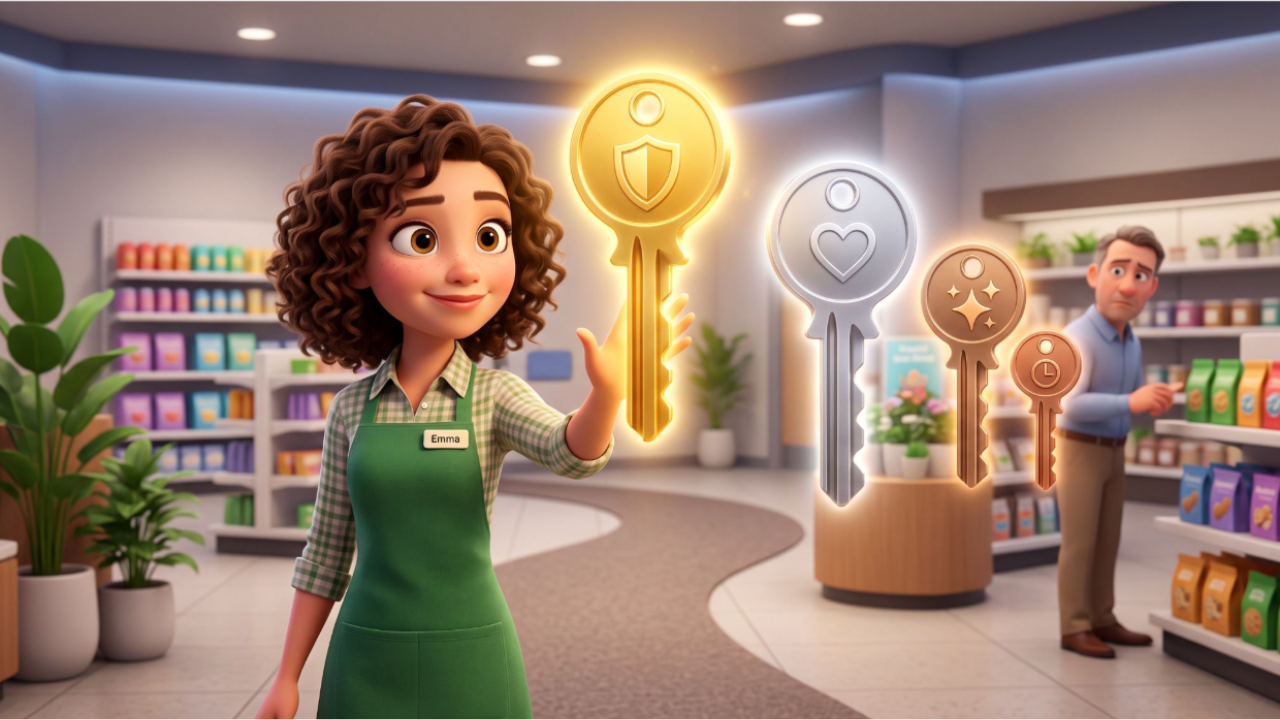
Disney calls it the Four Keys, and it's taught to every Cast Member during Traditions:
1. Safety
2. Courtesy
3. Show
4. Efficiency
And here's the crucial bit: they're listed in priority order.
When priorities conflict — and they always do — Safety trumps everything. Courtesy trumps Show and Efficiency. Show trumps Efficiency.
This means a Cast Member can make decisions on the spot without checking with management. If something is unsafe, stop it — even if it's discourteous to interrupt a guest. If being courteous to a guest means breaking "the show" (staying in character, maintaining the illusion), courtesy wins. If maintaining the show means being slightly less efficient, show wins.
The ice cream Cast Member was operating on Key #2: Courtesy. Being courteous to a melting, slightly pathetic British tourist was more important than efficiency (the speed of her other tasks) or even "the show" (maintaining the pristine, no-problems-here Disney illusion).
Lee Cockerell, who ran Walt Disney World operations for over a decade, puts it brilliantly in his book Creating Magic: "The front line is the bottom line." He means that the employees dealing directly with customers make or break your business — and they need tools to make good decisions instantly, not permission slips.
Most businesses do the opposite. They create massive policy manuals covering every imaginable scenario, then wonder why employees stand around looking helpless when anything slightly unusual happens. "It's not in the handbook" becomes the excuse for inaction.
The Four Keys framework means a Cast Member can handle situations that don't exist in any handbook — because they understand the principles, not just the procedures.
Simon Sinek talks about this in his work on leadership: "People don't buy what you do; they buy why you do it." The same applies to employees. They won't follow a list of rules, but they'll follow a set of values — if you give them one.
What's your Four Keys? What's the prioritised hierarchy of values that every person in your business can use to make decisions when you're not standing over their shoulder?
Don't have one? That's your problem right there.
Quick Quiz Time!
An employee faces a situation not covered by your company policies. Ideally, they should:
A) Do nothing and wait for a manager, even if it takes hours and the customer wanders off in disgust
B) Panic, sweat visibly, and loudly announce "I DON'T KNOW WHAT TO DO" to everyone within earshot
C) Use your company's values framework to make a decision that prioritises the right things
If you chose A or B, your employees are not equipped. They're terrified. And terrified employees do not create delighted customers. C is the answer — but only if you've actually given them a framework to work with.
Language Shapes Behaviour: Why Disney Doesn't Have "Employees" (And Neither Should You)
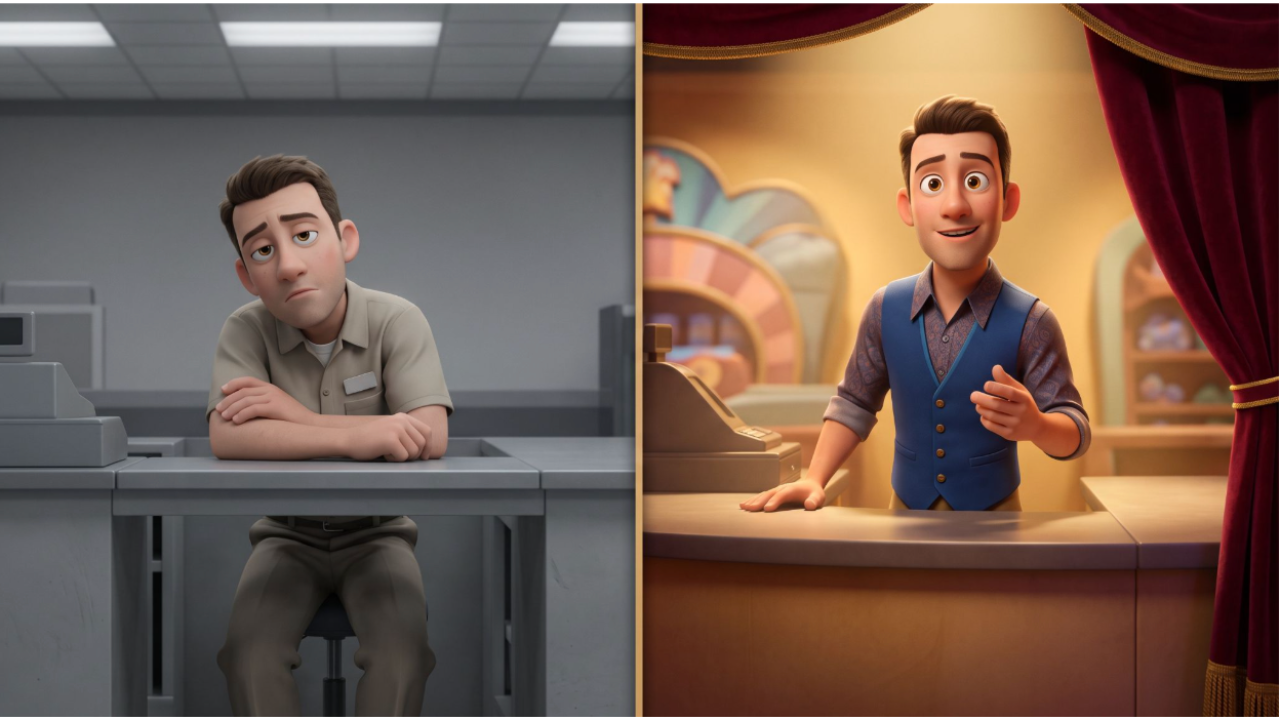
So there you are, running a perfectly respectable business. You hire "employees" who serve "customers." Your employees wear "uniforms" and work during "shifts" in "front-of-house" or "back-office" areas. When they finish work, they "clock out."
Perfectly normal. Standard business terminology.
Also: utterly boring and completely uninspiring.
Disney looked at this linguistic landscape and said: "No, thank you."
At Disney, employees are "Cast Members." Customers are "Guests." Uniforms are "Costumes." Being at work is being "Onstage." Behind-the-scenes areas are "Backstage."
This isn't corporate wordplay. It's psychological engineering.
When you call someone a "Cast Member," you're telling them they're a performer in a show. They have a role. They're part of something creative and deliberate. Their job isn't just to complete tasks — it's to create an experience.
When you call visitors "Guests," you change how your team thinks about them. Guests aren't transactions. Guests are people you've invited into your home. You'd never leave a guest standing awkwardly in your hallway, unsure where to go. You'd never give a guest the runaround or blame them for your own confusion.
The Maya Angelou quote comes to mind here: "People will forget what you said, people will forget what you did, but people will never forget how you made them feel."
Language shapes feeling. And Disney's language is designed to make Cast Members feel like performers and Guests feel like they're welcome.
During Traditions, Cast Members learn Disney's vocabulary before they learn anything about their specific role. They're being taught to see differently — to view every interaction as a scene in a show, every detail as part of a performance.
This is why the "Everything Speaks" philosophy is so central to Disney's approach. Marty Sklar, the legendary Imagineer who worked directly with Walt, created "Mickey's Ten Commandments" for designing Disney experiences. One of the core principles: everything the guest sees, hears, smells, and touches communicates something. Nothing is neutral.
That Cast Member emptying trash cans? He's not doing sanitation. He's maintaining the show. The queue line for a ride isn't just a waiting area — it's an opportunity to build anticipation and tell a story.
Now, you might be thinking: "But Andrew, if I start calling my plumbers 'Cast Members,' they'll look at me like I've lost the plot."
Fair. You don't have to use Disney's exact terminology. But consider what language would work for your business.
What if your employees were "team members" or "experts" or "partners"? What if your customers were "clients" or "members" or "guests"? What if your workspace wasn't an "office" but a "studio" or a "lab"?
I worked with a dental practice in Manchester last year that started referring to their waiting room as "the welcome lounge" and their examination rooms as "care suites." The team initially thought it was silly. Within three months, patient satisfaction scores had noticeably improved — not because the rooms were different, but because the mindset was different. Staff started treating those spaces as hospitality environments, not medical facilities.
Words matter. The words you use shape the behaviour of your team. Choose them deliberately.
Quick Quiz Time!
The language you use for employees and customers:
A) Doesn't matter at all — people know what you mean regardless of the words
B) Should be as boring and generic as possible to avoid seeming "weird" or "corporate"
C) Shapes how your team sees their role and how they treat the people they serve
If you chose A, I invite you to call your spouse "roommate" for a week and report back on how that goes. If you chose B, you're optimising for mediocrity. C is correct. Language is culture, and culture is everything.
The Restaurant Owner Who Made His Dishwashers Cry (In a Good Way)
One of my coaching clients — a restaurant owner in Leeds — came to me frustrated.
"I can't keep staff," he said. "They show up, work for a few months, and leave. Training is constant. Morale is low. Nobody seems to care about the business like I do."
I asked him to walk me through what happened when someone new started.
He shrugged. "The usual. Fill in some forms. Shadow someone for a shift. Learn the menu. Start working."
"Do you tell them why you started the restaurant?"
He looked at me like I'd asked if he tells them about his dreams. "Why would they care about that?"
As it turned out: they would care very much.
Here's the story he wasn't telling. His grandmother had escaped Poland during World War II with nothing but a recipe book. When he was a boy, she'd cook for him from that book — elaborate dishes that told stories of the life she'd left behind. When she died, he inherited the book. The restaurant was his way of keeping her memory alive. Every dish on the menu traced back, somehow, to those recipes and those stories.
Beautiful stuff. Absolutely the kind of thing employees should know on day one.
But he'd never told any of them.
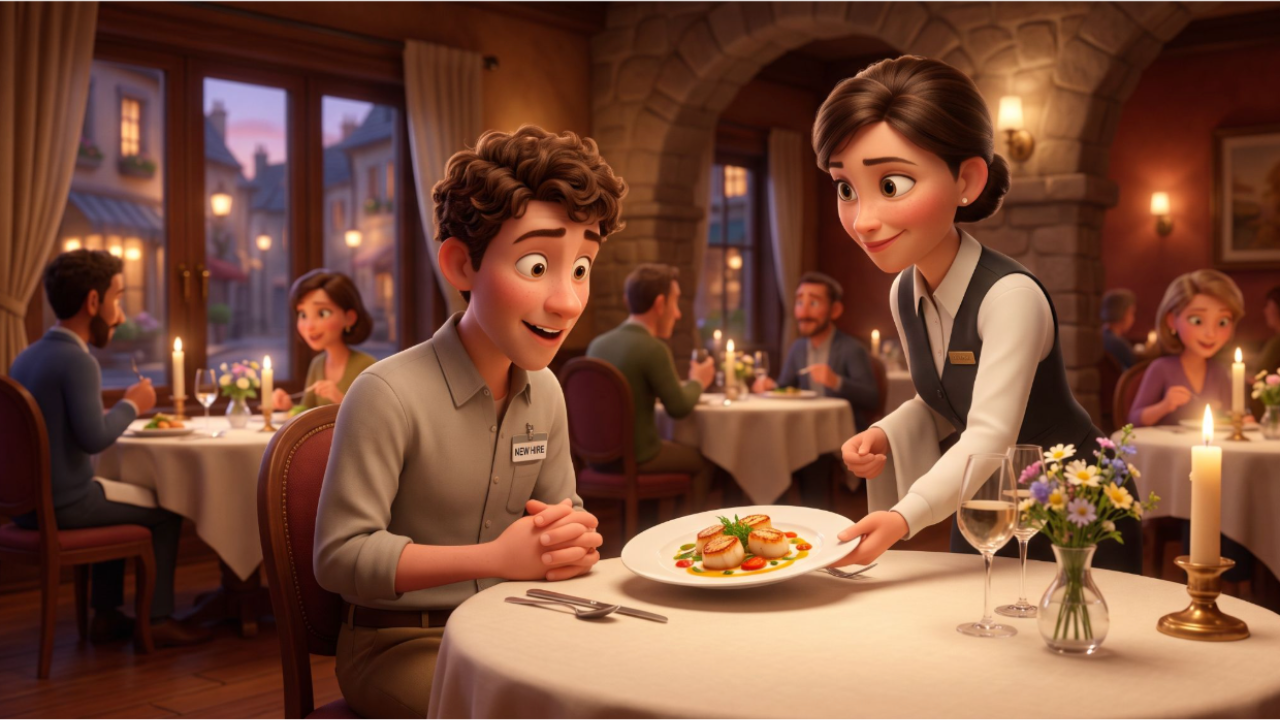
We created what I call a "Traditions Day" for his restaurant. Every new hire — dishwashers, servers, chefs, everyone — now starts with a two-hour session before their first shift. They sit with the owner (or his manager, when he's not available), they hear the story of his grandmother, they see the original recipe book, and they understand why this restaurant exists.
Then they eat a meal. As guests. In the dining room. Served by the current staff.
They experience what they're going to create before being asked to create it.
The results were remarkable.
Within six months, staff turnover dropped by nearly half. More importantly, the quality of service changed. Servers started telling guests the stories behind dishes — without being prompted. The dishwashers started treating plates with more care, because they understood those plates carried food connected to a grandmother's love letter to her lost homeland.
One dishwasher — a young lad who'd only taken the job because he needed cash — told the owner: "I've never felt like I mattered at a job before. This feels different."
According to Gallup research, employees who strongly agree that their company's mission makes them feel their job is important are 3.5 times more likely to be engaged at work. That's not fluffy feelings — that's measurable business impact.
That restaurant owner wasn't competing with other restaurants on wages or perks. He was competing on meaning. And meaning, as it turns out, is severely underpriced in the job market.
Lessons from this story:
- Your story is your competitive advantage. Every business has one. If you're not telling it to new employees, you're wasting your best recruitment tool.
- Immersion before action. Having new employees experience your business as a customer fundamentally changes their perspective.
- Meaning reduces turnover. People don't leave meaningful work for slightly more money elsewhere. They leave meaningless work at the first opportunity.
- It doesn't have to be fancy. Two hours and a meal. No budget required. Just vulnerability and honesty from the founder.
How This Works Across Every Industry (Yes, Even Yours)
Right, let's head off the objection before you voice it:
"This is all lovely for Disney, Andrew. And sure, maybe for restaurants with charming grandmother stories. But my business is different."
Is it, though?
Let's tour through some industries and see how the Traditions approach translates:
Retail: Before a new staff member learns the till, they should understand why this shop exists. What's different about the products you sell or the way you sell them? Have them spend their first hour shopping — as a customer — with a small gift card. Let them experience the store. Then debrief: what worked? What could be better?
Professional Services (Accountants, Lawyers, Consultants): New hires often join firms and immediately drown in technical work without understanding the firm's philosophy. Create a half-day orientation covering: why the founders started the firm, what kind of client relationships you want, and the one thing you never want a client to feel when working with you. Share war stories of great client experiences — and disasters that taught you something.
Trades (Plumbers, Electricians, Builders): Before a new apprentice touches a tool, they should understand your company's approach to customer homes. You're not just fixing pipes — you're entering someone's personal space. What are the expectations about cleanliness, communication, and respect? Ritz-Carlton — the hotel chain famous for exceptional service — requires every employee to learn their "Gold Standards" before any technical training. There's no reason a plumbing company can't have their own version.
Healthcare: Medical practices often onboard new staff with compliance training, forms, and system logins. What if the first day instead started with: "Here's why this practice was founded. Here's the one thing we want every patient to feel. Here's the story of the patient who reminded us why we do this." Cleveland Clinic famously requires all staff — including surgeons — to go through patient experience training. Results have been transformative.
Online Businesses: Remote or e-commerce companies often skip onboarding entirely because "there's no physical location." Huge mistake. Your Traditions can be virtual. Record a video telling your company's story. Send new hires a welcome package with products and a personal note. Schedule a video call dedicated entirely to culture, values, and "how we do things here" — before any training on tools or processes.
Hospitality: If you run a hotel, B&B, or venue, steal directly from Disney and Ritz-Carlton. The Ritz-Carlton's famous "Gold Standards" orientation includes their credo: "We are Ladies and Gentlemen serving Ladies and Gentlemen." Simple. Memorable. Identity-forming.
As Walt Disney once said: "It's kind of fun to do the impossible."
Creating a Traditions-style onboarding programme for your business isn't impossible. It's just unusual. And unusual, in a world of forgettable corporate mediocrity, is exactly what you need.
Quick Quiz Time!
The Traditions approach to onboarding applies to:
A) Only massive entertainment companies with theme parks and merchandise empires
B) Only businesses with emotional backstories involving wartime grandmothers
C) Any business that wants employees who care about more than just their paycheque
If you chose A, you've rather missed the point. If you chose B, I admire your specificity but reject your limitations. The answer is C. Every business benefits when employees understand why they're there.
Why This Pays Off Long After the First Day
There's a famous statistic from Bain & Company — the one every customer service consultant loves to quote — showing that holding onto just 5% more of your customers can boost profits by anywhere from 25% to 95%.
That's not a typo. 25% to 95%. Just by keeping more of the people you already have.
Now here's the thing nobody talks about: the same principle applies to employees.
Research from the Society for Human Resource Management (SHRM) shows that replacing an employee costs roughly 50-60% of their annual salary — and that's for frontline workers. For skilled roles, it can exceed 200%.
Every time someone leaves and you have to recruit, hire, and train their replacement, you're bleeding money. Not to mention the chaos, the lost knowledge, the impact on team morale, and the gap in service while the new person gets up to speed.
Disney understands this. They operate in theme parks and hospitality — industries notorious for high turnover. And yet their employee retention rates consistently outperform industry averages. 🎩✨
The secret isn't higher wages (though Disney's compensation has improved significantly in recent years). The secret is that people don't want to leave something they feel part of.
The Traditions programme creates belonging from day one. And belonging is the single greatest predictor of employee retention.
But the benefits go beyond retention:
Consistency at scale: With 75,000+ Cast Members at Walt Disney World alone, Disney can't supervise every interaction. But they don't need to — because everyone shares the same values and decision-making framework. The experience at Space Mountain is consistent with the experience at Cinderella's Royal Table is consistent with the experience at the Contemporary Resort gift shop. That consistency comes from shared training, not micromanagement.
Faster recovery from mistakes: Here's a counterintuitive finding from Harvard Business Review research: customers who experience a service failure that's handled well often become more loyal than customers who never experienced a failure at all. This is called the "service recovery paradox." Disney Cast Members, because they're trained in values rather than rigid scripts, excel at turning failures into wins. They have the authority and the framework to make it right on the spot.
Employee advocacy: People who feel part of something meaningful talk about it. They recruit their friends. They defend the company when others criticize. They wear the company t-shirt on weekends (metaphorically, sometimes literally). This free marketing and referral pipeline is worth far more than any recruitment budget.
Innovation from the front line: When employees understand the company's values and purpose, they can contribute ideas that actually align with the mission. Disney has implemented countless operational improvements that came from Cast Member suggestions — because Cast Members understood what Disney was trying to achieve and could spot opportunities leadership might miss.
Disney magic isn't about having deep pockets. It's about having deep caring — and transmitting that caring to every person who joins the team.
Quick Quiz Time!
Investing in meaningful onboarding primarily pays off through:
A) Impressive paperwork that auditors admire
B) Something vague about "culture" that you can't really measure
C) Reduced turnover, consistent service, faster recovery from problems, and employee advocacy
If you chose A, you may have a future in compliance. If you chose B, you're almost there but missing the specifics. The answer is C — real, measurable business outcomes that affect your bottom line. This isn't soft stuff. It's strategy.
The Reality Check: Why This Is Harder Than It Sounds (And How to Do It Anyway)
I'm not here to rain on your magical parade, but let's be honest: creating a Traditions-style programme for your business is not as simple as writing a company story and reading it aloud.
Here are the real challenges you'll face — and how to navigate them:
Challenge 1: "We need people productive immediately."
This is the most common objection. "I can't afford to spend a full day on culture when there's real work to do."
Here's the reality: spending a day on culture saves you weeks later. Employees who don't understand your values make mistakes you have to correct. They clash with colleagues. They frustrate customers. They leave — and you start the cycle again.
A day of Traditions training is an investment, not a delay. Even half a day makes a dramatic difference.
Challenge 2: "I don't have an inspiring company story."
Yes, you do. You just haven't looked for it.
Why did you start this business? What problem were you trying to solve? What's the best customer experience you've ever created? What's a failure that taught you something important? What do you want people to feel when they interact with your company?
Your story doesn't need a grandmother fleeing Poland or a visionary named Walt. It just needs to be true and told with genuine feeling.
Challenge 3: "My current team will think this is ridiculous."
Maybe. At first. But here's what I've observed: when the founder (or owner, or leader) genuinely believes in the programme and participates personally, skepticism fades quickly.
Don't delegate this to HR. At least for the cultural portion, the founder or senior leader should be in the room, telling the story, answering questions. That presence signals importance.
Challenge 4: "Maintaining consistency is exhausting."
Disney isn't perfect at this either. Over the years, they've struggled to maintain Traditions quality as the company has grown. During periods of cost-cutting, training has sometimes been rushed or diluted — and service suffers.
The solution is to treat your onboarding like a core business process, not a one-time project. Review it regularly. Get feedback from recent hires. Update it when your business evolves.
Challenge 5: "What if someone doesn't buy in?"
Then you've learned something valuable on day one instead of day ninety. Better to discover a cultural mismatch during a Traditions session — when fixing it is easy — than after months of damage to your team and customers.
Some companies, like Zappos, even offer new hires money to leave during onboarding if they don't feel the fit. It sounds crazy, but it ensures that everyone who stays is genuinely aligned.
Here's the Mary Poppins approach: a spoonful of sugar helps the medicine go down. Building a real onboarding programme takes effort, but the effort is frontloaded. Once you've created it, maintaining it is far easier than constantly recruiting, retraining, and recovering from turnover.
Your five-point strategy:
- Start small: You don't need a full-day programme to begin. Start with a two-hour session and expand from there.
- Invest in your people first: The person delivering Traditions needs to genuinely believe in it. Train them. Empower them. Let them evolve the programme.
- Document your story: Write it down. Record it. Make it shareable. So even when you're not available, the story can be told consistently.
- Build in the experience: Include some element of experiencing your business as a customer. It's the fastest shortcut to empathy.
- Measure and iterate: Ask new hires what worked and what didn't. Keep improving. This isn't a one-and-done project.
Quick Quiz Time!
The biggest risk of implementing a Traditions-style programme is:
A) Your employees might accidentally feel valued and start caring about their work
B) You'll discover culture mismatches early, which is terrifying because it means making decisions
C) There is no significant risk — only the risk of continuing to onboard people poorly
If you chose A or B, I appreciate your sense of humour about organizational dysfunction. The honest answer is C. The risk of doing something is minimal. The risk of doing nothing is significant — and you're already paying that cost in turnover and mediocre performance.
Frequently Asked Questions
Q: How long does Disney's Traditions programme actually last?
A: The core Traditions experience is typically a full day, though it can vary by role and location. Some positions include additional days of culture training before role-specific training begins. The key isn't the length — it's the content. Disney prioritises values and heritage before skills. For your business, even two hours of genuine culture immersion makes a difference. You don't need Disney's timeline. You need Disney's philosophy.
Q: We're a small business with only a few employees. Doesn't this only work at scale?
A: It works even better at small scale! Large companies like Disney created formal programmes because they had to — they couldn't personally onboard 75,000 people. As a small business, you have a massive advantage: you (the founder) can personally deliver the story. That's more powerful than any produced video or scripted presentation. A genuine conversation over coffee beats a conference room slideshow every time. The smaller you are, the more personal — and more impactful — your Traditions can be.
Q: What if my industry is "boring"? How do I make our story compelling?
A: No industry is inherently boring — only boringly told. An accounting firm can tell the story of the client whose business they saved by spotting a cash flow crisis early. A cleaning company can talk about the peace of mind they create for busy families. An IT support company can recount the moment they kept a hospital's systems running during a critical situation. Your story isn't about your industry — it's about the difference you make in someone's life. Find that, and you've found your narrative. 🪄
Q: How do I get my existing team to buy into this approach?
A: Start by including them. Before rolling out Traditions for new hires, run a version for your current team. Let them experience it. Ask for their input. Some of the best Traditions elements will come from your existing employees' suggestions. When they help build it, they'll believe in it. Also, lead by example — if the owner or manager treats this as important, the team will follow. If you delegate it entirely and never show up, they'll correctly interpret that as "this doesn't really matter."
Q: Should our Traditions programme change over time?
A: Absolutely. Disney's Traditions has evolved significantly since 1955. Your business story grows and changes. New challenges arise. New values emerge. Review your programme at least annually. Ask recent hires what worked and what felt disconnected. Update your examples. Refresh your delivery. A stale Traditions programme is almost worse than none — it signals that you created this once and forgot about it. Keep it alive.
Q: What's the single most important thing to get right?
A: Authenticity. New hires can smell insincerity from a mile away. If you don't genuinely believe in the values you're teaching, don't bother — they'll know. Disney Traditions works because the company genuinely tries to live those values (imperfectly, but genuinely). If your Traditions programme is just window dressing — fancy words that don't match reality — you'll create cynics, not believers. Start with what's true. Then expand from there.
Putting It All Together: Your Magical First Day
We've almost come to the end of our magical journey, and I hope you're already thinking about what your business's Traditions programme might look like.
Here's the uncomfortable truth that most business owners avoid: your new employee's first day predicts much of their entire tenure. Get it wrong, and you're fighting an uphill battle for months. Get it right, and you've created an ally for life.
Disney figured this out decades ago. They understood that employees who feel like cogs never perform like craftspeople. They understood that values, consistently shared, create consistency at scale. They understood that the question isn't "What should this person do?" but "Who should this person become?"
Your Traditions programme doesn't need a castle. It doesn't need elaborate props or a hundred-year heritage. It needs:
A story — why does your business exist, and what do you believe?
A framework — what values guide decisions when the handbook doesn't have an answer?
A language — how do you talk about your team and your customers in ways that shape behaviour?
An experience — how can new hires feel what you're asking them to create?
And a leader — someone who genuinely believes this matters and shows up to prove it.
The challenge I'll leave you with is simple but profound: How can you make your new employee's first day not just informative, but transformative?
Disney magic isn't about having a castle or a talking mouse. It's about creating moments of belonging in what could otherwise be a forgettable orientation session. It's about treating every new hire as a potential believer, not just a position to fill.
As Walt Disney said: "Do what you do so well that they will want to see it again and bring their friends."
That's true of your customers. It's also true of your employees. Do your onboarding so well that they'll tell everyone they know about how remarkable it felt to join your team.
Now go build your Traditions. Your future Cast Members are waiting.
About the Author
Andrew Lock is a renowned business coach, consultant, and author with over three decades of experience helping entrepreneurs and business leaders achieve extraordinary success. As the founder of 'Help My Business!', Andrew has empowered thousands of business owners worldwide through his unique coaching, mastermind groups, 10 best-selling books, and engaging keynote presentations.
Known as "The Yoda of marketing" (without the green pointy ears), Andrew brings a refreshing blend of humor and practical insights to his work. His expertise spans customer experience, pricing, sales, marketing, employee management, and operations, with a special focus on applying Walt Disney's business principles to modern enterprises.
Andrew is the author of ten books, including the popular "Walt's Way" and "Big Lessons from Big Brands." His work has been featured in major media outlets, and he's shared stages with business luminaries like Sir Richard Branson, Donald Trump, Daymond John, Dan Kennedy, The Dalai Lama, and Michael Gerber.
When he's not helping businesses transform their customer service, Andrew enjoys traveling with his family and indulging in his passion for all things Disney and chocolate (though not necessarily in that order).
For more insights and resources, visit www.AndrewLock.com.
Sources & Further Reading
Want to go deeper? Here are a few of the books and resources I referenced (or shamelessly stole ideas from) while writing this:
- Be Our Guest — Disney Institute (the closest thing to a Disney customer service bible, with detailed coverage of the Four Keys and Guestology)
- Creating Magic — Lee Cockerell (the chap who ran Walt Disney World operations for over a decade — essential reading on Disney's leadership and employee development)
- The Ride of a Lifetime — Bob Iger (fascinating read on Disney leadership and culture as competitive advantage)
- Walt's Way — Andrew Lock (yes, my book — but it genuinely covers onboarding and employee culture in depth)
- The Disney Institute: disneyinstitute.com (Disney's official leadership and culture training programmes)
