The Magic of Making Every Customer Feel Like Your Only Customer: Disney's Secret to Personalisation at Scale
Let me tell you about the time Disney made my wife cry. And before you start worrying, these were the good kind of tears — the kind that come when a complete stranger treats you like the most important person on the planet.
It was October 2019, and we were celebrating our anniversary at the Magic Kingdom. My wife was wearing one of those "Happily Ever After" buttons they give to newlyweds and anniversary couples — a small, circular piece of plastic that costs Disney approximately three pence to produce.
What happened next cost Disney nothing. And it's worth millions.
Every cast member we encountered — from the chap selling popcorn on Main Street to the woman operating Space Mountain — wished us a happy anniversary. Not in a robotic, scripted way, but as if they genuinely meant it. One cast member at Cinderella's Royal Table asked how many years we'd been married, then said, "Well, you've clearly found the right person. Anyone who can put up with each other in this heat deserves a medal."
My wife laughed. Then she cried. Then she spent an absolutely irresponsible amount of money in the gift shop because — and I quote — "We're celebrating, Andrew. Don't be such a Scrooge."
Here's the thing that keeps me awake at night (in a good way, mostly): Walt Disney World welcomes roughly 58 million visitors every year. Fifty-eight million. That's nearly the entire population of the United Kingdom, shuffling through turnstiles, queuing for rides, and sweating through their clothes in the Florida humidity.
And somehow, Disney makes each of them feel like they matter.
Not through some wizardry. Not through a magical algorithm. Through a system so elegant and simple that any business — yes, even yours — can steal it.
As Walt Disney himself once said, "You can design and create, and build the most wonderful place in the world. But it takes people to make the dream a reality."
Right then. Let's figure out how to make your customers feel like they're the only customer you've got.
Key Takeaways From This Article:
- Personalisation at scale isn't about custom-building experiences for each customer — it's about creating systems that make personal recognition automatic and consistent.
- Disney's celebration buttons are genius because customers self-identify what they want to be celebrated for, making the cast member's job simple: just respond to what's in front of you.
- The Maya Angelou principle is the foundation: People won't remember what you said or did, but they'll never forget how you made them feel.
- Small gestures outperform grand gestures when they're consistent. A birthday card every year beats a one-time "wow" experience.
- Empowering your team to create "magical moments" without manager approval is what separates Disney from bureaucratic businesses.
- Personalisation pays: Research shows customers with the best experiences spend 140% more than those with the worst.
- You don't need Disney's budget — you need Disney's mindset. A handwritten note costs less than a stamp and creates more loyalty than a 10% discount.
- Technology enables personalisation but doesn't create it — the magic happens in the human moment, not the database.
- The "Cheers" effect works everywhere: People want to go where everybody knows their name. Your business can be that place.
- Personalisation is a system, not a personality trait — you can train for it, build processes around it, and make it happen consistently even when you're having a bad day.
- Disney's Quality Standards prioritise Courtesy over Efficiency — making someone feel special matters more than moving them through quickly.
- The goal isn't just satisfaction, it's stories — personalised moments become the tales customers tell others, generating word-of-mouth you can't buy.
The Button That Changed Everything: A Very Personal Story
I've visited Disney parks more than 150 times. I've eaten at restaurants so exclusive you need to book them before your flight is even confirmed. I've ridden Space Mountain so many times I could navigate it blindfolded (not recommended, by the way — I asked).
But the moment I truly understood Disney's approach to personalisation wasn't on a ride or in a restaurant. It was in a queue. For ice cream.
It was summer 2017, and I was wearing a "1st Visit" button. Not because it was my first visit — obviously — but because my wife had bet me that cast members would still treat me like a first-timer, and I wanted to see if she was right. (She usually is. Don't tell her I said that.)
The teenager scooping my mint chocolate chip looked at my button and said, "First visit? Oh, you're going to LOVE it here. What's been your favourite thing so far?"
Now, I could have confessed. I could have said, "Actually, mate, I've been here 147 times. I'm conducting a social experiment."
But I didn't. Because the look on her face was so genuinely excited — so authentically delighted to be part of someone's "first" Disney experience — that I couldn't bring myself to burst her bubble.
"The Haunted Mansion," I said. "It's brilliant."
"That's one of my favourites too! Make sure you go at night — it's even spookier!"
She wasn't reading from a script. She wasn't checking a box on a customer service form. She was, for those thirty seconds, genuinely invested in making my experience magical.
And here's what struck me: she had probably had this exact conversation fifty times that day. Maybe a hundred. And yet it felt — completely, utterly, unexpectedly — personal.
My wife, watching from a bench nearby with a smug expression, simply said: "Told you."
She was right. (Still don't tell her.)
The Disney Institute — which trains thousands of executives every year — calls this "Guestology."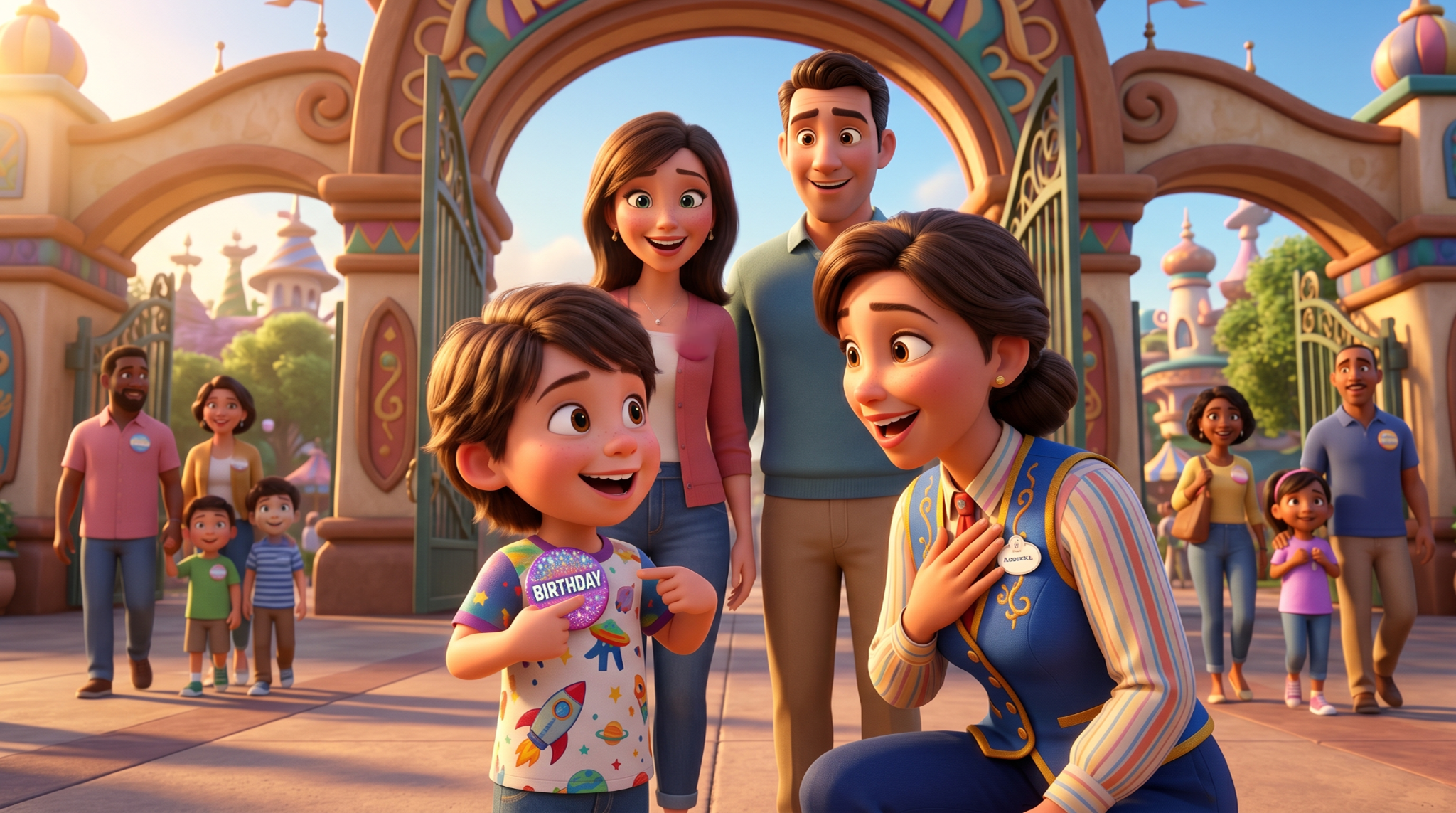
It's their fancy word for studying how guests behave, what they need, and most importantly, how they want to feel. But here's what makes it work: the system is designed so that any cast member can deliver a personalised moment, even if they've never met you before and will never see you again.
The button does the heavy lifting. The guest self-identifies. The cast member simply responds to what's in front of them.
It's not magic. It's better than magic. It's a system.
So let me ask you this: What's your version of the button? What signal are your customers giving you — consciously or unconsciously — that tells you how they want to be treated?
The Disney Principle in Action: How a Three-Cent Button Creates Priceless Loyalty
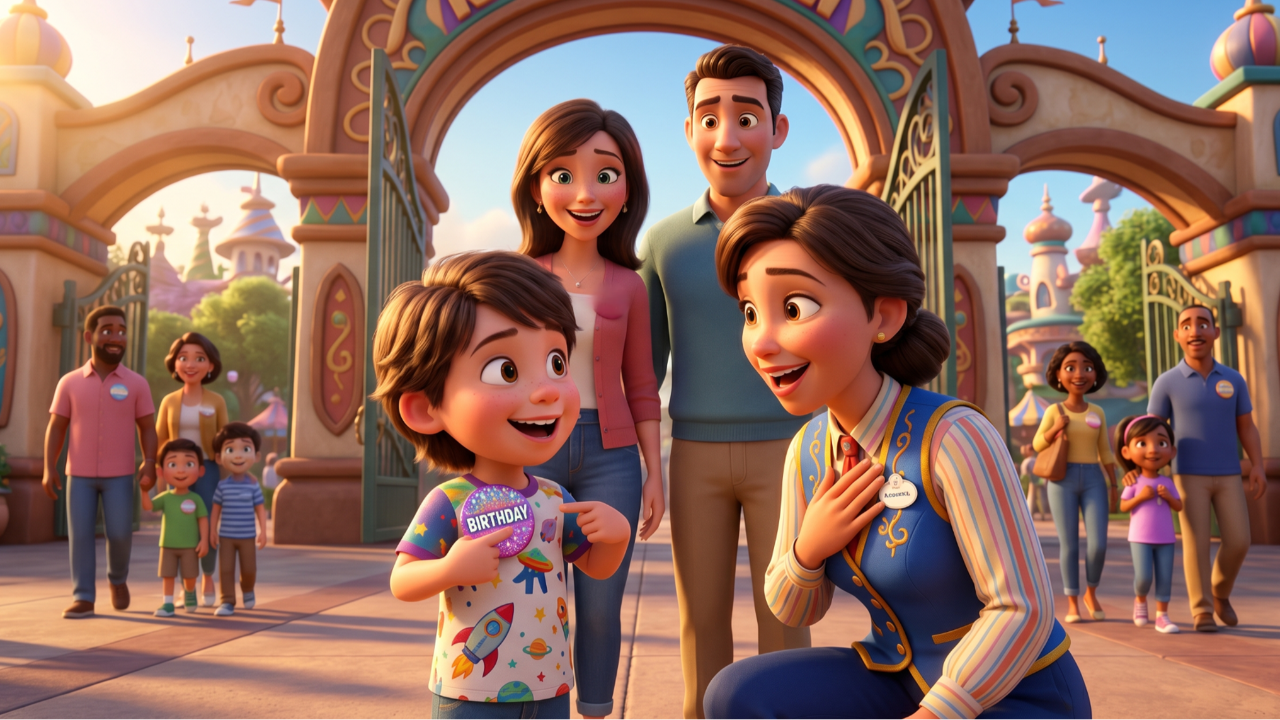
You're standing at Guest Relations in the Magic Kingdom, and you mention — almost as an afterthought — that it's your daughter's birthday.
The cast member behind the counter doesn't just say "Happy birthday." She reaches under the desk, pulls out a button, and writes your daughter's name on it with a flourish. "Wear this all day," she says, conspiratorially. "You're going to have a LOT of people wishing you happy birthday."
What happens next is extraordinary.
For the rest of the day, every cast member your daughter encounters — the ride operators, the merchandise sellers, the characters, the food service workers, the street sweepers — wishes her happy birthday. By name. With a smile.
By 3 PM, your daughter is convinced that Disney knew she was coming.
 That somehow, Mickey Mouse personally alerted everyone in the park that TODAY IS HER DAY.
The reality is far less magical and far more brilliant: the button system works because it outsources identification to the guest. Disney doesn't need a database telling them who's celebrating what. The guests wear their celebrations on their chests.
It's the business equivalent of someone walking into your shop wearing a T-shirt that says "PLEASE ASK ME ABOUT MY BIRTHDAY." And then your staff actually doing it.
Lee Cockerell, who ran Walt Disney World operations for a decade, puts it brilliantly in his book Creating Magic: "Everyone wants to feel special. That's not a sometimes thing. That's an every-single-day thing."
Think about your customers like Dory from Finding Nemo — not because they're forgetful (though some of them are), but because they're swimming through a sea of businesses that all look the same. Your competitors offer similar products at similar prices with similar service. Dory couldn't tell one piece of ocean from another.
But when someone calls her by name? When someone makes her feel seen? Suddenly, she remembers. She comes back. She brings her friends.
(Except Dory's friends include a stressed-out clownfish and a neurotic blue tang, so maybe don't model your referral programme on hers exactly.)
The point is this: recognition is remembering. And in a world where customers are drowning in options, being the business that remembers them is everything.
Quick quiz time:
When a customer tells you they're celebrating something, what's the best response?
A) Nod politely and continue the transaction as normal, because celebrations are private and it would be intrusive to comment.
B) Immediately launch into an elaborate song-and-dance routine that embarrasses everyone within earshot and gets you mentioned on TikTok for all the wrong reasons.
C) Acknowledge the celebration warmly, use their name if you have it, and look for small ways to make their visit feel special — even if it's just a sincere "Happy birthday! I hope today's wonderful."
If you chose A or B, I admire your commitment to either British reserve or American showmanship, but neither builds customer loyalty. The answer is C — and it takes about six seconds.
The Key Principles Behind Disney's Personalisation Magic
Right, let's get under the bonnet. Disney's personalisation system runs on five interlocking principles, and any business can use them — even if your budget is more "piggy bank" than "theme park empire."
Principle 1: Make Self-Identification Easy
Disney doesn't ask guests to fill out a survey about what they're celebrating. They put buttons by the front desk and let guests pick them up. The friction is almost zero.
For your business, this might mean: a line on your booking form that says "Celebrating anything special?" A question your receptionist asks every caller. A note field in your CRM that staff are trained to check. The point is to make it effortless for customers to tell you what matters to them.
Principle 2: Train Your Team to Respond, Not Just React
Disney's "Traditions" orientation programme doesn't teach cast members to read scripts. It teaches them to notice. To read body language. To look for the buttons, yes, but also for the tired parents, the overwhelmed kids, the couple having a tense conversation.
Then — and this is crucial — it empowers them to do something about it. Cast members can create "magical moments" without asking a manager. They can offer a FastPass to a family having a rough day. They can crouch down to a child's eye level and have a real conversation.
Most businesses do the opposite. They create rules that prevent personal initiative. "Don't give anything away without authorisation." "Follow the script." "Don't engage beyond the transaction."
Now, you might be thinking, "But Andrew, if I empower my team to give stuff away, they'll bankrupt me by Thursday."
Fair concern. But here's the thing: empowerment with guidelines works. The Ritz-Carlton gives every employee the authority to spend up to $2,000 to resolve a guest issue — without manager approval. You'd think they'd haemorrhage money. Instead, they build loyalty so fierce that guests pay premium prices for the privilege of staying there.
You don't have to start at $2,000. Start at £10. Start at "you can comp a dessert if someone's having a bad day." Start somewhere.
Principle 3: Use Names Like They're Currency (Because They Are)
There's a reason cast members wear name tags at Disney. It's not so guests can file complaints more efficiently. It's so interactions feel personal on both sides.
When a guest uses a cast member's name, the cast member feels seen. When a cast member uses a guest's name — which MagicBands and reservation systems now make possible — the guest feels valued.
Maya Angelou said it best: "People will forget what you said, people will forget what you did, but people will never forget how you made them feel."
Using someone's name is the simplest way to make them feel something. It costs nothing. It takes a second. And it works every single time.
Principle 4: Create Peaks, Not Just Smooth Experiences
Nobel Prize-winning psychologist Daniel Kahneman's research on the "peak-end rule" shows that people judge experiences based on their emotional peaks and how the experience ended — not on the average quality throughout.
Disney is excellent at this. They don't try to make every moment magical (impossible and exhausting). They create deliberate peak moments — the character interaction, the fireworks finale, the surprise upgrade — that guests remember forever.
Think of Elsa from Frozen: her big moment isn't a constant state. It's "Let It Go." One peak, unforgettable. Your business can't be peak all the time either. But you can engineer specific moments — the welcome, the surprise, the farewell — to be extraordinary.
Principle 5: Make the Personal Moment Shareable
Disney's PhotoPass system doesn't just capture memories; it captures stories. When a character meets your child, a professional photographer captures the moment. Now you have a photo to share, a story to tell, a social media post to make.
The personalised experience becomes marketing. The guest does the advertising for you — and they're happy to do it.
Quick quiz:
What's the most valuable thing a customer can do for your business after a great experience?
A) Leave a review on Google that three people will read before forgetting about it.
B) Spend more money immediately, preferably on your most expensive product, while making approving noises.
C) Tell a story about you to their friends, family, and social media followers — becoming an unpaid but highly credible spokesperson for your brand.
The answer is C, and it's not even close. A study from Nielsen found that 92% of consumers trust recommendations from people they know over any form of advertising. Your customers' stories are your most powerful marketing tool. Personalisation creates those stories.
(B is also nice though. I'm not going to lie — B is quite nice.)
Disney vs. Traditional Approaches: Why "Good Service" Isn't Good Enough
Let me paint you two pictures.
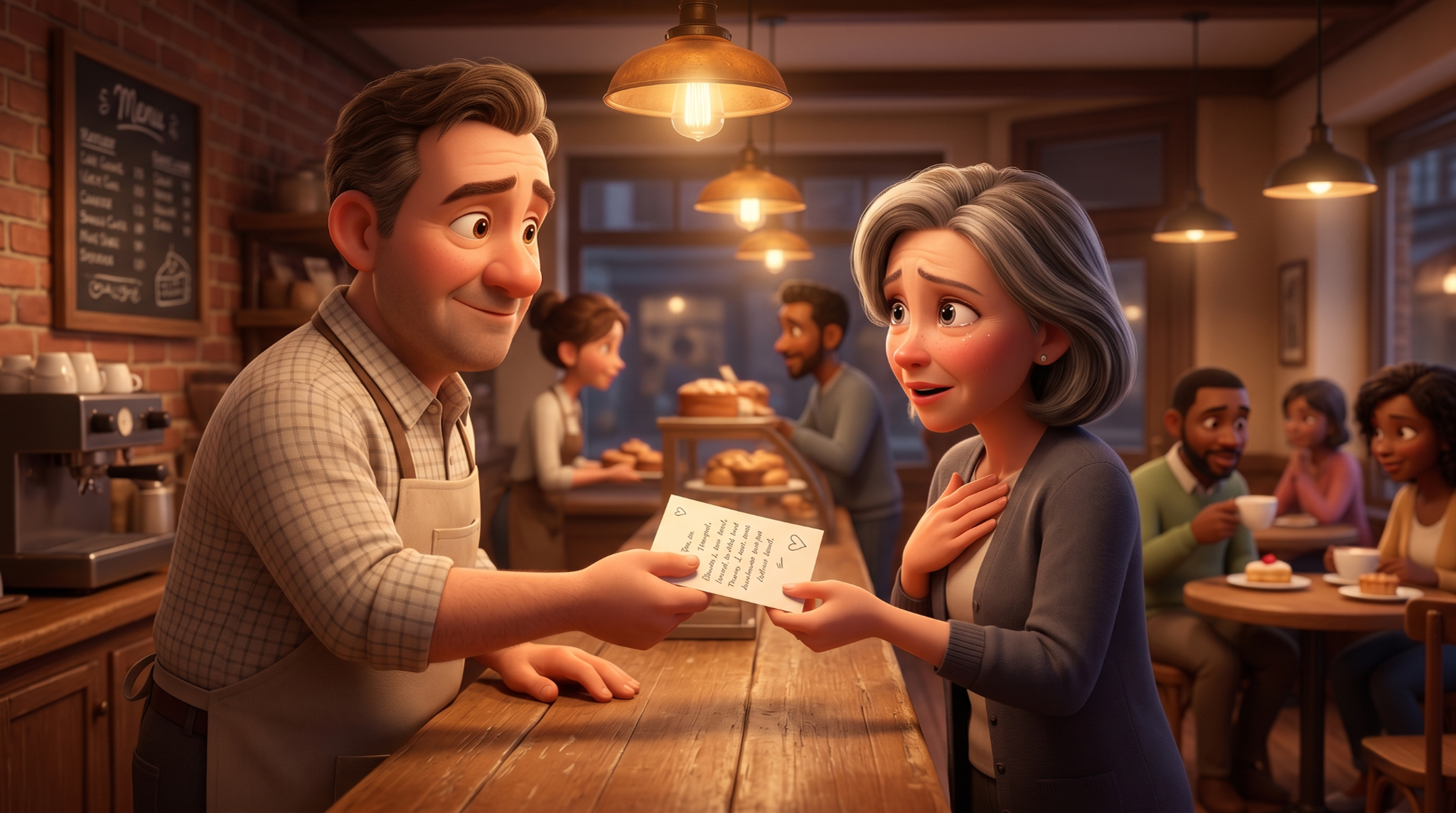
Picture One: It's a Tuesday afternoon. You walk into your local coffee shop — the one you've been visiting every weekday for three years. The person behind the counter looks at you with the dead eyes of someone who has made seven hundred flat whites today. "What can I get you?" they ask, as if you are a stranger. As if the last 750 lattes never happened. As if your loyalty means nothing.
You order your usual. They make it. You pay. You leave. The transaction is complete. And utterly forgettable.
Picture Two: It's a Tuesday afternoon. You walk into your local coffee shop. The person behind the counter sees you and immediately starts making your usual before you've even reached the till. "How did the presentation go?" they ask, remembering that last week you mentioned you were nervous about a work thing. "Oh, and we got some new pastries in — want to try one? On me, since you're basically family at this point."
Which coffee shop do you go back to? Which one do you tell your friends about? Which one could raise prices 15% and you'd still show up?
The coffee is identical. The transaction is identical. The feeling is not.
Disney understands this. Most businesses don't.
Traditional business thinking says: deliver the product, minimise friction, maximise efficiency. Get them in, get them out, get to the next one.
Disney thinking says: deliver the experience, maximise connection, then worry about efficiency. But never at the cost of courtesy.
Their Quality Standards hierarchy is explicit about this: Safety, Courtesy, Show, Efficiency. That's the priority order. Efficiency — which most businesses obsess over — is dead last. Making guests feel special (Courtesy) comes before moving them through quickly.
Radical, isn't it? Treating people like people before treating them like throughput?
Here's what you can do, starting today:
1. Create a "Celebration Question": Train your team to ask every customer if they're celebrating anything. Birthday? Anniversary? Got a promotion? First time visiting? You'd be amazed what people will tell you if you ask. And then you can respond to it.
2. Build a Simple Recognition System: This doesn't require fancy software. A notebook works. A shared spreadsheet works. Just a place to record: customer name, what they mentioned, date. Next time they come in, check the notes.
3. Empower Small Gestures: Give your team permission to do small, kind things without asking. Free coffee for someone who looks stressed. A handwritten thank-you card for a loyal customer. A "your money's no good here today" moment for someone celebrating.
4. Follow Up Personally: After a purchase, service, or appointment, send a personal message. Not an automated email. A text or call that says, "Just checking — how did it go?" This is so rare in modern business that it feels revolutionary.
Zappos built a billion-dollar company on this principle. Their call centre staff aren't timed. They're not scripted. They're encouraged to form genuine connections — the longest customer service call in company history lasted over 10 hours. (No, I don't know what they talked about. Probably shoes.)
You don't need magic. You need mindset.
Quiz time:
The best way to build customer loyalty is to:
A) Offer the lowest prices in your market, because customers are fundamentally rational economic actors who will always optimise for cost.
B) Implement a points-based rewards programme with complicated tiers and expiration dates that customers will definitely keep track of.
C) Make customers feel genuinely seen and valued through consistent personal recognition, creating an emotional connection that transcends price comparisons.
If you chose A, I'd like to introduce you to the entire luxury goods industry. If you chose B, congratulations on creating more administrative headaches than loyalty. C is the Disney way — and research backs it up: Harvard Business Review found that emotionally connected customers are 52% more valuable than merely satisfied ones.
Real-Life Case Study: The Dentist Who Became a Disney
I worked with a dental practice in Birmingham last year that was struggling with an unusual problem: they were technically excellent, but their patients didn't love them.
Their reviews were fine. Lots of "professional" and "efficient" and "no problems." But nobody raved. Nobody referred their friends. Nobody said, "You HAVE to go to this dentist."
The practice owner, Dr. Sarah (not her real name, but close enough), came to me frustrated. "We do everything right," she said. "Our clinical outcomes are excellent. Our equipment is top-notch. Why don't people love us?"
I asked her one question: "What do you know about your patients' lives outside their teeth?"
Long pause.
"Well… nothing, really. We focus on dental health."
There it was.
We implemented three changes — all stolen shamelessly from Disney:
First, the reception team started asking every patient, "Anything exciting happening in your life lately?" Just a casual question while pulling up their record. Some patients gave one-word answers. Others mentioned holidays, birthdays, new jobs, new babies. Every answer got noted in the system.
Second, the practice started sending handwritten birthday cards to every patient. Not email. Not text. A physical card, signed by the whole team, in an envelope. It took the reception team about 20 minutes a day to write them.
Third, Dr. Sarah trained her team to reference previous conversations. "How was Greece?" "Did your daughter's wedding go well?" "Still surviving the new job?"
That was it. No new equipment. No price changes. No renovation.
Within six months, their Google reviews transformed. Instead of "professional and efficient," patients were writing things like: "They actually remember who I am!" and "Best dentist I've ever been to — they sent me a birthday card!" and "I actually look forward to going now, which is insane because it's the DENTIST."
Referrals went up by 40%. Patient retention improved significantly — almost nobody left for competitors anymore. And Dr. Sarah finally understood what she'd been missing.
"It's not about teeth," she told me at our final session. "It's about people who happen to have teeth."
I couldn't have said it better myself. (Well, I could have. I'd have added a joke. But her version was more professional.)
The lessons:
1. Excellence is expected; connection is exceptional. Being good at your core service gets you in the game. Making people feel valued is what wins.
2. Small gestures compound. One birthday card is nice. Birthday cards every year for a decade is a relationship.
3. Notes are not optional. You can't personalise from memory. Systems enable scale.
4. Personal questions aren't intrusive — they're invitations. Most people want to be asked about their lives. They just need permission.
Cross-Industry Application: Making Every Customer Feel Like Your Only Customer
 I know what you might be thinking: "This is lovely, Andrew, but my business is completely different. I sell software / run a trades business / operate a B2B consultancy / work in healthcare. This doesn't apply to me."
Oh, but it does. It really, really does.
Let me show you how personalisation at scale works across wildly different industries:
Retail: John Lewis doesn't compete on price — they compete on service. Their staff are "Partners," not employees, and they're trained to form genuine connections. A good John Lewis interaction feels like getting advice from a knowledgeable friend, not being sold to by a commission-hunter. You can do this too: remember what customers bought last time and ask how it worked out.
Hospitality: A boutique hotel in Bath I stayed at last year had my name on a welcome card when I arrived, along with a note saying they'd pre-stocked the minibar with dairy-free options because they noticed my dietary requirements when I booked. Cost: minimal. Impact: I've told approximately thirty people about it.
Online Businesses: Even without face-to-face contact, you can personalise. Handwritten notes in packages (Warby Parker does this brilliantly). Personal video messages thanking customers for their purchase. Follow-up emails that reference what they bought and ask how they're enjoying it.
Trades (Plumbers, Electricians, Builders): This industry is shockingly impersonal. Most tradespeople show up, do the job, leave. The one who remembers your dog's name, texts to check everything's still working, and sends a thank-you card? That's who gets called next time. And recommended to the neighbours.
Professional Services (Law, Accounting, Consulting): Your clients are often nervous or stressed. Acknowledging that — really seeing them as humans, not just cases — sets you apart. A solicitor I know sends a small gift when a client's case closes. Not a pen with the firm's logo. An actual thoughtful gift based on something the client mentioned.
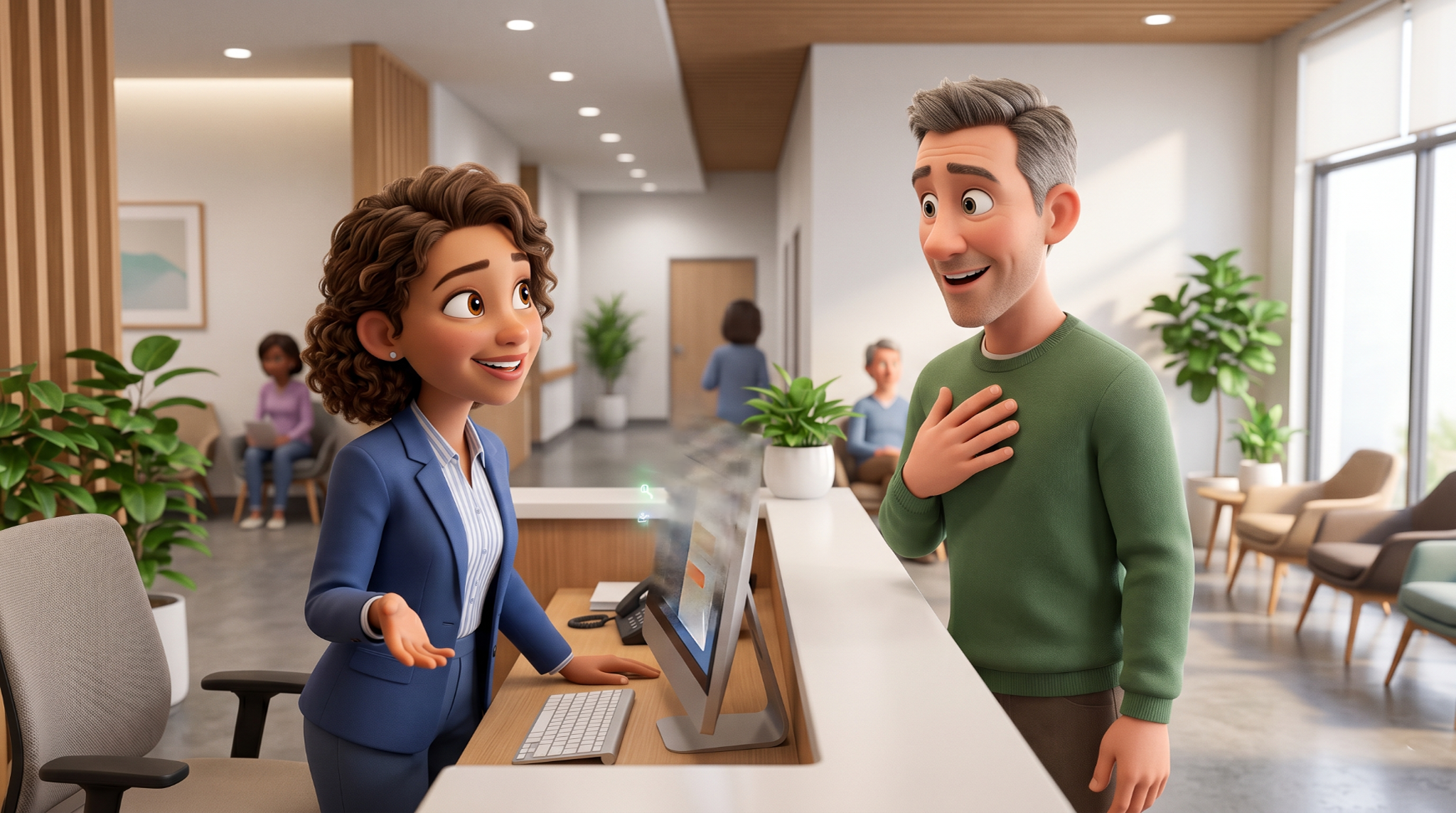
Healthcare: Patients aren't just conditions. They're people with lives, fears, and celebrations. The GP who remembers your holiday and asks about it feels fundamentally different from the one who stares at the screen and rattles off questions.
As Walt Disney said, "It's kind of fun to do the impossible." And making every customer feel like your only customer — at scale, consistently, across industries — might feel impossible. But it's not. It's just systems plus caring.
Quick quiz:
Personalisation doesn't work in your industry because:
A) Your industry is too professional/serious for that kind of thing, and customers expect detached efficiency, not warmth.
B) Your transactions are too quick — there's no time to build connection in a 30-second interaction.
C) Trick question. Personalisation works in every industry because every industry serves humans, and humans universally respond to being seen and valued.
The answer is C, and if you argued for A or B, I understand — but you're wrong. Even the most serious industries (medicine, law, finance) and the fastest transactions (retail, food service) benefit from personal connection. Often MORE, because the baseline is so impersonal.
The Long-Term Benefits: Why This Pays Off (And Then Some)
Let's talk about money. Because I know you're thinking about it.
Personalisation feels like a "nice to have." A soft skill. Something you'll get around to when the urgent stuff is handled.
But the data says otherwise.
A famous study from Bain & Company — the one every customer service consultant loves to quote — found that increasing customer retention by just 5% can boost profits by 25% to 95%. That's not a typo. The range is wide because it varies by industry, but even the low end is extraordinary.
Why? Because acquiring new customers is expensive. Keeping existing ones is comparatively cheap. And customers who feel personally valued stick around longer, buy more, and refer others.
Disney doesn't just know this — they've built their entire business model around it. Their repeat visitor rate is estimated at 70% or higher. Seven out of ten people who visit Disney World go back. In an age where consumers have infinite entertainment options, that's remarkable.
Harvard Business Review research found that customers who had the best experiences spent 140% more than those who had the poorest experiences. Not 14%. One hundred and forty percent.
Here's what happens when you master personalisation at scale:
Customer lifetime value increases: Customers stay longer, buy more per visit, and need less convincing for upsells. They trust you.
Word-of-mouth multiplies: Personalised moments become stories. Stories become recommendations. Recommendations become new customers who already trust you because their friend vouched for you.
Price sensitivity decreases: When customers feel emotionally connected to your brand, they compare you less aggressively to cheaper alternatives. The Ritz-Carlton and Disney don't compete on price. They compete on experience — and they win.
Employee satisfaction improves: Staff who are empowered to create magical moments enjoy their work more. They're not just processing transactions — they're making people's days. That meaning matters.
Resilience in tough times: When the economy dips, customers cut generic expenses first. The businesses they feel personally connected to are the last to go.
Think of Baymax from Big Hero 6. He's not impressive because of his medical database (that's just competence). He's beloved because he genuinely cares about Hiro's emotional wellbeing. "On a scale of one to ten, how would you rate your pain?" becomes touching because you know he actually wants to help.
Your business's version of this: being competent is baseline. Caring — demonstrably, consistently, personally — is what creates loyalty.
Disney magic isn't about having deep pockets. It's about deep caring.
Quiz:
The primary financial benefit of personalisation is:
A) Customers pay more for the exact same product because they've been tricked into an emotional connection that clouds their rational judgment.
B) You can spend less on marketing because customer acquisition costs plummet when everyone already knows your brand.
C) Customer lifetime value increases through better retention, higher spending, and word-of-mouth referrals — creating compound returns over time.
A is cynical and wrong. B is partially true but misses the bigger picture. C is the answer — personalisation is an investment that compounds. Every loyal customer you create pays dividends for years.
Challenges & Reality Check: Yes, There Are Obstacles (Let's Talk About Them)
I'm not here to rain on your magical parade, but I'd be doing you a disservice if I pretended this was all pixie dust and no effort.
Personalisation at scale has real challenges. Let's address them honestly — then figure out how to overcome them.
Challenge 1: It Requires Consistent Effort
One magical moment doesn't build loyalty. Consistent magical moments do. That means showing up the same way on Monday morning when you're tired and Thursday afternoon when you're slammed and Saturday when you'd rather be anywhere else.
Disney isn't perfect at this, by the way. I've had off days at Disney parks — cast members who were clearly exhausted, interactions that felt rote. They're human. But their systems are so strong that the overall experience still exceeds competitors. One off moment doesn't undo thousands of good ones.
Solution: Build it into the system, not just the culture. Checklists, training, prompts in your CRM. Make personalisation automatic enough that it happens even when people aren't at their best.
Challenge 2: It Can Feel Forced or Creepy
There's a line between "thoughtful" and "surveillance." Using a customer's name when they've given it to you: thoughtful. Using information you scraped from their social media without them knowing: creepy.
Disney navigates this by making personalisation opt-in. You choose to wear the button. You enter your name in the reservation. You link your MagicBand. The customer controls the information flow.
Solution: Let customers tell you what they want to be known for. Ask, don't assume. Use information they've explicitly shared, not data you've secretly gathered.
Challenge 3: Some Employees Aren't Naturally "People People"
Not everyone on your team is a natural conversationalist. Some of your best technical staff might be awkward with customers. Can you still make personalisation work?
Yes — because personalisation is a skill, not a personality trait. Disney hires for attitude ("Is this person naturally kind? Do they smile easily?") but trains for skills. The cast member at Space Mountain might be an introvert. But they've been trained to notice a birthday button and say "Happy birthday!" with warmth.
Solution: Script the basics. Give your less naturally effusive team members exact phrases to use. "I see you're celebrating — that's wonderful! What's the occasion?" Anyone can say that, even awkwardly. It still works.
Challenge 4: It's Hard to Measure
"How do I know if this is working?" you might ask. And honestly, the ROI of a birthday card is hard to put on a spreadsheet.
But you can track: repeat purchase rates, customer retention, Net Promoter Score, referral rates, review sentiment. The numbers might take months to move, but they will move.
Solution: Commit to a timeframe. Give it six months of consistent effort before judging. And look for leading indicators: customers mentioning your personal touches in reviews, staff reporting more positive interactions, a "feeling" that things are improving.
Challenge 5: It's Easy to Deprioritise
When things get busy, personalisation is often the first thing to go. "We don't have time to write birthday cards — we have orders to fill!"
This is where Disney's Quality Standards hierarchy matters: Courtesy comes before Efficiency. If you're sacrificing personal connection to save time, you're trading long-term loyalty for short-term speed.
Solution: Treat personalisation as non-negotiable, not nice-to-have. Build it into the job, not the extras. The dental practice I mentioned didn't add birthday cards to the reception team's already-full day — they made it part of the day, with protected time.
As Mary Poppins would say, a spoonful of sugar helps the medicine go down. The medicine here is the reality that this takes effort. The sugar is the knowledge that it works — and that even small steps make a difference.
Quiz:
The biggest obstacle to implementing personalisation at scale is:
A) Budget — this kind of thing only works if you have Disney-level resources.
B) Time — there are simply too many customers to give each one personal attention.
C) Consistency — doing it once is easy, but maintaining the standard day after day, with every team member, is the real challenge.
The answer is C. Budget and time are excuses (the most powerful personal touches cost nothing and take seconds). Consistency is the real battle — and it's won through systems, training, and culture, not inspiration alone.
Frequently Asked Questions
Q: "I can't afford birthday gifts for every customer. What do I do?"
Here's a secret: the gift doesn't matter. The recognition does. A handwritten card costs less than a stamp. An email that clearly isn't automated (uses their name, references something specific) costs nothing. A phone call saying "I just wanted to wish you happy birthday from all of us at [business]" costs three minutes. Disney's buttons cost pennies. The magic isn't in the expense — it's in the noticing. Genie from Aladdin had phenomenal cosmic powers, but his real gift to Aladdin was friendship and belief. Your customers don't need expensive gifts. They need to feel seen.
Q: "What if customers think personal attention is intrusive or weird?"
Great question, and it reveals an important nuance: personalisation must be invited, not imposed. Disney guests choose to wear buttons. They choose to share celebrations when booking. If a cast member started asking invasive questions about their personal life, it would feel creepy. The line is: use information they've voluntarily shared, expressed joy about, or would expect you to know (like their name from a booking). Don't use information they'd be surprised you have. When in doubt, ask: "Would I be comfortable if a business used this information about me?" If yes, proceed. If no, don't.
Q: "How do I get my employees to care about this? They just want to do their jobs and go home."
This is a leadership challenge, not a training problem. If your employees see personalisation as "extra work," you've framed it wrong. It's not extra — it's the job. Disney doesn't have a "customer service team" and an "everyone else team." Every cast member is in customer service, whatever their role. The key is showing your team why it matters (customer stories, reviews, retention data), empowering them to do it (give them permission and tools), and recognising when they do it well. People rise to what's celebrated. Celebrate personalisation, and you'll get more of it. Like Remy in Ratatouille — he didn't just cook food, he created experiences. Your team can learn to do the same.
Q: "How do I scale this when I have thousands of customers?"
This is exactly why systems matter. Disney doesn't rely on individual cast members remembering millions of guests. They create systems that enable personalisation: buttons that signal celebrations, MagicBands that store preferences, training that equips any cast member to respond appropriately. For your business, this might mean: CRM notes that every team member checks, automated prompts before meetings ("Reminder: This client just had a baby"), celebration questions built into your intake process. The goal isn't to personally remember everything — it's to build systems that remember for you, then respond personally when prompted.
Q: "Does this work in B2B, or is it just for consumer businesses?"
It works everywhere, and arguably more powerfully in B2B. Why? Because B2B transactions are usually larger, longer, and more relationship-dependent. A B2B client who feels personally valued sticks around for years, refers colleagues, and is more forgiving when things go wrong. I know a management consultancy that sends handwritten cards when their clients get promoted (they set up Google Alerts for client names). The card says something like, "Saw the news — congratulations! Couldn't have happened to a more deserving person." Cost: £2 and five minutes. Impact: clients who feel seen and celebrated, and a reputation for actually caring about people, not just invoices.
Q: "How long before I see results from this?"
Depends on what you're measuring. Customer feedback might improve within weeks — people notice personal touches immediately. Reviews and referrals take longer — typically 3-6 months before word-of-mouth generates measurable new business. Retention metrics are slowest — you won't know if customers are staying longer until… well, they've stayed longer. Give it at least six months of consistent effort before judging ROI. And track leading indicators in the meantime: customer comments mentioning personal touches, team reports of positive interactions, your own gut feeling about the energy in your business. Sometimes you can feel a cultural shift before you can measure it.
Putting It All Together: Your Journey to Making Every Customer Feel Like Your Only Customer
We've come a long way, you and I.
We've explored how Disney takes 58 million annual visitors and somehow makes each one feel individually recognised. We've examined the button system, the training philosophy, the Quality Standards hierarchy that puts Courtesy above Efficiency. We've seen how a dental practice in Birmingham transformed their patient experience with three simple changes. We've tackled the objections, the challenges, the "yes buts" and "what ifs."
So where does that leave you?
Here's the truth: most businesses will read something like this, think "that's nice," and change nothing. 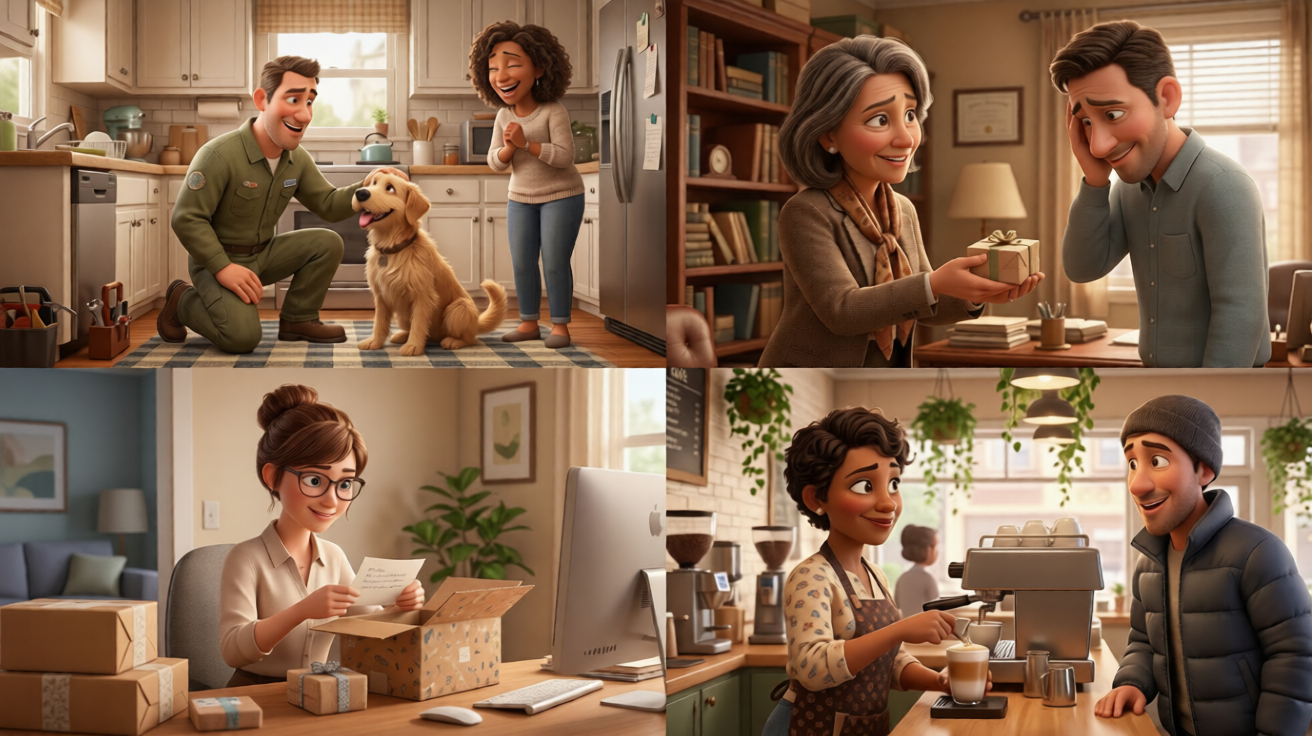 They'll go back to processing transactions, moving people through, optimising for efficiency while ignoring the human beings in front of them.
But you're still reading. Which tells me you're not most businesses.
The question I'd like to leave you with is this: What would change in your business if every customer felt like your only customer?
Not just your best customers. Not just the easy ones. Every single person who walks through your door, calls your number, visits your website, or buys your product.
What would your retention look like? Your referral rate? Your reviews? Your team's morale?
Disney magic isn't about having a castle or a talking mouse. It's about creating moments of wonder in the everyday. It's about a teenage ice cream scooper who makes a 40-something British writer feel like his fake "first visit" is the most exciting thing she's heard all day.
It's about systems that enable humans to be their best human selves, consistently, at scale.
And it's available to you. Today. Right now.
Start small if you need to. One question: "Celebrating anything special?" One note in the CRM. One birthday card in the post.
Build from there.
As Walt Disney said, "The way to get started is to quit talking and begin doing."
You've done the talking (or rather, the reading). Now it's time to begin doing.
Now go sprinkle some pixie dust. 🪄
About the Author
Andrew Lock is a renowned business coach, consultant, and author with over three decades of experience helping entrepreneurs and business leaders achieve extraordinary success. As the founder of 'Help My Business!', Andrew has empowered thousands of business owners worldwide through his unique coaching, mastermind groups, 10 best-selling books, and engaging keynote presentations.
Known as the "The Yoda of marketing," (without the green pointy ears), Andrew brings a refreshing blend of humor and practical insights to his work. His expertise spans customer experience, pricing, sales, marketing, employee management, and operations, with a special focus on applying Walt Disney's business principles to modern enterprises.
Andrew is the author of ten books, including the popular "Walt's Way" and "Big Lessons from Big Brands." His work has been featured in major media outlets, and he's shared stages with business luminaries like Sir Richard Branson, Donald Trump, Daymond John, Dan Kennedy, The Dalai Lama, and Michael Gerber.
When he's not helping businesses transform their customer service, Andrew enjoys traveling with his family and indulging in his passion for all things Disney and chocolate (though not necessarily in that order).
For more insights and resources, visit www.AndrewLock.com.
Sources & Further Reading
Want to go deeper? Here are a few of the books and resources I referenced (or shamelessly stole ideas from) while writing this:
- Be Our Guest — Disney Institute (the closest thing to a Disney customer service bible — covers Guestology, Quality Standards, and the philosophy of exceeding expectations)
- Creating Magic: 10 Common Sense Leadership Strategies from a Life at Disney — Lee Cockerell (the bloke who ran Walt Disney World operations — he knows a thing or two about personalisation at scale)
- The Ride of a Lifetime — Bob Iger (fascinating read on Disney leadership and culture)
- Walt's Way — Andrew Lock (yes, that's my book — but it genuinely covers this topic in depth, with specific application to your business)
- The Disney Institute Blog: disneyinstitute.com (regular insights on Disney's approach to customer experience and leadership)
