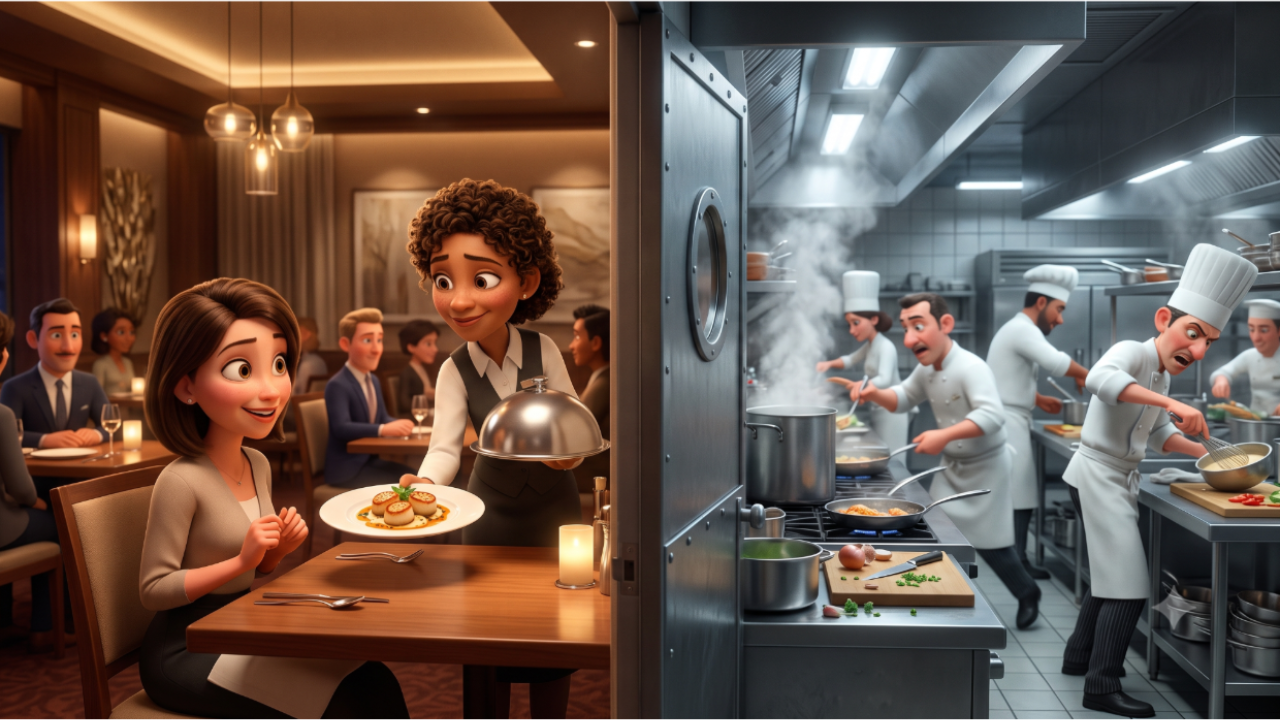
The Invisible Empire: What Disney's "Onstage/Backstage" Principle Reveals About What Your Customers Should (and Shouldn't) See
Right, let's start with a confession.
Last October, my wife and I were at Magic Kingdom, standing approximately four feet from Cinderella Castle, when I made a tactical error. I pointed at a door.
"Look at that," I said, full of geeky excitement. "That's one of the backstage doors. It's painted in 'Go Away Green' — Disney's special colour that makes things basically invisible to guests."
My wife stared at me. Then at the door. Then back at me.
"Andrew," she said, with the patience of a saint who married a man who knows Disney paint colours, "I literally cannot see a door. Are you okay?"
I was okay.
Because that door — the one my wife's brain didn't notice — is the key to everything Disney does brilliantly. And it's the key to something your business probably gets catastrophically wrong.
Walt Disney himself put it this way: "I don't want the public to see the world they live in while they're in the Park. I want them to feel they're in another world."
This isn't about hiding things. It's about protecting the experience. It's about understanding that your customers came for the show, not the stage crew.
And if you've ever let a customer see your business with its trousers down — metaphorically speaking — you already know the damage that does.
Let's fix that, shall we?

Key Takeaways From This Article:
- 'Onstage' is where customers experience your business; backstage is where the magic gets made. Disney separates these ruthlessly — and so should you.
- Customers don't want transparency about your operational chaos. They want the result of your operational excellence.
- The backstage/onstage divide isn't about physical space — it's about behaviour. You can create this separation in a one-room office.
- "Go Away Green" isn't just paint. It's a philosophy: make the operational stuff so unmemorable that customers don't notice it.
- Your team needs clear signals for when they're "on." Disney cast members know exactly when they're performing and when they can drop character.
- Mistakes should happen backstage. Practice, experiment, and fail where customers can't see — then perform flawlessly where they can.
- Strategic transparency beats accidental exposure. Choose what to reveal; don't just spray your internal mess everywhere.
- Disney's Quality Standards put "Show" before "Efficiency." Never sacrifice the customer's experience for your operational convenience.
- Service recovery is onstage; root cause analysis is backstage. Fix the customer's emotions immediately; fix the system privately.
- The best customer experiences feel effortless precisely because someone worked very hard backstage.
The Time We Witnessed Disney Magic (And Didn't Realise It)
During one of our many trips to Magic Kingdom — our 147th Disney parks visit to be precise, but who's counting (my wife is counting, specifically for divorce evidence) — we were having dinner at the Be Our Guest restaurant in Fantasyland.
If you haven't been, Be Our Guest is the restaurant inside Beast's Castle. It's stunning. Giant chandeliers, enchanted rose under glass, the works. You half expect Lumière to waltz by with the soup.
We were seated in the West Wing — the moody, dramatic room with the torn painting and the lightning effects. Very atmospheric. My wife was enjoying her scallops. I was enjoying watching her enjoy her scallops. (It's called romance, look it up.)
Then I noticed something.
Our server had quietly disappeared through what appeared to be a solid stone wall. I blinked. She was just... gone. Like she'd been 'absorbed' by the architecture.
A few minutes later, she reappeared from the same spot, carrying two more plates for the table next to us. Solid stone wall, server emerges, delivers food with a smile, vanishes back into the masonry.
"Did you see that?" I whispered to my wife.
"See what?"
"She went through the wall."
My wife gave me the look. You know the look. The "I'm eating scallops and you're being weird about architecture" look.
But here's what was actually happening: Disney had designed a hidden service door, perfectly disguised to match the stonework, positioned so that servers could access the kitchen without ever breaking the spell of the Beast's enchanted castle. The door wasn't invisible — but it was designed to be unmemorable. Your eye simply didn't register it as interesting.
That's backstage and onstage in action.
The servers, the kitchen, the dirty dishes, the chaos of feeding hundreds of people — all of that was happening just metres away. But we never saw it. We never thought about it. We were in the Beast's castle, dining in his moody West Wing, fully immersed in the story.
Now here's the uncomfortable question: What walls does YOUR business have? And what's leaking through them?
Core Teaching Section 1:
How Disney's Onstage/Backstage System Actually Works
You're walking down Main Street, U.S.A. at Magic Kingdom. The sun is warm, the popcorn smells incredible, and a barbershop quartet is harmonising somewhere near the ice cream parlour.
What you're NOT seeing:
Beneath your feet, there's an entire city. The Utilidors — a 392,000-square-foot network of tunnels (technically at ground level; the park was built above them) — are bustling with activity. Cast members in Adventureland costumes walking to their shifts without passing through Tomorrowland. Deliveries being made. Garbage being whisked away through pneumatic tubes. Management scurrying to solve problems.
None of that reaches you. You're on Main Street. You're in 1910. The illusion is intact.
The Disney Institute — which trains executives from companies around the world — calls this maintaining "Show." It's one of Disney's four Quality Standards, in strict priority order: Safety, Courtesy, Show, Efficiency.
Notice that Show comes before Efficiency. That's not an accident. That's a philosophy.
It means Disney will choose a less efficient option if the more efficient one damages the guest experience. They'll build tunnels. They'll paint doors in forgettable colours. They'll train cast members to point with two fingers instead of one (because one-finger pointing is rude in many cultures — a detail most guests never consciously notice, but which keeps the show feeling right).
Think of it like Remy from Ratatouille. On the plate — beautifully composed, aromatic, worthy of a Michelin star. In the kitchen? A rat. Chaos. Linguini flailing about. But the diner never sees that. They just taste excellence.
Lee Cockerell, who ran Walt Disney World operations for over a decade, puts it brilliantly in his book Creating Magic: "Make sure your backstage never leaks onto your stage." Simple. Brutal. True.
So let me ask you this: What's leaking through YOUR walls?
Quick Quiz — What Would Disney Do?
A customer walks into your business and you're in the middle of a supplier crisis. Your options:
A) Tell them all about it in exhausting detail so they understand why things are slow today. (Bonus points for dramatic sighing.)
B) Let them overhear you on the phone yelling at your supplier — that's just authenticity, right?
C) Handle the crisis backstage while ensuring their onstage experience remains seamless and pleasant.
If you chose A or B, congratulations — you've just made your problem into your customer's problem. They didn't come to you for a front-row seat to your operational drama. They came for the result.
Core Teaching Section 2:
The Five Principles Behind Backstage/Onstage Mastery
Let's go deeper. Because this isn't just "hide the mess." It's a complete framework for how experiences get designed.
Principle 1: Cognitive Load Reduction
When customers see your operational reality, their brain shifts from "enjoyment mode" to "problem-solving mode." They start wondering: Is that normal? Should I be concerned? Is something wrong?
Disney removes those questions entirely. The guest brain stays relaxed, receptive, enjoying.
A PwC study found that 73% of consumers point to customer experience as an important factor in purchasing decisions, yet only 49% say companies actually deliver a good experience. That gap? Much of it is cognitive load — businesses accidentally making customers work too hard.
Principle 2: Emotional Immersion
The theatrical frame must never break. Disneyland isn't a place with rides. It's a place where magic is real. Every glimpse of mundane operations — the forklift, the staff argument, the pricing sticker — undermines that reality.
Maya Angelou famously said: "People will forget what you said, people will forget what you did, but people will never forget how you made them feel."
Backstage operations, when they leak through, make people feel backstage. Like they're not supposed to be there. Like the magic isn't real. That feeling sticks.
Principle 3: Employee Role Clarity
Disney cast members know exactly when they're "on" and when they can relax. This isn't about being fake — it's about having defined performance boundaries.
When you're onstage, you're performing. Full energy. Full smile. Full commitment to the guest experience.
When you're backstage, you can breathe. You can be human. You can roll your eyes at the guy who just asked where the bathroom is for the fortieth time today.
This separation actually reduces burnout. The performance has edges. You know when it starts and when it stops.
Principle 4: Error Containment
Mistakes, experiments, and ugly realities can happen backstage without affecting guest perception. You can have a chaotic kitchen as long as the dining room is serene. You can have a messy brainstorm as long as the client presentation is polished.
Think of Dory from Finding Nemo. Internally? Chaos. Can't remember anything for more than a few seconds. But to her friends — to the "audience" of her life — she's optimistic, brave, helpful. The internal chaos doesn't leak through.
(Okay, sometimes it leaks through. Dory's not perfect. Neither are you. The point is to minimise the leakage.)
Principle 5: Intentional Reveal vs. Accidental Exposure
Now, you might be thinking, "But Andrew, transparency is trendy! Customers want authenticity! They want to see behind the curtain!"
Sure. Sometimes. Trends come and go.
But there's a massive difference between intentional reveal (strategically showing your process because it adds value) and accidental exposure (dumping your operational chaos on customers because you haven't designed a proper backstage).
Disney does intentional reveal brilliantly — think of the Animation Academy at Disney's Hollywood Studios, where you watch artists draw characters. That's backstage-as-entertainment, carefully curated. It's not the same as seeing an animator stress-eating at their desk while their deadline looms.
What's the difference between what you intentionally show customers and what you accidentally leak?
Quick Quiz — The Backstage Behaviour Check
Your customer overhears two of your team members having a conversation. The conversation is:
A) A complaint about how annoying another customer was earlier — because honestly, they WERE annoying
B) A detailed discussion of the company's cash flow problems — keeping it real!
C) A positive, professional exchange that reinforces the atmosphere you're trying to create
If you chose A or B, your backstage is leaking. And your customers are getting splashed.
Core Teaching Section 3: Disney vs. The Rest of Us — A Tale of Two Businesses
There you are, standing in a local coffee shop. It's a Tuesday afternoon, and you really need caffeine.
The espresso machine is hissing. Good sign. But then you notice the barista is on the phone, clearly arguing with a supplier about a late delivery. She's not even trying to hide it. She's making eye contact with you while saying, "Well, that's completely unacceptable, Kevin. I needed those oat milk cartons YESTERDAY."
You wait. She keeps arguing. Another staff member is restocking mugs loudly, muttering about being understaffed. The card machine is prominently displaying an error message. Someone's labelled printer is chirping alarmingly in the corner.
You just wanted coffee. Now you're a supporting actor in this business's chaotic backstage drama.
Now imagine the Disney version:
You walk into a café at Disney Springs. The espresso machine hisses beautifully. The cast member greets you warmly. Behind the counter, there's a door that blends into the decor — you barely notice it. Cast members slip through it seamlessly, emerging with supplies, disappearing with problems. If there's a supplier crisis, it's being handled via radio in the back office. If someone's restocking, they're doing it before the café opened or they're doing it invisibly.
Your job as a customer? Simply to enjoy your coffee.
That's the Disney difference.
Four Action Steps to Create Your Own Onstage/Backstage
1. Map your customer journey and identify every "backstage leak." Walk through your business as if you were a customer. What operational realities are you accidentally exposing? The messy back office visible from the front desk? The staff conversation audible from the waiting room? The error message on the point-of-sale system?
2. Create physical or behavioural boundaries. If you can't build a wall, build a rule. "This conversation happens in the back room." "This type of problem gets handled by radio/text, not at the front desk." "We don't discuss internal issues within earshot of customers."
3. Design your "Go Away Green." What can you make unmemorable? The door to your stockroom doesn't need to be hidden — it just needs to be boring. The printer doesn't need to be silent — it just needs to be somewhere customers don't focus.
4. Train your team on "onstage behaviour." Everyone should know: When you're in front of customers, you're performing. That doesn't mean being fake — it means being the best, most professional version of yourself. Save the venting for the break room.
Ritz-Carlton — another company that obsesses over customer experience — trains their team with this phrase: "We are ladies and gentlemen serving ladies and gentlemen." That's an onstage mindset. It clarifies the performance.
Quick Quiz — The Coffee Shop Test
A customer is waiting while you handle an internal problem. Your approach:
A) Explain the problem in detail so they appreciate how hard your job is
B) Ignore them while you fix it — they can see you're busy!
C) Acknowledge them warmly, handle the problem invisibly backstage, and return to serve them as if nothing was ever wrong
If you chose C, congratulations. You've just passed the first course at Disney University. 🎓
Real-Life Case Study: The Dental Practice That Learned to Close the Door
I worked with a dental practice in Manchester a few years ago. Lovely people. Great dentists. Absolutely terrible at onstage/backstage.
Here was the problem: The reception desk was positioned so that patients in the waiting room could see directly into the administrative office. And hear it. Every phone call about overdue bills. Every conversation about insurance rejections. Every hushed discussion about "that difficult patient" in room two.
The practice owner — let's call her Sarah — genuinely didn't realise this was happening. She was too busy being a dentist to notice what the waiting room experience felt like.
But her patients noticed. Her Google reviews kept mentioning how "stressful" and "chaotic" the practice felt. One review actually said, "Great dentist, but the waiting room sounds like a call centre having a nervous breakdown."
Ouch.
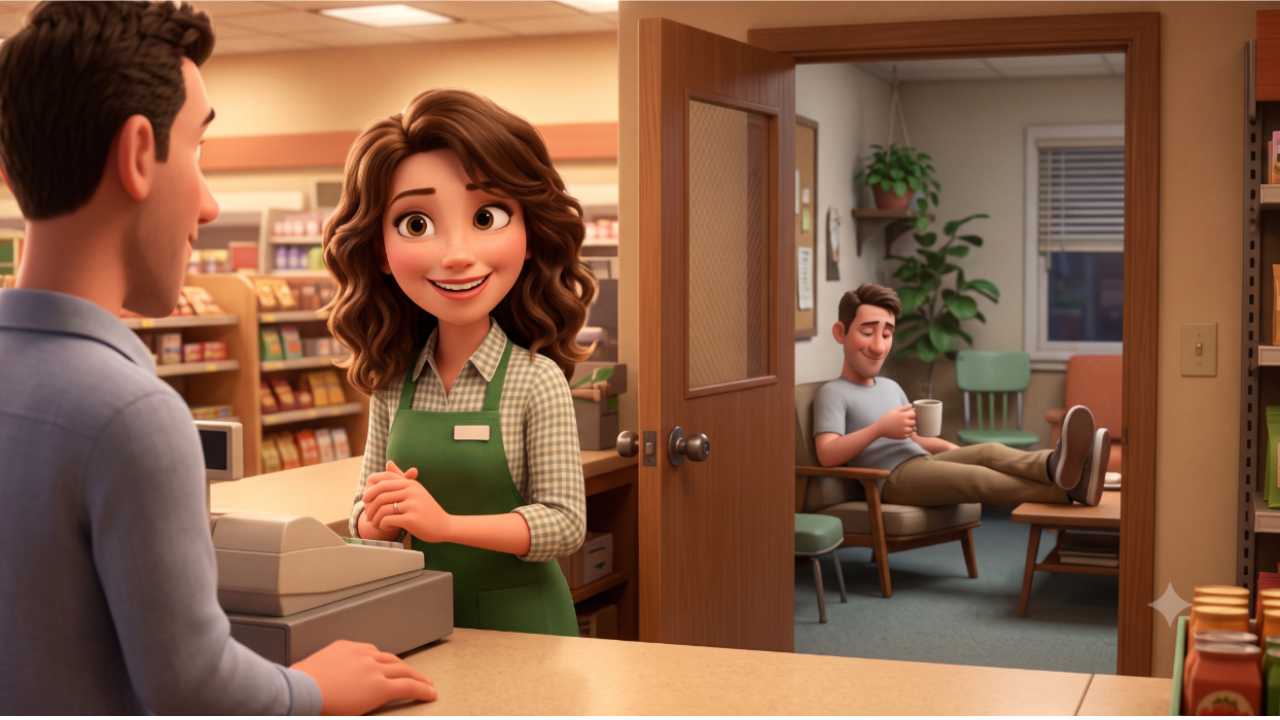
We made three changes:
First, we moved the administrative conversations. Not to a different building — just to a back office. Billing calls, insurance wrestling, internal discussions — all happened out of earshot.
Second, we trained the reception team on "onstage voice." When patients could hear them, the tone was warm, calm, reassuring. The frantic problem-solving voice was reserved for backstage calls.
Third, we added a simple sound barrier — not a wall, just a partition with some plants — that broke the sightline between waiting room and admin chaos.
The result? Within six months, the practice's Google rating went from 3.8 to 4.6 stars. New patient enquiries increased by 35%. And the recurring complaint about "chaos" completely disappeared from reviews.
Sarah hadn't become a better dentist. She was always a great dentist. But she'd finally built a backstage — and her onstage started to shine.
Three Lessons from Sarah's Practice:
1. You can't see your own backstage leaks. You're too close. Walk through as a customer — or better yet, ask someone else to do it and report back.
2. Small changes create big perception shifts. Sarah didn't renovate her building. She moved some conversations, trained some behaviours, and added a plant-covered partition. Total cost: minimal. Total impact: dramatic.
3. "Chaotic" is a feeling, not a fact. Sarah's practice wasn't actually any more chaotic than any other dental practice. But it felt chaotic because the chaos was onstage. Move it backstage, and suddenly you feel calm, professional, competent.
Cross-Industry Application: The Onstage/Backstage Principle Works Everywhere
You might be thinking, "Andrew, that's fine for Disney with their billion-dollar parks and underground tunnels. But my business is a three-person operation in a converted garage."

Fair point. But the principle isn't about square footage. It's about intention.
Retail
Your stockroom is backstage. Your sales floor is onstage. When inventory arrives, it gets processed backstage before appearing on shelves. Price changes happen before opening. Staff discussions about "the awkward return from yesterday" happen where customers can't hear.
Professional Services (Accountants, Lawyers, Consultants)
Your messy research, your drafts covered in red pen, your "I don't know yet but I'll figure it out" — that's backstage. What the client sees is the polished recommendation, the clear advice, the confident expertise. You can be uncertain backstage. Onstage, you're the expert.
Restaurants & Hospitality
The kitchen is backstage. The dining room is onstage. Server stations should be positioned out of the direct sightline of diners. The chef's temper tantrum? Backstage. The sommelier's recommendation? Onstage.
Trades (Plumbers, Electricians, Builders)
The van full of tools and mess is backstage. The customer's home is your onstage. When you're in their space, you're performing — clean, polite, minimising disruption. The swearing happens in the van.
Online Businesses
Your website, your checkout flow, your customer communications — that's onstage. Your CRM chaos, your support ticket backlog, your 3am scramble to fix a bug — that's backstage. Customers experience the seamless result, not the panicked process.
Health & Wellness
The treatment room is onstage. The break room where you complain about that client who refuses to do their exercises — backstage. The insurance billing nightmare — definitely backstage.
As Walt Disney said: "It's kind of fun to do the impossible." And what feels impossible — running a calm, professional business while chaos erupts behind the scenes — becomes very possible once you build proper backstage/onstage boundaries.
Quick Quiz — Industry Application
You run a small accounting firm. A client calls during tax season, when your office is in full panic mode. You:
A) Put them on speakerphone so they can hear the authentic sounds of their tax return being frantically processed
B) Sigh heavily and say, "This time of year is INSANE" before helping them
C) Answer warmly, step into a quiet space if needed, and handle their query as if you have all the time in the world — saving your stress for after the call
If you chose C, you're starting to think like a cast member. Your clients don't need to know about your chaos. They need to feel looked after.
Long-Term Benefits: Why Backstage Discipline Pays Off
Let's talk about what happens when you get this right — not just for a day, but consistently, over time.
Customer Loyalty That Compounds
Disney World welcomes approximately 58 million visitors a year. And here's the staggering part: the majority of them have been before. The return visitation rate is estimated at over 70%.
That's not because the rides are so wildly different each year. It's because the experience is reliably magical. And that reliability comes from backstage discipline — every visit, the show is maintained.
Bain & Company research shows that increasing customer retention by just 5% can boost profits by 25-95%. Disney doesn't need to read that study. They've been living it since 1955.
Word-of-Mouth That Multiplies
People don't tell stories about "adequate" experiences. They tell stories about magical ones. And magical experiences require onstage discipline.
When Sarah's dental practice cleaned up its onstage presence, her patient referrals increased by 40%. Her patients weren't just returning — they were bringing friends. Because they finally had a story worth telling: "You have to try my dentist. The practice is so calm and professional."
Team Morale That Sustains
When your team knows they have a backstage — a place to breathe, to vent, to be imperfect — they can give more onstage. The performance has boundaries. That's sustainable.
Without backstage, your team is always "on." And nobody can maintain peak performance indefinitely without a break. Burnout becomes inevitable.
Brand Reputation That Compounds
Every onstage moment is a brand moment. When customers experience consistent excellence, they stop evaluating you and start trusting you. You move from "provider" to "institution."
Disney isn't evaluated like a normal entertainment company. They're trusted like few brands on earth. That trust took decades of backstage discipline to build.
Disney magic isn't about deep pockets. It's about deep caring. It's about deciding that the customer experience matters more than your convenience.
Quick Quiz — The Long Game
Your business is struggling with retention. You could:
A) Blame the economy, competitors, and the youth of today
B) Keep doing exactly what you've been doing but somehow expect different results
C) Audit your onstage experience, identify backstage leaks, and create the consistent excellence that earns repeat business
If you chose C, you're playing the long game. The Disney game.
Challenges & Reality Check: I'm Not Here to Rain on Your Magical Parade, But...
Look, I'd love to tell you this is all pixie dust and singing mice. But you're a grown-up running a real business, so let's be honest about the challenges.
Challenge 1: It Requires Constant Vigilance
Backstage discipline isn't a one-time fix. It's a daily practice. The moment you stop paying attention, the leaks start again. That team member who thinks customers can't hear them. That process that slowly migrates from back office to front desk. Entropy is always pushing chaos onstage.
Challenge 2: It Can Feel "Fake"
Some people resist the onstage/backstage concept because it feels performative. "I'm just being myself!" they say, as they complain about their personal life to a customer.
Here's the reframe: It's not fake. It's professional. You're choosing to be the best version of yourself in front of customers. That's not deception — that's courtesy.
Challenge 3: Disney Gets It Wrong Sometimes Too
Let's not pretend the Mouse is perfect. Disney has had their share of backstage leaks — the MagicBand rollout was famously rocky, with technical problems very much onstage. Some of their service recovery has missed the mark. They're not infallible.
But here's the difference: Disney treats backstage leaks as emergencies. When the show breaks, they move heaven and earth to fix it. Most businesses just... shrug.
Challenge 4: Physical Constraints Are Real
Not everyone can build underground tunnels. Some businesses operate in single rooms with no separation possible. This is where behavioural backstage becomes critical — if you can't separate spaces, you separate conversations, phone calls, and activities by time or technology.
Five Strategies for Overcoming the Challenges:
1. Start small. You don't need to transform everything overnight. Identify your ONE biggest backstage leak and fix that first.
2. Involve your team. Make onstage/backstage part of your culture, not just a management directive. When everyone understands the concept, everyone helps maintain the show.
3. Audit regularly. Once a quarter, walk through your business as a customer. What do they see, hear, smell, experience? Where has chaos crept onstage?
4. Create clear signals. Some businesses use literal cues — a bell when a customer enters, a green light when the webcam is on. Make "onstage mode" unmistakable.
5. Celebrate the wins. When your team maintains the show brilliantly, notice it. Reward it. Make backstage discipline part of what you praise.
As Mary Poppins would say, a spoonful of sugar helps the medicine go down. The medicine here is discipline. The sugar is the results: happier customers, calmer operations, a business that feels magical instead of chaotic.
Quick Quiz — Reality Check
You've implemented onstage/backstage practices, but your team keeps slipping back into old habits. You:
A) Give up. Clearly magic isn't for you.
B) Yell at them more. That always works!
C) Recognise that habit change requires repetition, recommit to the training, and create visible reminders of the standard you're maintaining
If you chose C, welcome to the never-ending work of excellence. It's tiring. It's also worth it.
Frequently Asked Questions
Q: "We're a tiny business — just two people. How can we possibly separate onstage from backstage?"
A: You're thinking about it as physical space. Think about it as behaviour instead. When a customer is present (in person, on a call, on a video chat), you're onstage. When they're not, you're backstage. You can create this separation in a phone booth if necessary. It's about compartmentalising your behaviour, not building walls. Mickey Mouse doesn't take his head off on Main Street, even if the Magic Kingdom is technically one big space. 🪄
Q: "What about radical transparency? Isn't hiding things from customers dishonest?"
A: There's a crucial difference between strategic transparency and operational dumping. Showing customers your values, your process, your reasoning — that can build trust. Showing them your staff arguments, your billing chaos, and your supplier struggles just makes them uncomfortable. Patagonia is radically transparent about their supply chain because it's relevant to their brand promise. They're not transparent about which employees are having a bad day. Choose what to reveal.
Q: "My employees hate the idea of 'performing.' They say it's fake."
A: Then reframe it. This isn't about being fake — it's about being professional. We all perform in different contexts. You behave differently at a job interview than at a pub with mates. That's not fake; that's appropriate. When customers are present, we bring our best selves. That's respect, not deception. Woody doesn't stop being a toy when Andy's around. He just... performs his role beautifully. 🤠
Q: "How do I handle complaints if I can't show the customer what's happening backstage?"
A: Service recovery happens onstage — the empathy, the apology, the immediate fix. Root cause analysis happens backstage. So when a customer complains, you respond emotionally and practically right there. "I'm so sorry. Let me fix this immediately." What you do NOT do is pull out your laptop and start debugging while they watch. You fix them onstage, then you fix the system backstage.
Q: "Won't customers notice that everything seems 'too perfect' and get suspicious?"
A: Funny enough, no. Customers don't think, "This is suspiciously smooth." They think, "This is nice. I feel looked after." Nobody walks out of a Disney park wondering what chaos they didn't see. They walk out feeling magical. The goal isn't perfection anyway — it's the feeling of being cared for. You're not pretending to be perfect. You're curating their experience.
Q: "What if a customer directly asks about something that's backstage — like our pricing process or internal operations?"
A: Answer thoughtfully. Backstage doesn't mean secrets — it means not dumping operational reality on customers unprompted. If a customer asks how you set your prices, you can explain your value. You just don't volunteer a monologue about your margin anxiety while they're trying to buy. There's a difference between answering questions and narrating your internal drama. Think of it like a magician — they don't explain every trick, but they'll answer a genuine question with grace.
Putting It All Together: Your Onstage Awaits
We've almost come to the end of our magical journey — and if you've stayed with me this far, you're clearly committed to making your business feel less like a chaotic backstage scramble and more like a polished Disney production.
So what have we learned?
We've learned that Disney's onstage/backstage principle isn't about building underground tunnels or painting doors in forgettable colours (though those help). It's about making a fundamental choice: your customers came for the show, not the stage crew.
We've learned that the separation can be physical (walls, doors, separate rooms) or behavioural (voice tone, conversation topics, what gets discussed where). Either way, the goal is the same: protect the customer experience from the operational reality that makes it possible.
We've learned that Disney's Quality Standards — Safety, Courtesy, Show, Efficiency — put Show before Efficiency for a reason. You never sacrifice the customer's experience for your operational convenience.
We've learned that your team needs clear signals for when they're "on" — and permission to be human when they're not. The performance has boundaries. That's sustainable.
And we've learned that the best customer experiences feel effortless precisely because someone worked very hard backstage.
Here's your challenge, then: What would change if you audited your business tomorrow with onstage/backstage eyes?
What would you see that your customers shouldn't?
What would you hear that doesn't belong onstage?
What operational chaos is currently leaking through your walls?
Fix those leaks. Build your backstage. Protect your show.
Walt Disney himself said: "Do what you do so well that they will want to see it again and bring their friends."
That's not about having a castle or a talking mouse. That's about creating an onstage experience so good that customers can't help but return — and bring others with them.
Now go build your backstage. Your onstage is waiting. ✨
About the Author
Andrew Lock is a renowned business coach, consultant, and author with over three decades of experience helping entrepreneurs and business leaders achieve extraordinary success. As the founder of 'Help My Business!', Andrew has empowered thousands of business owners worldwide through his unique coaching, mastermind groups, 10 best-selling books, and engaging keynote presentations.
Known as the "The Yoda of marketing," (without the green pointy ears), Andrew brings a refreshing blend of humor and practical insights to his work. His expertise spans customer experience, pricing, sales, marketing, employee management, and operations, with a special focus on applying Walt Disney's business principles to modern enterprises.
Andrew is the author of ten books, including the popular "Walt's Way" and "Big Lessons from Big Brands." His work has been featured in major media outlets, and he's shared stages with business luminaries like Sir Richard Branson, Donald Trump, Daymond John, Dan Kennedy, The Dalai Lama, and Michael Gerber.
When he's not helping businesses transform their customer service, Andrew enjoys traveling with his family and indulging in his passion for all things Disney and chocolate (though not necessarily in that order).
For more insights and resources, visit www.AndrewLock.com.
Sources & Further Reading
Want to go deeper? Here are a few of the books and resources I referenced (or shamelessly stole ideas from) while writing this:
- Be Our Guest — Disney Institute (the closest thing to a Disney customer service bible, with extensive coverage of the onstage/backstage framework)
- Creating Magic — Lee Cockerell (the bloke who ran Walt Disney World operations for a decade — his insights on backstage discipline are gold)
- The Disney Way — Bill Capodagli & Lynn Jackson (detailed analysis of Disney's theatrical approach to business)
- Walt's Way — Andrew Lock (yes, that's my book — but it genuinely covers the onstage/backstage principle in depth)
- Disney Institute: disneyinstitute.com (where thousands of executives learn to apply Disney's methods to their own businesses)
