
The Disney Principle of "Casting": Why Hiring for Personality (and Training for Skill) Will Transform Your Business
Right, then. Let me tell you about the worst hiring decision I ever made.
Actually, no. Let me tell you about the second worst hiring decision I ever made, because the first one involves a chap who shall remain nameless and a rather unfortunate incident with a client database that I'm still not emotionally ready to discuss.
The second worst? I hired someone with a CV so impressive it practically glowed. Qualifications coming out of his ears. References that read like love letters. Technical skills that made me feel like a caveman discovering fire.
He lasted three weeks.
Not because he couldn't do the job. He could do the job brilliantly. He just couldn't do it without making everyone around him want to stick their head in a filing cabinet. Clients avoided him. Staff hid when he walked past. My wife, upon meeting him at a company function, pulled me aside and whispered, "That man has the warmth of a refrigerated fish."
She wasn't wrong.
Meanwhile, at a little theme park in Orlando, a company that welcomes roughly 58 million visitors a year has figured out something that took me decades and several HR disasters to understand: You can teach someone to operate a till. You cannot teach someone to care.
Disney calls their hiring process "casting" — and that word choice isn't accidental. They're not filling positions. They're casting roles. And like any good casting director, they know that the most technically proficient actor in the world is useless if they can't connect with the audience.
As Walt Disney himself once said: "You can design and create, and build the most wonderful place in the world. But it takes people to make the dream a reality."
Today, we're going to explore how Disney's casting philosophy can revolutionise the way you hire — and why, if you're still obsessing over qualifications and experience while ignoring personality and attitude, you're essentially casting Eeyore as your leading man and wondering why nobody's buying tickets to your show.
Let's get on with it, shall we? 🪄
Key Takeaways From This Article:
- Disney calls hiring "casting" because they're filling roles in a show, not just positions on an org chart. This mindset shift changes everything about how you evaluate candidates.
- Skills can be trained; personality cannot. Disney's entire hiring philosophy rests on this fundamental truth — and decades of success prove they're right.
- The "casting" approach prioritises attitude, values alignment, and natural warmth over technical qualifications — because a friendly person can learn your systems, but a skilled grouch will never learn to genuinely care.
- Disney's Quality Standards (Safety, Courtesy, Show, Efficiency — in that order) provide a framework for identifying which traits matter most in your candidates.
- Traditional hiring focuses on what candidates have done; Disney's casting focuses on who candidates are — and how they'll make guests (and fellow cast members) feel.
- The "casting" mindset applies to every industry, from dental practices to construction companies to online businesses — anywhere humans interact with other humans.
- Disney University proves that world-class training can bring anyone up to speed on technical skills, but no training programme can install a genuine desire to serve.
- Hiring for personality doesn't mean ignoring competence — it means recognising that competence without warmth creates friction, while warmth with developing competence creates magic.
- Your current team's attitudes are largely a reflection of your past hiring decisions. If your culture is toxic, the casting is the problem.
- Every employee is either adding to or subtracting from your customer experience — there's no neutral. Disney knows this. Do you?
The Moment I Finally Understood What Disney Actually Does Differently
It was October 2019, and my wife and I were at Disney's Hollywood Studios — specifically, we were having breakfast at the Hollywood & Vine restaurant, which during that period featured Minnie Mouse and friends in their Halloween costumes.
Now, I should mention that I have food allergies. Gluten and dairy, specifically. The kind of allergies that turn every restaurant meal into a negotiation and every buffet into a minefield. I've learned to expect eye-rolls, sighs, and that particular expression servers get when they're mentally calculating how much extra work you've just created for them.
What I got instead was a chef.
Not a manager summoned reluctantly from the back. An actual chef who came to our table, crouched down to eye level (a nice touch — made me feel like less of a problem and more like a guest), and proceeded to walk me through every single item I could safely eat. He offered to prepare custom dishes. He checked the ingredients on items I was uncertain about. He smiled — genuinely smiled — like my dietary requirements were the most interesting challenge he'd encountered all morning.
My wife, who has spent years watching me apologetically navigate restaurant menus, turned to me afterwards and said, "That man was actually happy to help you."
She was right. And here's the thing: you cannot train that.
You can train someone to follow an allergy protocol. You can train them to fetch a chef when a guest mentions dietary restrictions. You can train them to smile and say the right words. But you cannot train someone to mean it. You cannot install genuine warmth through a PowerPoint presentation. You cannot orientation-programme your way to actual human caring.
Disney didn't train that chef to be kind. They hired him because he already was.
That's the difference. That's the entire secret, really. And yet most businesses — including, for many years, my own — get it completely backwards. We hire for skills and then wonder why our team lacks heart. We recruit for experience and then scratch our heads when the culture feels cold. We tick boxes on CVs and then act surprised when the humans behind those CVs don't connect with other humans.
The Maya Angelou quote that gets trotted out so often it's practically a cliché is a cliché for good reason: "People will forget what you said, people will forget what you did, but people will never forget how you made them feel."
Disney hasn't just adopted this as a motto. They've built their entire hiring philosophy around it.
So let me ask you this: When was the last time someone on your team made a customer feel the way that chef made me feel — not because they were following a script, but because it's simply who they are?
The Disney Casting Philosophy: It's Not Hiring, It's Showbusiness
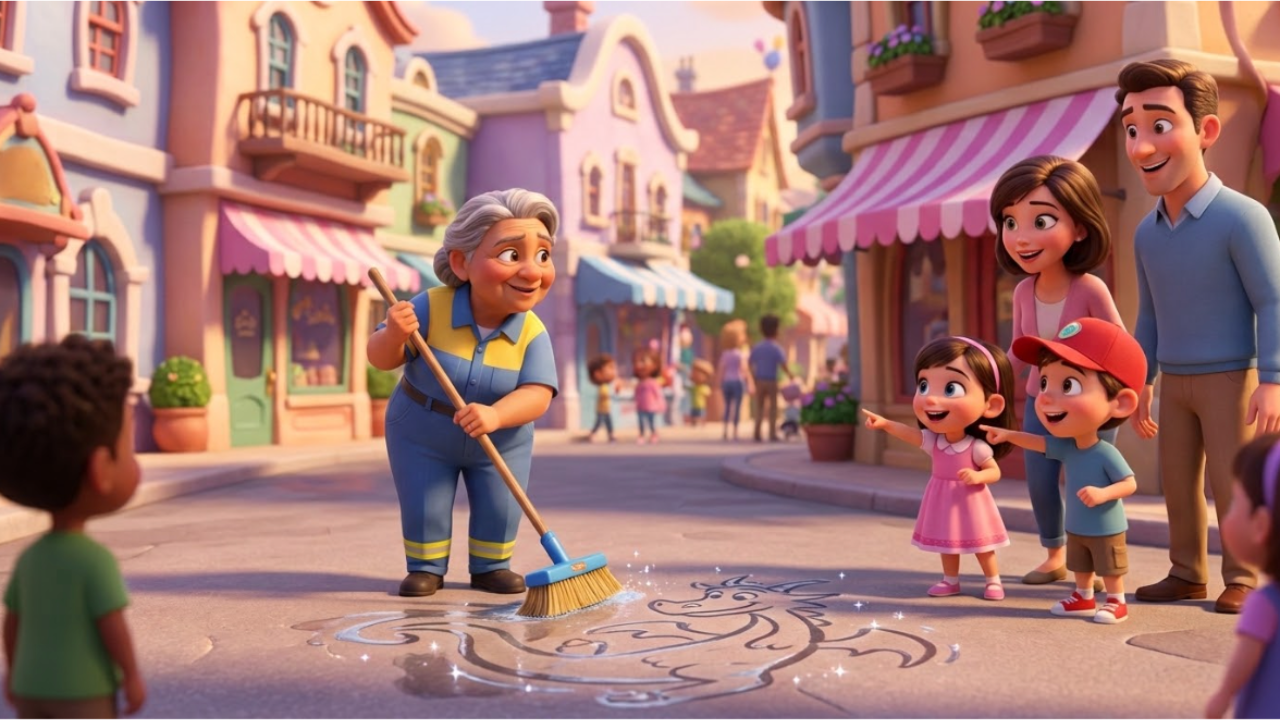
You're standing in the Magic Kingdom, watching a street sweeper.
Strange sentence, I know. But stay with me.
This particular street sweeper — or "custodial cast member," in Disney parlance — is using their broom to draw Mickey Mouse on the pavement with water. A small crowd has gathered. Children are delighted. Parents are filming. The cast member is grinning, engaging with the kids, answering questions about where Mickey lives, making the whole mundane act of cleaning a pathway feel like a performance.
Because at Disney, it is a performance.
This is what the Disney Institute calls "Everything Speaks" — the philosophy that every single touchpoint, including the person sweeping the floor, communicates something about your brand. And it's why Disney doesn't "hire employees." They "cast members."
The language matters. When you "hire an employee," you're filling a vacancy. When you "cast a member," you're selecting someone to play a role in an ongoing show. The first is administrative. The second is creative. The first focuses on tasks. The second focuses on the guest experience.
Van France, who founded Disney University in 1955, put it beautifully: "At Disneyland, we cast members in roles that help create happiness for our guests. Every role is important to the show."
The street sweeper isn't just cleaning. They're playing the role of "friendly cast member who maintains the magic." The chef who helped with my allergies wasn't just cooking. He was playing the role of "caring expert who makes every guest feel special." The parking attendant who directed our car wasn't just managing traffic flow. They were the first cast member in the show — the opening act that sets the tone for everything that follows.
Now, here's where this gets interesting for your business.
Disney's Quality Standards — their operational priorities — are, in order: Safety, Courtesy, Show, Efficiency. That ranking is deliberate and non-negotiable. Safety comes first (obviously). But notice what comes second: Courtesy. Not efficiency. Not productivity. Not cost management. Courtesy.
This hierarchy tells you everything about what Disney values in its cast members. They can train efficiency. They can teach show standards. They can drill safety protocols. But courtesy — genuine warmth, natural kindness, an instinct to make others feel valued — that's the raw material they're selecting for at the casting stage.
Think of it like casting a film. If you're Pixar, making a movie about a lovable robot, you can teach an actor the technical skills — how to move in a motion-capture suit, how to time their performance to animation frames. But you cannot teach them to be lovable. WALL-E works because Ben Burtt, who created the character's voice, had an intrinsic warmth that no amount of direction could manufacture.
Your receptionist, your sales team, your service technicians — they're all cast members in your show. The question is: are you casting them like Disney casts, or are you just filling seats?
Quick quiz time!
You're interviewing two candidates for a customer-facing role. Candidate A has ten years of industry experience, flawless technical skills, and references that praise their efficiency — but during the interview, they barely make eye contact and seem irritated by your questions. Candidate B has two years of experience, will need training on your systems, but lights up the room, asks thoughtful questions, and makes you feel genuinely listened to.
What do you do?
A) Hire Candidate A. Experience is king. You can send them on a customer service course.
B) Hire neither. Keep searching for a unicorn who has both.
C) Hire Candidate B. Train for skill. You can't train for personality.
If you chose C, congratulations — you're thinking like a Disney casting director. If you chose A or B... well, enjoy your technically proficient team of refrigerated fish. 🤔
The Key Principles Behind Disney's Casting Magic
Right. So we've established that Disney hires differently. But what, specifically, are they looking for? What's the actual criteria that separates the cast members who create magic from the ones who merely clock in?
Let me break this down into the key principles I've observed over more than 150 visits to Disney parks — and yes, my wife has pointed out that this is "perhaps excessive." She's not wrong. But in my defence, it's research. Very enjoyable research that happens to involve churros.
Principle 1: They Hire for Values Alignment, Not Just Skills Match
Disney's Traditions programme — the orientation that every single cast member goes through, from executives to hourly workers — doesn't start with job training. It starts with immersion in Disney's values, history, and culture.
But here's the thing: Traditions works because the people in the room have already been selected for their compatibility with those values. You can't indoctrinate someone into caring about guest happiness if they fundamentally don't. The programme reinforces and amplifies existing traits — it doesn't create them from scratch.
Lee Cockerell, who spent a decade running Walt Disney World operations (overseeing 40,000 cast members), puts it brilliantly in his book Creating Magic: "Hire people who already have the values and attitudes you want. Then train them for the skills they need."
In practical terms, this means Disney's casting process is designed to identify intrinsic characteristics: empathy, optimism, genuine interest in others, adaptability, and what they call "guestology" — the ability to intuitively understand what guests need, often before the guests know themselves.
Think of Genie from Aladdin. His magic isn't just that he can grant wishes — it's that he genuinely, delightfully wants to. His enthusiasm is contagious. He's not serving Aladdin because it's his job; he's serving him because making others happy is fundamentally who he is. That's the type of person Disney casts.
Principle 2: They Look for "Natural Performers"
This doesn't mean actors. It means people who are naturally "on" — who bring energy to interactions without it feeling forced.
There's a concept in Disney's approach called being "onstage" and "backstage." When cast members are in guest-facing areas, they're onstage — performing their role. When they're in staff-only areas, they're backstage — where they can relax, take a breath, and be themselves.
But here's the subtlety: the best cast members don't see onstage as a performance they have to endure. They see it as an extension of themselves. Being friendly and helpful isn't a mask they put on; it's who they are, amplified.
Your best employees are likely the same way. They don't drag themselves through customer interactions like a cat being given a bath. They genuinely enjoy the human connection. They're Miguel from Coco — born to perform, unable to help themselves, energised rather than drained by sharing their gift with others.
Principle 3: They Prioritise Recovery Potential
Things go wrong. Even at Disney — especially at Disney, given the scale and complexity. Rides break down. Queues get long. Food orders get muddled. The rain arrives on what was supposed to be a perfect park day.
What Disney looks for in casting is not people who won't make mistakes — that's impossible — but people who will recover brilliantly.
There's a study often cited in customer service circles (originally from the Technical Assistance Research Programs Institute, though it's been validated repeatedly since) that shows customers who experience a problem that's resolved exceptionally well often become more loyal than customers who never had a problem at all. Disney figured this out decades ago.
The cast members who create the most magical moments are often the ones who turn a disaster into a triumph. The families who missed a character meet-and-greet and were personally escorted to a private encounter. The children whose dropped ice cream was replaced with a full-size sundae and a sticker. The guests whose ride broke down and received FastPasses for their entire day.
These recoveries require cast members who can think on their feet, who are empowered to make decisions, and — crucially — who want to fix things rather than pass the buck. That instinct to own problems and solve them? That's a hiring criteria, not a training outcome.
Principle 4: They Assess How Candidates Make Them Feel
This is perhaps the most underrated aspect of Disney's casting approach.
During the interview process, Disney casting directors pay close attention to how they themselves feel in the candidate's presence. Do they feel listened to? Valued? Energised? Or do they feel drained, uncomfortable, or subtly judged?
Because here's the reality: however the interviewer feels is how your customers will feel. If a candidate makes you slightly uneasy in an interview — when they're theoretically on their best behaviour — imagine how they'll make customers feel on a stressful Tuesday when everything's going wrong.
"But Andrew," I can hear you thinking, "my business isn't a theme park. I sell accounting software. I run a plumbing company. I manage a law firm. Are you really telling me I should hire accountants based on whether they're bubbly?"
Not bubbly, necessarily. But yes, you should hire accountants — and plumbers, and lawyers, and software developers — based on whether they make others feel valued, respected, and well-served. The specifics of warmth look different in different industries, but the principle is universal.
Even Eeyore has his place, but you probably shouldn't make him your head of customer relations.
Quick quiz time!
You run a dental practice. A highly qualified dental hygienist applies. Their clinical skills are impeccable. But during the interview, they complain about their previous workplace, seem bored by your questions about patient care, and their only question for you is about parking policies.
What do you do?
A) Hire them immediately. Clinical skills are what matter in dentistry.
B) Hire them but assign them to patients who don't really need to be put at ease. (Do those exist?)
C) Keep looking. Someone who seems bored by patient care will not create a great patient experience, regardless of their skills.
If you chose C, you're casting like Disney. If you chose A or B, I hope your patients enjoy their technically perfect but emotionally distressing cleanings.
Disney vs. Traditional Hiring: A Tale of Two Approaches
There you are, sitting in your favourite coffee shop.
The barista takes your order. They're efficient. They remember the sequence: take order, process payment, call the drink to the bar, move to the next customer. The machine operates smoothly.
Notice what I just said. "The machine operates smoothly." Not "the human being made you feel welcome." The machine.
Now think about the last truly memorable coffee shop experience you had. I'd wager it wasn't memorable because the barista was efficient. It was memorable because they remembered your name. Or made a joke that genuinely made you smile. Or asked how your day was going and — here's the key bit — actually seemed to care about the answer.
That's the difference between traditional hiring and Disney's casting approach.
Traditional hiring asks: "Can this person do the job?"
Disney casting asks: "Can this person make our guests feel the way we want them to feel while doing the job?"
Traditional hiring focuses on the past — what the candidate has already done, where they've already worked, what qualifications they've already earned.
Disney casting focuses on the present and future — who the candidate is, how they make others feel now, and how they'll contribute to the guest experience going forward.
Let me give you a vivid non-Disney example that illustrates the contrast.
I worked with a dental practice in Leeds a few years back — lovely practice, great clinical standards, but struggling with patient retention. When we dug into the problem, it wasn't the dentistry. The dentistry was excellent. It was the front desk.
The practice manager had hired their receptionist based on administrative skills: typing speed, software proficiency, previous experience managing appointment systems. On paper, she was perfect. In practice, she was making patients feel like interruptions.
Not rudely. She wasn't unkind. She was just... transactional. Efficient. A machine operating smoothly.
We helped them recast the role. Found someone whose admin skills were honestly mediocre (at first), but whose natural warmth made every patient feel like the most important person in the building. Within six months, patient retention improved markedly, online reviews started mentioning the "welcoming atmosphere," and the mediocre admin skills? She'd learned the systems. Because systems can be learned.
Warmth cannot.
Here's another example. Zappos — the online shoe retailer — famously applies a version of Disney's casting philosophy. They hire for culture fit so intensely that they offer new employees $2,000 to quit after their first week if they feel the company isn't right for them. They'd rather pay someone to leave than keep someone who doesn't genuinely belong in their customer-obsessed culture.
Tony Hsieh, their late CEO, built an entire company philosophy around this: hire for attitude and train for skill. The technical aspects of selling shoes online can be taught. The genuine desire to make customers happy — to spend an hour on the phone helping someone find the perfect pair — that's either there or it isn't.
Four Action Steps You Can Implement This Week:
1. Rewrite your job descriptions. Before listing required skills and qualifications, list the attitudes, values, and interpersonal qualities the role requires. Make these non-negotiable. Skills requirements can be "preferred" or "desirable"; values alignment is mandatory.
2. Redesign your interview process to reveal personality. Ask about times candidates went above and beyond for someone. Ask how they handled a situation where following the rules would have created a bad outcome. Ask what they do when they see a colleague struggling. Their answers (and how they tell the stories) reveal far more than their CV.
3. Pay attention to how candidates make you feel. After every interview, pause and ask yourself: Did I feel listened to? Energised? Respected? Or did I feel drained, uncomfortable, or subtly judged? Your gut is data.
4. Involve your best "cast members" in the hiring process. The employees who already embody your culture are your best judges of whether a candidate will fit. Their instincts are calibrated to what you're looking for.
You don't need a castle or a talking mouse. You need a mindset shift. And that shift starts with recognising that the personality your team brings to work every day is either adding magic or subtracting it — and no amount of training fixes a casting mistake.
Quick quiz time!
A candidate's CV shows they've worked for three companies in the last two years. In the interview, they explain: "The first company had a toxic culture that didn't value employees. The second company promised growth opportunities that never materialised. The third company's leadership didn't know what they were doing."
What's your reaction?
A) Completely understandable. Those sound like terrible workplaces. Hire them!
B) Concerning, but everyone deserves a fresh start. Hire them with a probation period.
C) A red flag. Someone who blames every previous employer may become someone who blames you. Proceed with extreme caution and probe deeper.
If you chose C, excellent pattern recognition. One difficult previous job is believable. Two is unlucky. Three is a pattern — and patterns tend to repeat. 🌟
The Time I Watched a "Casting Mistake" Nearly Ruin a Holiday
Not at Disney, I should clarify. Disney's casting process is remarkably consistent. No, this was at a resort in the Caribbean — a place that shall remain nameless because I'm not a complete monster, and also because they've since improved considerably.
My wife and I had booked a week-long getaway. Anniversary trip. We'd saved up, done the research, read the reviews (mostly glowing), and arrived with expectations suitably elevated.
The resort was beautiful. The beach was pristine. The rooms were lovely. And the staff... well, the staff illustrated exactly what happens when you hire for competence and ignore personality.
Every single interaction felt like a transaction. The restaurant staff took orders efficiently but without warmth. The concierge answered questions correctly but with visible impatience. The housekeeping was impeccable — rooms spotless, towels replaced, amenities restocked — but we never once saw a housekeeper smile.
The technical execution was flawless. The human connection was non-existent.
By day three, my wife observed: "I feel like we're bothering them by being here."
That's the feeling. That's what happens when you staff a customer-facing business with people who can do the job but don't actually enjoy serving others. The guests feel like problems to be processed rather than humans to be delighted.
Contrast this with our stay at Disney's Grand Floridian Resort just two months later. Technically, the Grand Floridian is "just" a hotel. It has rooms, restaurants, a pool, a concierge desk — the same basic components as the Caribbean resort.
But the feeling couldn't be more different.
The cast member who checked us in noticed it was close to our anniversary (we'd mentioned it when booking) and upgraded us — not because I'm important (I'm not) or because we'd complained (we hadn't), but because she saw an opportunity to create a magical moment. She seemed genuinely pleased to do it.
The server at Citricos remembered our drink orders from the night before. The housekeeper left our towels arranged in the shape of a mouse (with chocolate ears). The cast member at the pool offered us a recommendation for the best fireworks viewing spot, then offered to make a reservation at a restaurant that would time perfectly with the show.
None of these were grand gestures. None required significant resources. What they required were people who were paying attention and who genuinely wanted to help.
That's what Disney casts for.
Lessons from this story:
1. Technical excellence without warmth creates distance. Customers may not be able to articulate why they don't want to return, but they'll feel it.
2. Small moments of personalisation create disproportionate loyalty. Remembering a drink order costs nothing. Upgrading an anniversary stay creates a story we've told a hundred times.
3. Hiring the wrong people is expensive. The Caribbean resort had high turnover (we learned from another guest). Of course they did. Working in hospitality when you don't actually like people is exhausting. The cast members at Disney seem energised by their work — because they were selected for people who would be.
4. Your culture is the sum of your casting decisions. Every person you hire is a vote for the type of organisation you're building. Cast warmly, and warmth compounds. Cast coldly, and... well, you become a technically competent Caribbean resort that guests don't return to.

How to Apply Disney's Casting Principle in Any Industry
Now, I can hear the objection forming: "That's all well and good for a theme park, Andrew. Or a resort. But my business is different."
Fair enough. Let me show you how the casting principle applies across industries that are decidedly not magical kingdoms.
Retail: The shop assistant who notices a customer looking lost and approaches with "Can I help you find something?" versus the one who stays behind the counter scrolling their phone. Same job description. Different casting. The first person wants to help; the second person wants their shift to end. A study by the Gallup organisation found that emotionally engaged employees create customer satisfaction rates that are, on average, 20% higher than their disengaged colleagues. Retail margins are tight. That 20% is the difference between thriving and surviving.
Professional Services (Accounting, Law, Consulting): "But my clients want expertise, not personality!" Incorrect. Your clients want both. They want to feel that their accountant, lawyer, or consultant actually cares about their outcome — not just that they're technically proficient. The professionals who build long-term client relationships are the ones who call to check in, who remember details about the client's life, who make the client feel like a person rather than a file. Cast for that.
Healthcare: This one's crucial. A study published in the Journal of General Internal Medicine found that patients who felt their doctors had high empathy were significantly more likely to follow treatment recommendations. Empathetic healthcare providers literally improve health outcomes. You can train clinical skills. You cannot train empathy. Cast for it.
Trades (Plumbing, Electrical, Construction): The plumber who explains what they're doing, who leaves the work area cleaner than they found it, who calls ahead to confirm the appointment time — that's the plumber who gets referrals. The technically excellent plumber who's gruff, dismissive, and leaves muddy footprints on the carpet? They might get the job done, but they won't build a loyal customer base. Cast for people skills, train for pipe skills.
Online Businesses: "But my team doesn't interact with customers face-to-face!" Perhaps. But they interact through email, chat, social media, phone calls. Every touchpoint communicates something about your brand. The support agent who types "Thanks for reaching out! Let me dig into this for you 😊" creates a different experience than the one who types "Your ticket has been logged. Reference #45723." Same information. Different warmth. Cast for the first type.
Hospitality (Restaurants, Hotels, Event Venues): This one's obvious, but it's worth stating: hospitality businesses live or die by their people. The best restaurant in town, staffed with servers who make guests feel unwelcome, will struggle. The mediocre restaurant with a team that makes everyone feel like a regular will thrive. I've seen it happen. I've watched brilliant chefs fail because they hired front-of-house staff for their technical competence (wine knowledge, POS proficiency, tray-carrying ability) rather than their warmth.
Walt Disney said: "Do what you do so well that they will want to see it again and bring their friends."
That's the long game. And it's won or lost at the casting stage.
Quick quiz time!
You run a small accounting firm. A potential new hire has excellent qualifications and experience, but during the interview mentions that they "prefer working with numbers to working with people" and "find client meetings draining."
What do you do?
A) Perfect! Accountants should prefer numbers. Hire them for your back-office work.
B) Hire them, but make sure they never interact with clients.
C) Consider carefully. Even back-office roles require collaboration with colleagues. And someone who finds human interaction "draining" may struggle in your team culture.
If you chose C, you're thinking holistically about casting. A and B might work in some contexts, but be honest about whether you can truly isolate someone from all human interaction in your business. Usually, you can't.
The Long-Term Payoff: Why Casting for Personality Creates Compound Magic
Let me share some numbers that might surprise you.
A Bain & Company study — the one that every customer service consultant loves to cite, including me — found that increasing customer retention by just 5% can boost profits by anywhere from 25% to 95%. That's not a typo. That's the power of keeping the customers you already have.
Disney doesn't need to read that study. They've been living it since 1955.
Disney World's guest return rate is remarkably high — some estimates suggest that over 70% of visitors have been before. These aren't first-time tourists ticking a box. These are repeat guests who've chosen Disney over every other holiday option, again and again.
And here's the thing: those repeat guests didn't come back for the rides. The rides are fun, but once you've experienced Space Mountain, you've experienced it. They came back for the feeling. The way they feel when they're at a Disney park — valued, immersed, cared for.
That feeling is created by cast members. By people. By humans who were cast for their ability to make other humans feel a certain way.
The long-term benefits of casting for personality compound over time:
Customer loyalty increases. People don't just buy from businesses; they buy from people. When your team genuinely connects with customers, those customers become loyal advocates. They forgive occasional mistakes. They return even when a competitor offers a lower price. They tell their friends.
Word-of-mouth marketing amplifies. Nobody posts on social media about "adequate service." They post about remarkable experiences — both positive and negative. Staff who create genuine connections create stories worth sharing. That's free marketing you can't buy.
Employee retention improves. Here's a counterintuitive one: when you hire for personality and values fit, your team likes each other more. They enjoy coming to work. They stay longer. The cost of constant recruitment and training — which is substantial — decreases. Bob Iger, in his book The Ride of a Lifetime, emphasises that one of his core leadership principles was surrounding himself with people who were not only talented but also "good people." The result? A leadership team that stayed together for years, executing on long-term vision.
Your culture becomes self-reinforcing. The people you hire influence the people you hire next. Warm, connected employees attract and select for more warm, connected employees. Your culture evolves, for better or worse, based on your casting decisions. Choose wisely and the momentum works in your favour.
Customer problems become opportunities. As I mentioned earlier, service recovery — fixing problems brilliantly — creates loyal customers. But that requires people who want to fix problems, not people who want to avoid blame. Cast for problem-solvers and your service failures become relationship-building opportunities.
Disney magic isn't about deep pockets. It's about deep caring. And deep caring starts with casting people who care deeply.
Quick quiz time!
Your business has a high employee turnover rate. Exit interviews reveal that staff feel "the culture is cold" and "management only cares about numbers." What's the most likely root cause?
A) You're not paying enough. Raise salaries.
B) You need better employee benefits. Add a ping pong table.
C) Your past hiring decisions created the culture you have today. The fix starts with casting differently — including in management roles.
If you chose C, you've identified the real issue. A and B might help at the margins, but they won't fix a culture problem that was built through years of misaligned hiring. Culture is a casting outcome.
Challenges and Reality Check: The Spoonful of Sugar

Right, I've been singing Disney's praises for a while now. Time for a dose of reality — or as Mary Poppins might put it, a spoonful of honesty to help the inspiration go down.
Casting for personality instead of skills is not without its challenges. Let me be frank about them.
Challenge 1: It Takes Longer
Finding candidates who have both the right personality and the willingness to learn your systems takes longer than grabbing the first person with relevant experience. You might interview more candidates. You might leave positions open longer. This can create pressure — especially when you're short-staffed and desperate.
The temptation to hire the skilled person who seems "fine" is real. Resist it. The cost of a bad cultural fit — in morale, customer experience, and eventual termination — is far higher than the cost of a prolonged search.
Challenge 2: It Requires Better Training
If you're hiring for personality and training for skill, your training had better be good. Disney can pull this off because Disney University is world-class. They've invested enormously in their ability to bring anyone up to speed on operational requirements.
Your business might not have that infrastructure yet. Building it takes time and resources. But the alternative — hoping that skilled people will somehow develop warmth — doesn't work. Training can fill skill gaps. Nothing fills personality gaps.
Challenge 3: It's Harder to Measure
"Can this person operate our software?" is easy to test. "Will this person make our customers feel valued?" is harder. You're assessing for qualities that can't be quantified on a scorecard.
This discomfort with subjectivity leads many businesses to default to objective criteria — qualifications, years of experience, technical tests — even when those criteria don't predict success in customer-facing roles.
Get comfortable with subjectivity. Trust your gut. Train your interviewers to pay attention to how candidates make them feel, not just what candidates say.
Challenge 4: Disney Gets It Wrong Too
Look, I adore Disney. I've visited more than 150 times. I've written a book about their business principles. But they're not perfect.
I've encountered cast members who were clearly having a bad day. I've experienced service that fell below expectations. The 2021 rollout of the Genie+ system created widespread guest frustration — not necessarily a casting issue, but a reminder that even Disney makes missteps.
The point isn't perfection. The point is intention. Disney tries to cast for personality. They prioritise guest experience in their hiring. They build systems that support their cast members in delivering magic. They won't succeed 100% of the time — no one does — but their casting philosophy creates the conditions for magic to happen far more often than it otherwise would.
Challenge 5: Not Everyone Wants to Work for Disney
Disney's casting approach works partly because people want to work at Disney. The brand attracts candidates who are already aligned with the values. Your roofing company or accounting practice might not have that same magnetic pull.
This means you have to work harder to attract personality-fit candidates. Your job postings, your employer brand, your interview process — all of it needs to signal what kind of workplace you are and what kind of people thrive there. If your job ad reads like a legal document, you'll attract people who think like legal documents.
Five Strategies for Overcoming These Challenges:
1. Start small. You don't have to overhaul your entire hiring process overnight. Start with one role. Cast intentionally. See the results. Build from there.
2. Invest in your training infrastructure. If you're going to hire for personality and train for skill, your training needs to be excellent. Document your processes. Create onboarding programmes. Make skill development part of your culture.
3. Hire slow, fire fast. Take your time finding the right people. But if you make a casting mistake — if someone reveals themselves to be a poor fit — address it quickly. Keeping a bad fit damages your culture and demoralises your good people.
4. Involve your best cast members in hiring. The people who already embody your desired culture can spot kindred spirits better than any HR checklist.
5. Be patient. Cultural change takes time. Your current team is the sum of years of hiring decisions. A single great hire won't transform everything overnight. But each aligned hire shifts the balance. Over time, the compound effect is powerful.
Quick quiz time!
You've decided to adopt Disney's casting philosophy, but your senior management team is resistant. They believe "skills and experience are what matter" and think focusing on personality is "soft." What do you do?
A) Abandon the idea. You need buy-in from the top.
B) Implement it secretly in your own department and hope no one notices.
C) Make the business case with data (retention rates, customer satisfaction, hiring costs) and start with a pilot programme to prove the results.
If you chose C, you're playing the long game. Change-resistant leadership is a challenge, but it's not insurmountable. Data and demonstrated results are your allies. 🎩✨
Frequently Asked Questions
"Isn't this just discrimination? How is hiring for 'personality' legal?"
Excellent question, and one that comes up more than you'd think. Let me be clear: hiring for personality does not mean hiring based on protected characteristics. You're not selecting for age, gender, ethnicity, religion, or any other legally protected category.
You're selecting for job-relevant qualities: warmth, empathy, communication style, values alignment. These are legitimate hiring criteria when they're genuinely connected to job performance — which, in customer-facing roles, they absolutely are.
Disney doesn't hire cast members because they're young or attractive or a particular demographic. They hire cast members who can create exceptional guest experiences. That's not only legal; it's good business. Just make sure your criteria are applied consistently, documented, and genuinely connected to role requirements. When in doubt, consult an employment lawyer — but don't let fear of the question stop you from casting intentionally.
"What if I'm in an industry where technical skills genuinely matter more than personality?"
There's almost no industry where technical skills matter instead of personality. There are industries where technical skills have a higher floor — where you genuinely cannot hire someone without certain qualifications (surgeons, commercial pilots, structural engineers).
But even in those fields, personality matters. The best surgeons have bedside manner. The best pilots manage their crews effectively. The best engineers collaborate with teams and communicate with clients.
The question isn't "skills or personality?" The question is "what's the minimum skill level required, and among candidates who meet that bar, which one will create the best experience for customers, colleagues, and the organisation?" Dory from Finding Nemo wouldn't make a great surgeon — she'd forget where she left the scalpel — but even surgeons need to make patients feel cared for.
"This sounds expensive. How can a small business afford to be this picky about hiring?"
How can you afford not to be?
The cost of a bad hire is enormous. There's the obvious cost — salary, benefits, training time — but there's also the hidden cost: customers lost, team morale damaged, your time spent managing problems instead of growing the business, and the eventual cost of terminating and replacing them.
Some estimates put the cost of a bad hire at 30% of the employee's first-year salary. For customer-facing roles where a bad fit actively drives customers away, it can be far higher.
Being picky about hiring isn't expensive. Being sloppy about hiring is. The time you invest in finding the right person saves multiples of itself in avoided problems. Scrooge McDuck would approve of the ROI on intentional casting.
"How do I train my managers to hire for personality when they've always hired for skills?"
Start by changing the questions they ask. Most traditional interviews focus on credentials and past accomplishments: "Tell me about your experience with X." "Walk me through your CV." "What qualifications do you have?"
Add behavioural and values-based questions: "Tell me about a time you went above and beyond for someone." "Describe a situation where you had to choose between following the rules and doing what felt right." "What does excellent customer service look like to you?" "How do you handle it when you see a colleague struggling?"
Then train your managers to pay attention to how candidates answer, not just what they say. Do they light up when talking about helping others? Do they take ownership of past problems or blame others? Do they seem genuinely interested in your business, or are they going through the motions?
Finally, have them practice by interviewing alongside someone who already hires this way. Like most skills, it's learned through observation and practice.
"What if someone is great in the interview but turns out to be different on the job?"
This happens. Some people are excellent interviewees but poor cultural fits in practice. A few strategies help:
Use longer interview processes. It's harder to maintain a façade over multiple conversations. Disney's casting process includes multiple touchpoints for a reason.
Include practical elements. Have candidates interact with your team, shadow for a day, or work on a trial project. Real-world behaviour reveals more than interview answers.
Have multiple interviewers. Different people pick up on different signals. One interviewer might miss what another catches.
Have a robust probation period and use it meaningfully. If someone isn't fitting in, address it early. Don't let politeness prevent you from making necessary corrections.
Simba looked great on paper — heir to the throne, literally born for the job — but he still needed to prove himself in practice. Give candidates the same opportunity to demonstrate their true fit.
"Will this actually work, or is it just Disney-flavoured wishful thinking?"
It works. I've seen it work in dental practices, restaurants, online businesses, professional services firms, and trades companies. I've coached business owners through the transition from skills-first hiring to personality-first casting, and the results are consistent: better customer experiences, improved retention, stronger team culture.
But here's the honest caveat: it's not a quick fix. Cultural change takes time. If your current team is the product of years of misaligned hiring, one great new cast member won't transform everything overnight.
What they will do is start shifting the balance. Each personality-fit hire makes the next one easier. Each warm, engaged team member raises the standard for everyone around them. The compound effect, over months and years, is dramatic.
Disney didn't build their cast overnight. They've been refining their approach since 1955. But you don't need decades. You need to start.
Putting It All Together: Your Casting Call Awaits
Well, we've almost come to the end of our magical journey through Disney's casting philosophy — and I hope, like a well-worn pair of Mickey ears, it fits comfortably and makes you smile.
Let me pull the threads together.
We've explored how Disney transforms hiring into "casting" — a fundamental mindset shift that changes everything about how you evaluate candidates. We've seen that skills can be trained but personality cannot, and that Disney's entire approach rests on this truth.
We've examined Disney's Quality Standards (Safety, Courtesy, Show, Efficiency) and how "Courtesy" sitting at position two — above efficiency, above show — tells you everything about what they're selecting for when they cast.
We've walked through the key principles: hiring for values alignment, looking for natural performers, assessing recovery potential, and paying attention to how candidates make you feel. We've compared Disney's approach to traditional hiring and seen the difference between filling positions and casting roles.
We've applied the principle across industries — from retail to healthcare to professional services to trades — proving that this isn't theme-park-specific wisdom. It's human wisdom. It's business wisdom.
And we've been honest about the challenges: it takes longer, requires better training, is harder to measure, and even Disney doesn't get it right every time.
So where does that leave you?
It leaves you with a choice. The same choice every business owner faces with every hire: do you fill the position, or do you cast the role?
Do you select for the skills on the CV, or for the warmth in the room?
Do you tick boxes, or do you build magic?
Here's your challenge: The next time you hire, ask yourself not just "Can this person do the job?" but "How will this person make our customers feel while doing the job?"
That single question changes everything.
Disney magic isn't about having a castle or a talking mouse. It's about creating moments of wonder in the everyday. It's about making people feel seen, valued, and cared for.
And that starts — it always starts — with who you cast.
As Walt Disney himself said: "You can design and create, and build the most wonderful place in the world. But it takes people to make the dream a reality."
Go build your dream. Cast it brilliantly.
Now, if you'll excuse me, I have a wife to convince that our 151st trip to Disney is absolutely, definitely necessary for "research purposes." Wish me luck. 🧙♂️
About the Author
Andrew Lock is a renowned business coach, consultant, and author with over three decades of experience helping entrepreneurs and business leaders achieve extraordinary success. As the founder of 'Help My Business!', Andrew has empowered thousands of business owners worldwide through his unique coaching, mastermind groups, 10 best-selling books, and engaging keynote presentations.
Known as the "The Yoda of marketing," (without the green pointy ears), Andrew brings a refreshing blend of humor and practical insights to his work. His expertise spans customer experience, pricing, sales, marketing, employee management, and operations, with a special focus on applying Walt Disney's business principles to modern enterprises.
Andrew is the author of ten books, including the popular "Walt's Way" and "Big Lessons from Big Brands." His work has been featured in major media outlets, and he's shared stages with business luminaries like Sir Richard Branson, Donald Trump, Daymond John, Dan Kennedy, The Dalai Lama, and Michael Gerber.
When he's not helping businesses transform their customer service, Andrew enjoys traveling with his family and indulging in his passion for all things Disney and chocolate (though not necessarily in that order).
For more insights and resources, visit www.AndrewLock.com.
Sources & Further Reading
Want to go deeper? Here are a few of the books and resources I referenced (or shamelessly stole ideas from) while writing this:
- Be Our Guest — Disney Institute (the closest thing to a Disney customer service bible, and essential reading on their casting philosophy)
- Creating Magic — Lee Cockerell (the man who ran Walt Disney World operations for a decade knows a thing or two about hiring the right people)
- The Ride of a Lifetime — Bob Iger (fascinating insights on Disney leadership and surrounding yourself with the right people)
- Walt's Way — Andrew Lock (yes, shameless plug — but I dedicate considerable space to Disney's people principles)
- Delivering Happiness — Tony Hsieh (Zappos' take on hiring for culture, directly inspired by Disney's approach)
