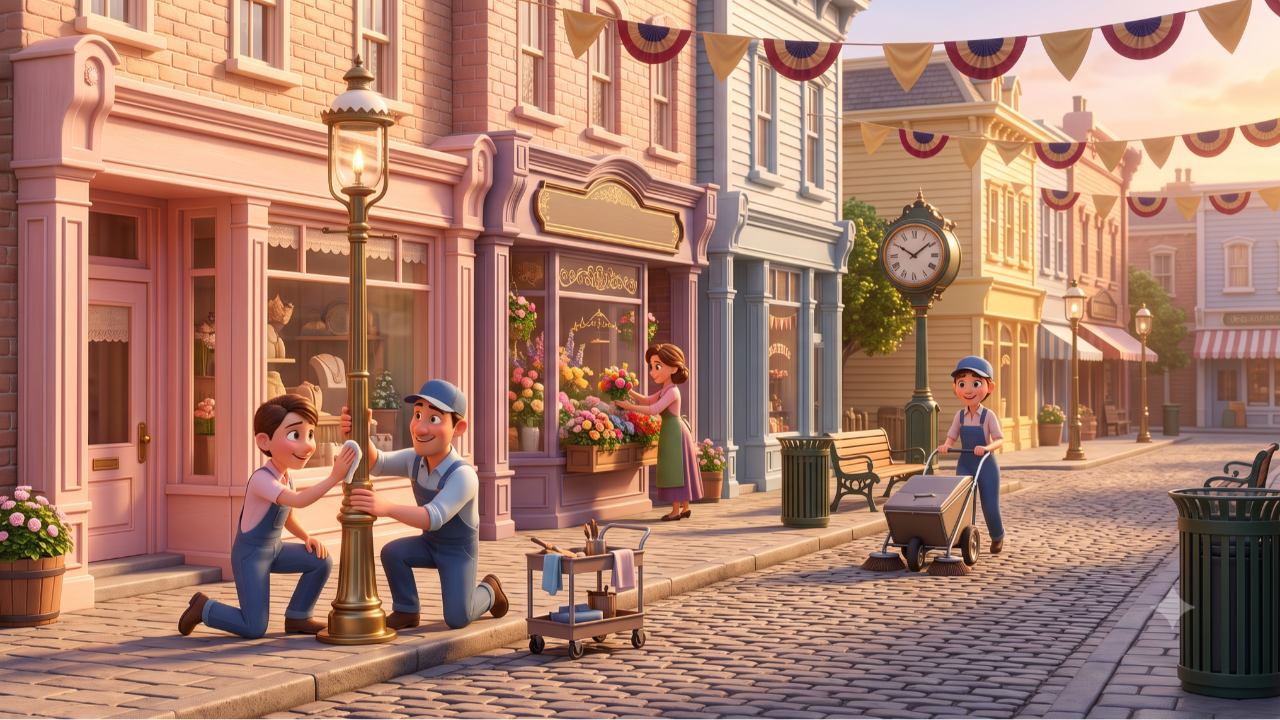
Why Disney Puts Safety Before Smiles —
And What Your Business Can Learn From Their Secret Hierarchy
Right, then. Let's talk about something that sounds monumentally boring but is actually the most important business principle you've probably never heard of.
Four words. That's all it takes. Safety. Courtesy. Show. Efficiency.
In that order. Always in that order.
This is Disney's Quality Standards hierarchy — the decision-making framework that guides every single Cast Member at every Disney property on Earth. And it's the reason Disney delivers impossibly consistent service to 58 million guests a year while most businesses can't get two employees to agree on where to put the staplers.
Here's the thing most companies get catastrophically wrong: they say "everything is important." Customer service is important! Safety is important! Hitting targets is important! Team morale is important!
Which is corporate-speak for "nothing is important" — because when everything is a priority, your employees are left standing in the middle of a crisis playing eeny-meeny-miny-moe with competing demands.
Disney solved this problem decades ago. And in this article, I'm going to show you exactly how they did it, why it works, and how you can steal their framework for your own business. (Legally. I'm not advocating corporate espionage. Though I do look quite dashing in a trench coat.)
As Walt Disney himself once said: "You can design and create, and build the most wonderful place in the world. But it takes people to make the dream a reality."
Those people need clarity. Let's give it to them.
Key Takeaways From This Article:
- Disney's Quality Standards hierarchy (Safety, Courtesy, Show, Efficiency) provides a clear decision-making framework when priorities conflict — something most businesses lack entirely.
- Safety always comes first — Cast Members can halt rides, stop operations, and override efficiency without management approval when safety is at stake.
- Courtesy trumps efficiency — Spending extra time helping a distressed guest is always the right call, even if the queue is building.
- "Show" means everything speaks — Every detail, from trash can placement to background music, contributes to the experience and should be protected.
- Efficiency matters — but it's last — Disney is ruthlessly efficient, but efficiency serves the experience, never the other way around.
- The hierarchy pre-authorises decisions — Employees don't need to guess or wait for manager approval. They know the priorities.
- Clarity creates confidence — When staff understand the ranking, they act faster, better, and more consistently.
- This works in any industry — Healthcare, trades, retail, professional services — the principle of ranked priorities applies everywhere.
- "Everything is important" means nothing is — Vague values without hierarchy create confusion and inconsistent service.
- Short-term inefficiencies create long-term loyalty — The "wasted" time on courtesy interactions builds customer relationships worth far more than seconds saved.
- You don't need Disney's budget to adopt their framework — The hierarchy is free. The only cost is the clarity of thought required to implement it.
The Time Disney Ruined My Romantic Dinner Plans
(And Taught Me Everything About Priorities)
So there we were, sitting at Cinderella's Royal Table in Magic Kingdom with my wife. If you haven't been, this is the restaurant inside Cinderella Castle — the one you need to book approximately seventeen years in advance and requires a second mortgage to afford.
This was a special dinner. I'd planned it for months. I was wearing my nice shirt. The one without mysterious stains.
We'd just ordered when the server — a lovely Cast Member named Rachel — suddenly appeared at our table with an expression I can only describe as "professionally apologetic."
"I'm so sorry," she said, "but we need to ask everyone to leave the restaurant immediately."
My wife looked at me. I looked at my wife. We'd been there for approximately eight minutes.
Turns out there was a safety concern with the castle's elevator system. Not an emergency, mind you. Not a fire or an earthquake or an invasion of particularly aggressive geese. Just a potential issue that the maintenance team wanted to inspect.
Now, here's where most restaurants would do a quick risk assessment: "Is anyone actually in danger? No? Right, keep serving. We'll check it after the dinner rush. Think of the revenue!"
Not Disney.
Safety first. Always. No debate. No manager having a quiet word about the lost bookings. No calculations about how many complaints they'd receive.
They emptied that castle restaurant in the middle of dinner service without a moment's hesitation.
And then — and this is the part that matters — Courtesy second.
Within minutes, we were escorted to 'Be Our Guest', given a table immediately (bypassing a queue that snaked into next week), our entire meal was comped, and Rachel personally delivered dessert with a handwritten note apologizng for the interruption.
My wife cried. Actual tears. I may have misted up a bit myself, though I blamed it on allergies. (It's always allergies.)
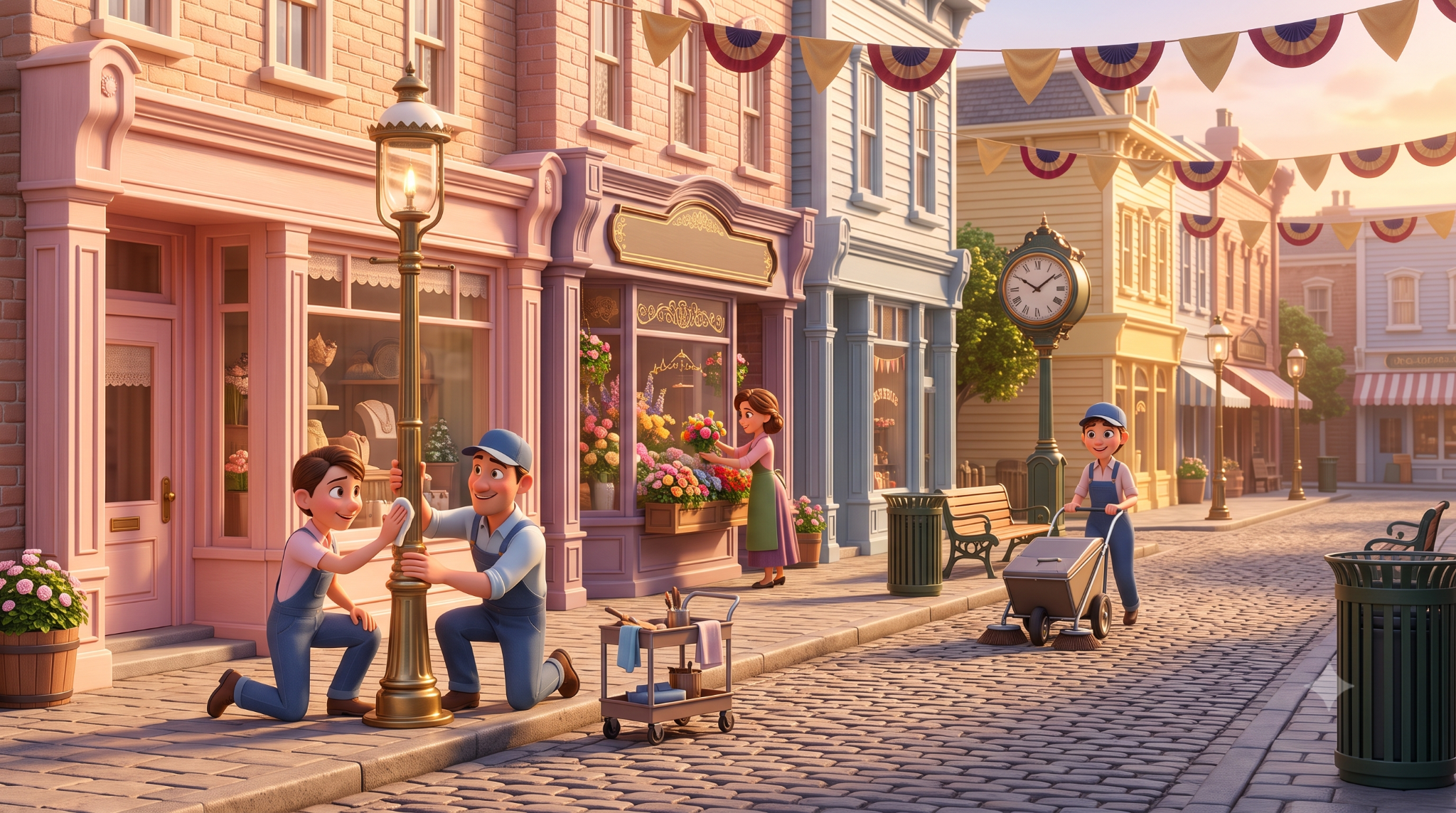
The elevator? Turned out to be fine. Thirty-minute inspection, and all clear.
But here's the thing: it didn't matter that the elevator was fine. The decision to prioritize safety wasn't based on whether the threat was real. It was based on whether the threat might be real.
That's the hierarchy in action. Safety first. Courtesy second. The "show" of our romantic castle dinner? Third. The efficiency of keeping service running? Dead last.
I've thought about that night a lot. Because most businesses would have made the opposite choice. Most businesses would have done a quick mental calculation: "Probably fine. Let's not disrupt things."
And they would have been playing Russian roulette with their reputation. 🎰
Let me ask you something: Does your team know what to do when priorities conflict? Or are they stuck guessing — and hoping they guess right?
The Disney Principle in Action: Why Order Matters More Than Values
You're strolling through Tomorrowland on a sweltering July afternoon. The queue for Space Mountain is 90 minutes. Guests are wilting. The Cast Members are fielding complaints every thirty seconds.
Then the ride stops.
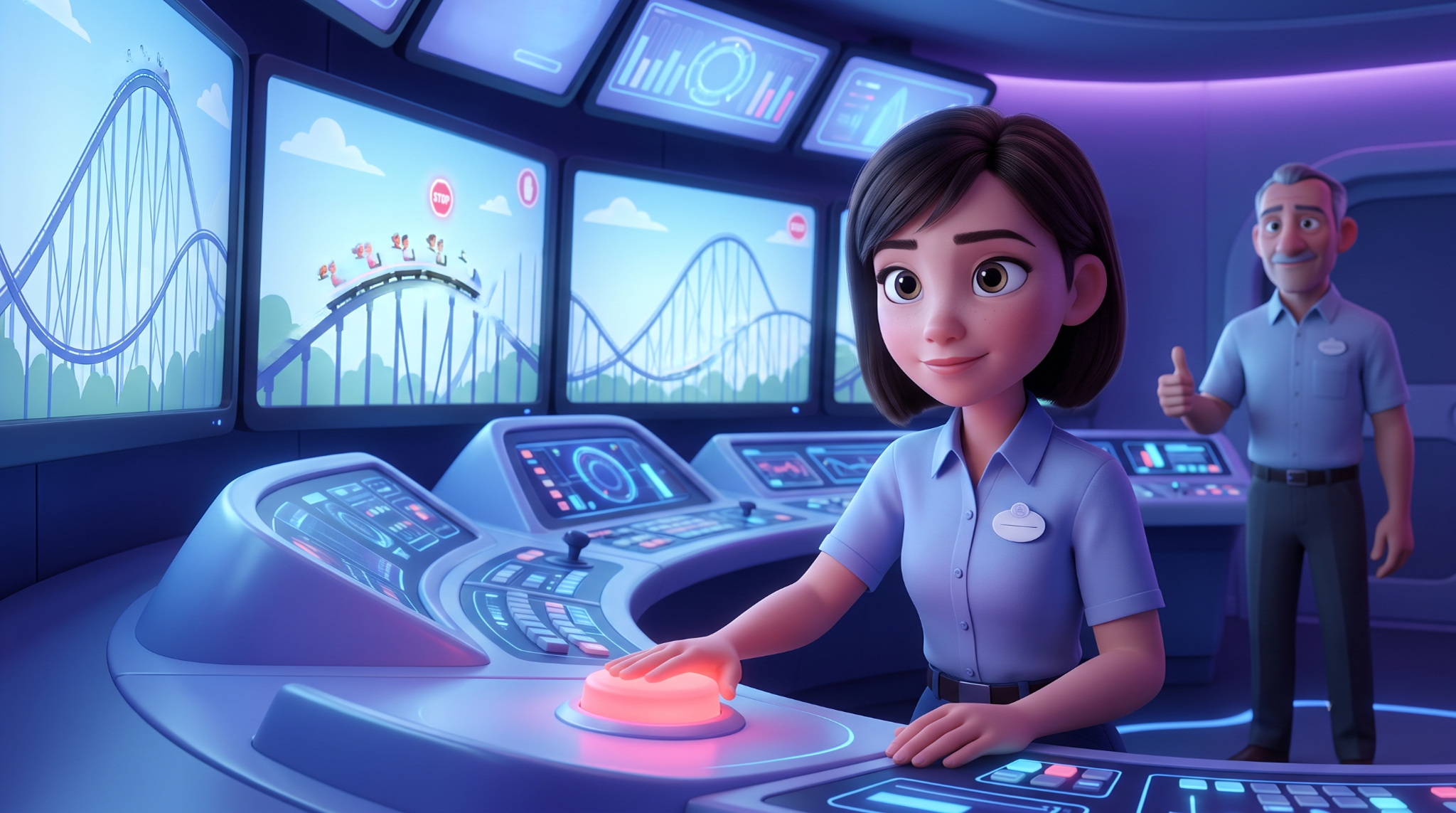
A ride operator — not a manager, not an executive, just a Cast Member doing their job — noticed something that looked slightly off on one of the safety systems. Probably nothing. But maybe something.
Here's what doesn't happen: a panicked call to management asking permission to shut down. A committee meeting to assess the revenue implications. A risk/reward calculation involving spreadsheets.
Here's what does happen: the ride stops. Immediately. No questions, no hesitation, no second-guessing.
Because that Cast Member knows the hierarchy. Safety first. Everything else — the queue, the schedule, the metrics, the inevitable complaints — comes after.
This is what Disney calls their Quality Standards, and it's the most important operational framework you've never stolen from them.
The Disney Institute — which has trained executives from more than a third of Fortune 500 companies — teaches this hierarchy as the foundation of their approach to quality service. It's not a set of vague "values" painted on a wall. It's a prioritised decision tree that tells every employee exactly what matters most when things get complicated.
Safety — The non-negotiable. Physical safety, psychological safety, emotional safety. If there's any doubt, you err on the side of caution. Always.
Courtesy — Treating every guest as an individual human being, not a transaction. Taking the time to help, to listen, to care. Even when the queue is building.
Show — The immersive experience. The details. The costumes, the music, the cleanliness, the "magic." Everything that creates the Disney atmosphere.
Efficiency — Operational excellence. Speed, throughput, minimising waste. Critically important — but ranked fourth.
Think about what this means in practice. If a Cast Member faces a choice between being efficient and being courteous, courtesy wins. If maintaining the "show" (staying in character, keeping the illusion) conflicts with safety, safety wins.
There's no ambiguity. There's no "use your judgment" without guidance. The hierarchy does the heavy lifting.
Lee Cockerell, who ran Walt Disney World operations for a decade, puts it brilliantly in his book Creating Magic: "When you know what's most important, you can make decisions quickly and confidently. When you don't, you hesitate, and hesitation is the enemy of great service."
Think about Baymax from Big Hero 6 — that lovable inflatable robot whose entire programming centres on one question: "On a scale of one to ten, how would you rate your pain?" Everything else flows from that primary directive. He doesn't get confused about his priorities because his hierarchy is clear: protect and heal the patient.
Your employees need to be Baymax. Not confused, conflicted humans trying to balance seventeen competing demands while a customer glares at them.
Here's a quick quiz for you:
A customer is upset and wants extended help, but there's a growing queue. What do you do?
A) Apologise, promise to follow up later, and move to the next customer. Efficiency is king!
B) Ignore the queue entirely and spend two hours with this one person. They're special!
C) Help the customer fully — courtesy before efficiency — but do so with awareness. Perhaps a colleague can help manage the queue.
If you chose C, you've grasped the principle. You don't abandon efficiency; you just don't let it trump courtesy.
If you chose A, you've just optimised your way to a one-star review and a viral tweet about how your company doesn't care about people.
If you chose B... well, I admire your enthusiasm, but perhaps a career in one-to-one life coaching might suit you better. 🤔
What priority conflicts do your employees face every day — and do they know how to resolve them?
The Key Principles Behind Disney's Hierarchy — And Why Most Businesses Get Them Backwards
Let's dig deeper into why this hierarchy works — and why most businesses unknowingly reverse it.
Principle 1: Safety Is Non-Negotiable Because Trust Is Fragile
There I was, reading about theme park incidents on a slow Tuesday afternoon (as one does), when I came across a fascinating statistic: a single serious safety incident at a theme park can reduce visitor numbers for years afterward. Not weeks. Years.
Trust, once broken, rebuilds at the speed of continental drift.
Disney understands this. That's why their safety protocols border on paranoid — in the best possible way. Cast Members don't need permission to prioritise safety. They're expected to. The hierarchy pre-authorises the decision.
Think about Mufasa's death in The Lion King. One betrayal. One moment of misplaced trust. And young Simba carries that trauma for years. Your customers are the same. One safety failure — one moment where they felt at risk — and that memory lodges in their brain like a splinter.
Principle 2: Courtesy Creates Emotional Loyalty (Efficiency Just Creates Transactions)
There's a famous study from Bain & Company — the one that every customer service consultant loves to quote — showing that holding onto just 5% more of your customers can boost profits by anywhere from 25% to 95%. That's not a typo.
Disney doesn't need to read that study. They've been living it since 1955.
Here's the magic: customers remember how you made them feel far more than they remember how fast you were. Maya Angelou said it better than I ever could: "People will forget what you said, people will forget what you did, but people will never forget how you made them feel."
Efficiency is forgettable. Courtesy is memorable.
When a Cast Member at Disney kneels down to speak to a child at eye level — even though it slows the queue — that child's parents remember it for decades. I've heard stories from grown adults who still talk about the Cast Member who took extra time with them when they were five years old.
That's not efficiency. That's legacy.
Principle 3: "Show" Means Everything Speaks — Even the Things You Don't Notice
Here's a detail most people miss: Disney places trash cans every 30 feet throughout their parks. Why? Because Walt Disney himself spent time watching guests and noticed that 30 feet is approximately how far people walk before discarding rubbish.
Any further apart, and people drop litter. Any closer, and you've cluttered the visual landscape.
This is what Disney calls "Everything Speaks." Every sight, sound, smell, and texture contributes to — or detracts from — the experience.
The term comes from the Imagineers (Disney's legendary design team), and it reflects an obsessive attention to detail that most businesses would dismiss as "nice to have." At Disney, it's essential. The "show" is the product.
But notice where it sits in the hierarchy: third. Because even the most beautiful show isn't worth a safety risk or a moment of discourtesy.
Principle 4: Efficiency Serves — It Doesn't Rule
"But Andrew," I hear you saying (I have excellent imaginary hearing), "Disney is one of the most efficient operations on the planet! They move millions of people through rides every day! They've got FastPass and MagicBands and all sorts of clever systems!"
Yes. Exactly. Disney is ruthlessly efficient.
But — and this is crucial — that efficiency is in service of the guest experience, not in competition with it.
Think about Kronk from The Emperor's New Groove. Brilliant at logistics. Can coordinate palace events, manage complex schedules, and whip up a mean spinach puff. But when Yzma's demands conflict with basic decency? He hesitates. He knows something's wrong with the hierarchy he's being asked to follow.
Efficiency that tramples safety, courtesy, or show is efficiency pointed in the wrong direction. Disney's genius is that they optimise like maniacs — but only after the other three priorities are secure.
Principle 5: The Hierarchy Pre-Authorises Decisions
This is the subtle brilliance most people miss.
When a Cast Member shuts down a ride for a safety check, they don't need to call their manager. They don't need to fill out a form. They don't need to justify the decision in a meeting later.
The hierarchy has already authorised the decision before the situation even arose.
This is transformative. It means employees can act instantly, confidently, and consistently. No hesitation. No fear of being second-guessed. No paralysis.
Compare this to most businesses, where employees think: "If I stop what I'm doing to help this customer, will my manager complain that I fell behind on tasks? If I raise this safety concern, will I be seen as a troublemaker? If I spend extra time on quality, will I get dinged for being slow?"
That uncertainty kills good service.
Quick quiz time:
You run a small plumbing business. Your technician arrives at a job to fix a leaky tap but notices dodgy wiring near the bathroom. What's the right move?
A) Ignore it — not your department! Fix the tap and get to the next job.
B) File a detailed report about the wiring, email it to the homeowner, copy their electrician, their insurance company, and possibly their grandmother, then proceed with the tap while waiting for formal acknowledgment.
C) Stop. Tell the homeowner about the safety concern. Explain you can't work until it's addressed. Yes, it delays the job. Yes, it might cost them more. Safety first.
If you chose C, you've got the hierarchy. If you chose A, please don't come to my house. If you chose B... I appreciate your thoroughness, but the homeowner may have moved out by the time you finish the paperwork. 📋
What decisions are your employees hesitating on because they don't know what's truly most important?
Disney vs. Everyone Else: Why Most Businesses Have It Backwards
It's a Tuesday afternoon. You walk into your local coffee shop — not a chain, one of those independent places with mismatched furniture and a chalkboard menu.
There's a queue. The barista is dealing with a customer who has a complicated order and about seventeen questions about oat milk sourcing. Behind you, people are sighing theatrically.
In most coffee shops, the barista is under pressure. Their manager tracks "speed of service." There's a target for orders per hour. The queue is the enemy.
So what happens? The barista rushes. The complicated customer feels hurried, gets defensive. The barista gets flustered. The coffee gets made wrong. The customer complains. The barista apologises through gritted teeth while trying to serve the next person.
Nobody wins. The efficiency obsession creates worse outcomes for everyone.
Now imagine that same coffee shop, but with Disney's hierarchy embedded in the culture.

The barista knows: Courtesy before Efficiency. This complicated customer isn't a delay — they're a guest. The barista takes the time, answers the questions, makes the oat-milk-curious customer feel valued.
Meanwhile, another staff member — trained to spot the queue building — offers the waiting customers a free mini pastry sample and a warm acknowledgment: "Thank you so much for your patience. Sarah's making sure everyone gets exactly what they want. She'll be with you soon."
The wait time is identical. But the experience is transformed.
This is the difference between managing efficiency and managing experience.
Compare two approaches:
Traditional approach (Efficiency First):
"How can we serve more people faster?"
Result: Rushed interactions, errors, customer complaints, stressed staff, high turnover.
Disney approach (Hierarchy):
"How can we make every interaction safe, courteous, and magical — as efficiently as possible?"
Result: Memorable experiences, loyalty, word-of-mouth, engaged staff, premium pricing power.
Zappos, the online shoe retailer (now owned by Amazon), famously built their entire culture on a similar principle. Their customer service reps have no time limits on calls. One legendary call lasted over 10 hours. The "efficiency" metrics would scream in horror. But Zappos understood: that 10-hour call generated more word-of-mouth marketing than a million-pound advertising campaign.
Tony Hsieh, the late CEO of Zappos, once said: "Customer service shouldn't just be a department; it should be the entire company." He understood the hierarchy, even if he didn't use Disney's exact language.
Here's your action plan:
1. Write down your hierarchy. Literally. What matters most in your business? Second most? Third? If "efficiency" or "profit" is at the top, reconsider. (Profit is an outcome, not a value. You can't prioritise profit and courtesy simultaneously — they will conflict.)
2. Share it with your team. Not as a poster on the wall. As a conversation. Give examples. Talk through scenarios where the priorities might conflict. Ask them what they would do.
3. Pre-authorise decisions. Tell your team explicitly: "If safety and efficiency ever conflict, choose safety. I will back you up. Every time." Then mean it.
4. Remove the conflicting metrics. If you're measuring speed of service but saying "courtesy matters," your employees will correctly identify the hypocrisy and prioritise whatever they're actually measured on. Measure what you mean.
You don't need a castle to do this. You just need clarity.
Quick quiz:
A customer sends an angry email at 5:47pm. Your official policy is to respond within 24 hours. What do you do?
A) Reply tomorrow morning. Policy is policy. They can wait.
B) Send an immediate automated response saying "We've received your message!" then reply in 3-5 business days.
C) If you can safely address it tonight without compromising your own wellbeing (safety includes your mental health!), send a human, courteous response. If you can't, send a brief personal note acknowledging their frustration and promising a full response by [specific time] tomorrow.
C accounts for safety (yours), courtesy (theirs), and show (personal touch), while being efficient about it.
A is hiding behind policy. B is cowardly automation pretending to be service.
Choose C. Always choose C. 🌟
What metrics in your business might be accidentally overruling your real priorities?
Real-Life Case Study: How a Dental Practice Discovered the Hierarchy the Hard Way
I worked with a dental practice in Leeds a couple of years ago. Lovely people. Good dentists. Absolutely frantic operation.
Their problem, they told me, was "efficiency." They couldn't see enough patients. The schedule was always running behind. People were waiting. Everyone was stressed.
So I spent a day observing. And within about forty-five minutes, I'd identified the real problem.
It wasn't efficiency. It was hierarchy — or rather, the complete absence of one.
Here's what I saw: A patient arrived nervous. Really nervous. First dental visit in years. She needed reassurance, time, explanation. But the dentist was running ten minutes behind, and the receptionist was watching the schedule like a hawk, tapping her pen impatiently.
So the dentist rushed. Skipped the rapport-building. Got straight to the examination. The patient tensed up. The examination took longer because she kept flinching. The dentist got frustrated. The patient left feeling unheard and vaguely traumatised.
She never came back. And — because this is how modern dentistry works — she left a two-star Google review mentioning the "rushed, impersonal experience."
One review doesn't sink a practice. But multiply that by every nervous patient who got the "efficiency first" treatment, and you've got a reputation problem.
We sat down and built their hierarchy. It looked like this:
1. Patient Safety (clinical accuracy, infection control, proper procedures — no shortcuts)
2. Patient Comfort (emotional safety, feeling heard, appropriate pace for each individual)
3. Professional Standards (the "show" — clean environment, clear communication, dignified experience)
4. Schedule Efficiency (seeing enough patients to run a viable business)
Notice what went to the bottom? The thing they thought was their biggest problem.
Then we pre-authorised decisions. I had them write it down and share it with every team member:
"If a patient is nervous and needs more time, take it. The schedule will flex. Management will support you. Every patient gets the pace they need."
Do you know what happened?
Schedule efficiency... improved.
I know. Counterintuitive. But here's why: When nervous patients felt heard, they relaxed. When they relaxed, examinations went smoother. When examinations went smoother, they took less time.
The practice also saw:
✅ Retention up 34% (nervous patients actually came back for their next appointment)
✅ Google reviews jumped from 3.8 to 4.6 stars over eight months
✅ Staff turnover dropped (the hygienists stopped feeling like they were on a factory line)
✅ Word-of-mouth referrals increased (patients started telling their nervous friends: "This dentist actually listens")
The "inefficiency" of taking time with anxious patients turned out to be the most efficient thing they could do.
Lessons from this case study:
1. Your perceived problem may not be your actual problem. The practice thought they needed to be faster. They needed to be more human.
2. Efficiency often improves when you stop making it the top priority. Rushing creates errors, friction, and rework. Quality creates flow.
3. Pre-authorising decisions changes behaviour overnight. Staff stopped hesitating once they knew the hierarchy.
4. Your reputation is built on moments of choice. Every time that practice chose speed over care, they lost a patient. Every time they chose care, they built loyalty.
What would change in your business if you explicitly ranked your priorities and shared that ranking with your team?
Cross-Industry Application: How the Hierarchy Works Everywhere
I sometimes hear: "That's lovely for theme parks and dental practices, Andrew, but my business is different."
It's not. I promise.
The hierarchy isn't about rides and Mickey Mouse. It's about decision-making clarity when priorities conflict. And that problem is universal.
Here's how it applies across industries:
Retail (fashion boutique): Safety = fire exits clear, no trip hazards, secure changing rooms. Courtesy = greeting customers warmly, offering help without pressure. Show = visual merchandising, music, fitting room experience. Efficiency = checkout speed, stock management. A sales associate who stops a conversation to grab a dropped hanger (show) over helping a customer (courtesy) has the hierarchy wrong.
Hospitality (bed & breakfast): Safety = smoke alarms, food allergies handled correctly, secure locks. Courtesy = remembering returning guests' preferences, warm welcome. Show = charming decor, fresh flowers, spotless rooms. Efficiency = quick check-in/check-out, housekeeping turnaround. Never rush a guest out so you can clean faster.
Trades (electrician): Safety = code compliance, no shortcuts on wiring, proper PPE. Courtesy = respecting the customer's home (shoe covers, clean workspace), explaining what you're doing. Show = professional appearance, tidy van, clear invoices. Efficiency = completing jobs on time, minimising return visits. An electrician who rushes a job and skips a safety check has committed a hierarchy crime.
Professional services (accountant): Safety = accuracy, compliance, fiduciary duty. Courtesy = clear communication, patient explanations, responsiveness. Show = professional presentation, polished reports. Efficiency = meeting deadlines, minimising wasted time. An accountant who rushes a tax return to meet a deadline and makes errors has prioritised efficiency over safety.
Online business (e-commerce): Safety = secure checkout, data protection, accurate product descriptions (no nasty surprises). Courtesy = responsive customer service, easy returns, human acknowledgment of issues. Show = beautiful website, quality packaging, brand consistency. Efficiency = fast shipping, automated processes. Never automate courtesy. Chatbots are not courteous.
Healthcare (physiotherapy clinic): Safety = correct diagnosis, appropriate treatment, do no harm. Courtesy = listening to the patient, explaining treatment, emotional support. Show = clean clinic, professional attire, calming environment. Efficiency = appointment pacing, administrative systems. A physio who rushes treatment to fit more patients in is practising the hierarchy backwards.
As Walt Disney once said: "It's kind of fun to do the impossible."
What seems impossible is often just a hierarchy problem. Once you know what matters most, the "impossible" choices become obvious.
Quick quiz:
You run a small law firm. A long-standing client emails with an urgent question, but your calendar is packed with billable consultations. What's the hierarchy-aligned response?
A) Ignore the email until you have a gap in three days. Efficiency rules.
B) Send a quick reply: "Got your email! I'll respond when I can." Then forget about it for a week.
C) Acknowledge the email promptly, give a realistic timeline for a full response, and if it's genuinely urgent, ask a colleague to cover a consultation so you can respond properly. Courtesy — especially to loyal clients — trumps efficiency.
If you chose C, you've mastered the hierarchy. If you chose A, your client is already Googling other firms. If you chose B... you're technically responsive but emotionally absent. Which is worse, somehow. 🧐
What would your version of the hierarchy look like, customised to your industry?
Long-Term Benefits: Why the Hierarchy Pays Dividends for Decades
Let's talk about compounding.
Not the financial kind (though that's nice too). The reputational kind.
Every interaction with your business is a deposit or a withdrawal in the trust bank. Every moment where safety, courtesy, and show come before efficiency is a deposit. Every moment where you rush, cut corners, or prioritise your convenience over their experience is a withdrawal.
Gallup research shows that emotionally engaged customers are worth, on average, 23% more in terms of wallet share, profitability, and revenue than the average customer. That's not minor. That's a business model.
Disney knows this. That's why they're happy to "lose" money on a comped meal for a disrupted guest (like my castle dinner fiasco). The short-term cost is dwarfed by the long-term value of a guest who tells that story for years.
Here's what the hierarchy creates over time:
1. Customer Loyalty That Survives Mistakes
Because here's a secret: you're going to screw up. Every business does. Products fail. Services disappoint. People have bad days.
But customers who have experienced your hierarchy in action will forgive you. They'll give you the benefit of the doubt. Because they know — from prior experience — that you prioritise their wellbeing over your convenience.
A fascinating study from Harvard Business Review found that customers who experience excellent service recovery after a problem are actually more loyal than customers who never had a problem at all. It's called the "service recovery paradox."
The hierarchy enables that recovery. When your team knows that safety and courtesy come first, they respond to problems in ways that rebuild trust.
2. Word-of-Mouth Marketing That Doesn't Cost a Penny
I've told my castle dinner story approximately forty-seven times. To colleagues. To coaching clients. To strangers on planes who made the mistake of asking what I do.
Disney didn't pay me for that. They earned it.
Your best marketing isn't the ad you run. It's the story your customer tells. And nobody tells stories about "acceptable efficiency." They tell stories about moments that made them feel something.
3. Employee Retention and Engagement
People want to work for businesses that stand for something. When your employees know the hierarchy — and see leadership honour it — they feel proud. They engage. They stay.
The alternative is cynicism. "We say we care about customers, but really management just wants us to hit targets." That cynicism destroys morale.
Disney's Cast Members are famously engaged. Part of that is the magic of working around talking mice and fireworks. But a lot of it is the clarity of the hierarchy. They know what's expected. They're empowered to deliver it. They're backed up when they make the right call.
4. Premium Pricing Power
Let's be blunt: Disney is expensive. A family of four can easily spend more on a week at Disney World than on a week in most European destinations.
And people happily pay.
Why? Because the hierarchy creates an experience worth paying for. Safety, courtesy, and show at that level command premium prices.
If you want to charge more — and you probably do — the path isn't "better marketing." It's a better hierarchy. Deliver more value than the price suggests, and people will pay.
As Disney magic goes: "Disney magic isn't about deep pockets. It's about deep caring."
The money follows the caring. Not the other way around.
Quick quiz:
A customer leaves a lukewarm review: "It was fine. Nothing special." What does this tell you about your hierarchy?
A) Nothing. You can't please everyone. Some people are just miserable.
B) Your efficiency metrics are strong! "Fine" means no complaints!
C) You've achieved adequacy — which is the enemy of loyalty. Your hierarchy might be present but not visible. You're not violating it, but you're not living it loudly enough to create memorable experiences.
"Fine" is the death knell of differentiation. C recognises this. A and B are whistling past the graveyard. 🎭
What moments in your customer experience could be elevated from "fine" to "worth talking about"?
Challenges & Reality Check: The Hard Truths About Implementing the Hierarchy
Right. Let me put on my wet-blanket hat for a moment. (It's not as stylish as my Mickey ears, but it's necessary.)
I'm not here to pretend this is easy. It's not.
Disney has advantages you don't have. Massive training budgets. A culture built over decades. The ability to attract employees who want to work for Disney. A brand so powerful that guests arrive predisposed to love the experience.
You probably don't have those advantages. And that's okay. The hierarchy still works. But let's be honest about the challenges.
Challenge 1: Culture Change Is Hard
If your team has been operating with "efficiency first" for years, they'll be skeptical when you announce a new hierarchy. They've heard the "customers first!" speeches before. They know how the game works.
Words won't convince them. Only actions will.
The first time an employee prioritises courtesy over efficiency and gets praised for it — publicly, genuinely — the culture shifts a millimetre. Repeat that a hundred times, and you have change.
Challenge 2: It Looks Expensive at First
Comping meals. Spending extra time. Fixing things that would have "been fine." The hierarchy looks like lost revenue in the short term.
The ROI is real, but it's not immediate. You need to trust the process — and convince your finance person to trust it too.
Challenge 3: You'll Make Mistakes
Even Disney gets this wrong sometimes. The MagicBand rollout was plagued with glitches. Some Cast Members have bad days. The hierarchy is aspirational, not perfect.
Your implementation will be messier. Staff will misinterpret it. Some will take "courtesy before efficiency" as license to chat with one customer for an hour while others wait. You'll need to coach, correct, refine.
Challenge 4: Not Every Customer Deserves the Hierarchy
There. I said it.
Some customers are abusive. Some take advantage. Some will weaponise your generosity.
The hierarchy protects your staff too. Notice that "safety" includes employee safety. A customer screaming abuse at your team is not entitled to "courtesy." Your team's psychological safety comes first.
Disney is quite good at this, actually. Cast Members are trained to be courteous but not doormats. There's a firm but warm protocol for handling guests who cross lines.
Challenge 5: Measurement Is Tricky
You can measure efficiency easily. Call times! Throughput! Orders per hour!
Measuring courtesy, safety, and show is harder. NPS scores help. Reviews help. Employee feedback helps. But there's no perfect metric.
This tempts businesses to default back to measuring what's easy — and you get what you measure. Resist the temptation.
Strategies to overcome these challenges:
1. Start small and visible. Don't overhaul everything at once. Pick one touchpoint — initial greeting, problem resolution, checkout — and implement the hierarchy there. Let people see it work before expanding.
2. Invest in your team. Training matters. Role-playing scenarios matters. Talking through the hierarchy in team meetings matters. Disney doesn't achieve this by accident; they invest in Disney University and Traditions orientation.
3. Budget for courtesy. Seriously. Have a line item for "moments of magic" — comps, surprises, problem resolution. When it's budgeted, it's permitted.
4. Set realistic expectations. You're not Disney. You're not going to become Disney. You're going to become a better version of you, informed by what Disney does well.
5. Keep the long-term benefits in mind. When the short-term costs feel painful, zoom out. Customer lifetime value. Employee retention. Brand reputation. The hierarchy is an investment, not an expense.
Mary Poppins had it right: a spoonful of sugar helps the medicine go down. The hierarchy is the medicine. The sugar is starting small, celebrating wins, and being patient with the process.
Quick quiz:
A team member spends 45 minutes resolving a complex complaint, delighting the customer but falling behind on tasks. Your reaction?
A) Pull them aside and remind them about efficiency targets. Can't have this becoming a habit.
B) Say nothing publicly, but make a note in their next performance review about "time management."
C) Praise them publicly for honouring the hierarchy. Then work with them to figure out how to handle similar situations with slightly less time impact in the future — without sacrificing the outcome.
C recognises the win while coaching improvement. A and B will teach your team that the hierarchy is a lie. They will never prioritise courtesy again. And they will probably quit. 🎪
What obstacles do you anticipate when implementing the hierarchy in your business — and how might you address them?
Frequently Asked Questions
Q: We're a small business with tight margins. Can we really afford to put efficiency last?
A: I understand the concern — truly. But here's the reframe: you can't afford to put it first. Efficiency in service of poor experiences just means you disappoint customers faster. The dental practice I worked with worried about the same thing. They thought slowing down would cost them money. It made them money — through loyalty, reviews, and retention. The hierarchy isn't anti-efficiency; it just ranks efficiency correctly. You can still be efficient. You just can't let efficiency override safety, courtesy, or show. And when you think about it, can you really afford a safety incident? A viral complaint about rudeness? A reputation for cutting corners? Those costs dwarf the savings from rushing. 🤔
Q: What about genuinely difficult customers who abuse the courtesy policy?
A: Ah, the "customer from hell" question. Look, safety is at the top of the hierarchy — and that includes your team's psychological safety. A customer screaming abuse isn't entitled to unlimited courtesy. Disney handles this brilliantly: Cast Members are trained to remain calm and professional while escalating to supervisors who can make boundary decisions. The hierarchy doesn't mean "let customers walk all over you." It means prioritise their wellbeing — but not at the expense of yours. If a customer is genuinely abusive, courtesy to them takes a backseat to safety of your team. Fire that customer. Seriously. Some customers cost more than they're worth, and protecting your team is protecting your business.
Q: How do I get buy-in from employees who think this is just another management fad?
A: Cynicism is earned, usually through broken promises. If your team has heard "customers first!" while watching management prioritise metrics, they won't believe you now. The only cure is action. Catch someone prioritising courtesy and celebrate it publicly. The first time you back up an employee who "cost" the company money to do the right thing, you'll see the shift. Words are worthless. Consistent actions over months are what change culture. Also, involve them in building the hierarchy. Ask: "What conflicts do you face? What do you do when efficiency and courtesy clash?" Let them feel ownership of the framework. People support what they help create.
Q: Should our hierarchy look exactly like Disney's — Safety, Courtesy, Show, Efficiency?
A: Not necessarily. The specific words might differ for your context. A hospital might put "Clinical Accuracy" where Disney puts "Safety." A creative agency might prioritise "Quality of Work" where Disney puts "Show." The principle is universal: ranked priorities that help employees make decisions when values conflict. What matters is that you have a hierarchy, it's explicit, everyone knows it, and leadership honours it. The exact labels can be customised. Just make sure you're not cheating by putting "Efficiency" at the top with a different name. "Operational excellence" is just efficiency in a fancier hat. 🎩✨
Q: How long does it take to see results from implementing this?
A: Culture change is measured in months and years, not weeks. You might see some quick wins — a delighted customer here, an engaged employee there. But the compounding effects (loyalty, word-of-mouth, reputation, retention) take time. I'd say give it six months before you judge. A year before you expect significant measurable impact. And never, really — because this isn't a project with an end date. It's a way of operating. Disney has been refining their hierarchy since 1955. You're playing an infinite game.
Q: What if my industry has regulations that seem to conflict with the hierarchy?
A: Good question. Regulations usually reinforce the hierarchy, actually. Healthcare regulations are about safety. Financial regulations are about protecting clients (a form of safety and courtesy). Quality standards in manufacturing are about "show" — delivering what you promised. If a regulation seems to conflict, look closer. It's probably reinforcing one element while you were neglecting another. That said, compliance for compliance's sake — bureaucracy that doesn't serve safety, courtesy, or show — can become an efficiency drain that hurts everyone. The hierarchy helps you distinguish "essential regulation" from "mindless box-ticking."
Putting It All Together: Your Hierarchy Is Waiting
We've almost come to the end of our magical journey through the wonderful world of prioritised decision-making. (I promise that's the last time I'll make it sound that whimsical.)
Here's where we've been:
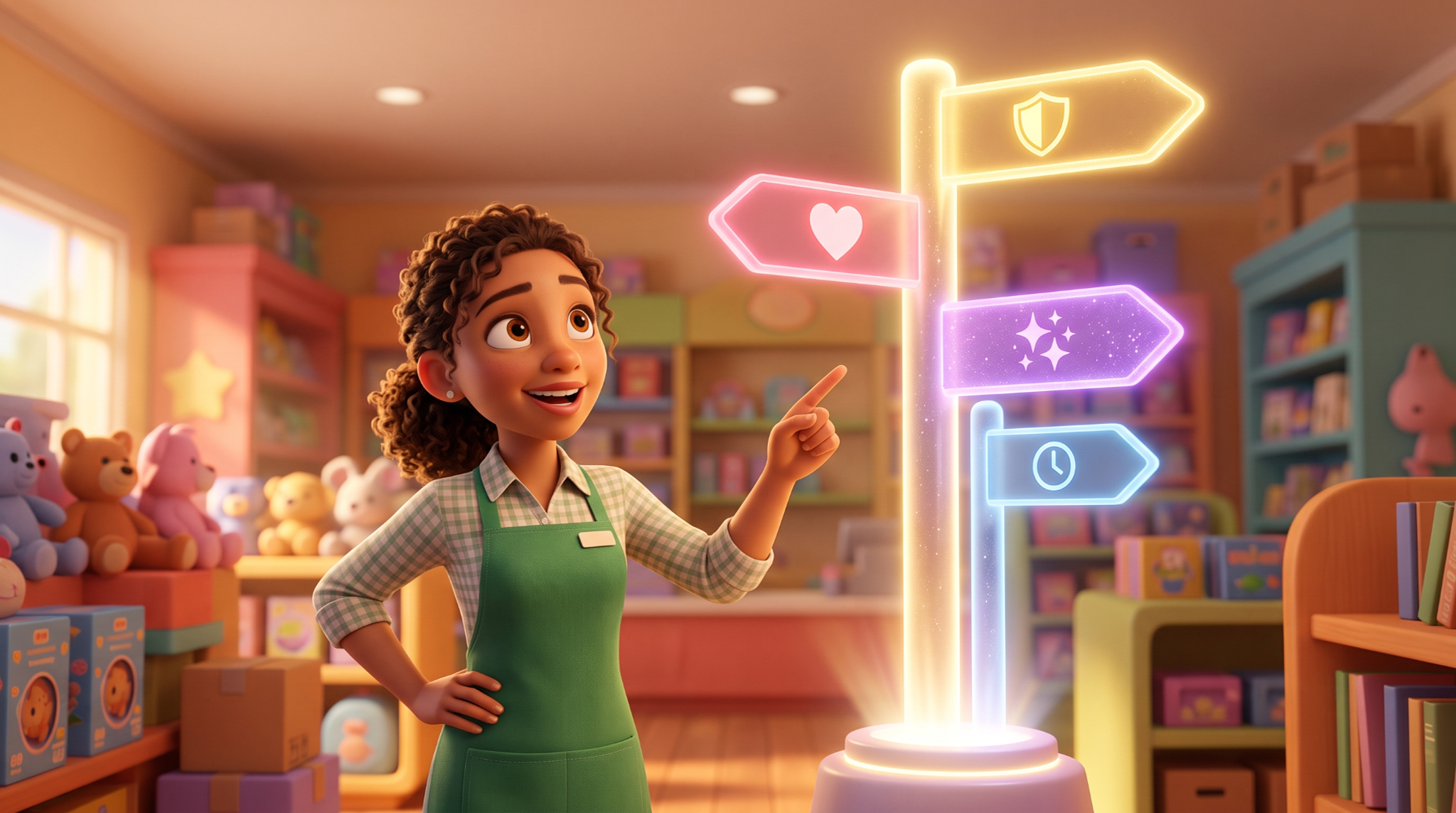
Disney's Quality Standards — Safety, Courtesy, Show, Efficiency — aren't just nice words on a poster. They're a decision-making framework that guides behaviour when priorities conflict. And priorities always conflict, eventually.
Most businesses fail here. They say "everything matters" and leave employees to guess. Or they measure efficiency while claiming to value courtesy, and employees correctly prioritise what gets measured.
The hierarchy cuts through the faff. It tells your team: "When in doubt, here's what matters most." And it pre-authorises them to make the right call without waiting for permission.
Safety first — because trust, once broken, rebuilds slower than glaciers move. Courtesy second — because how you make people feel is what they remember. Show third — because every detail either adds to or subtracts from the experience. Efficiency fourth — because speed in the wrong direction gets you nowhere faster.
This isn't about becoming Disney. You don't need a castle, a talking mouse, or a fleet of monorails.
You need clarity.
You need to decide what matters most, second most, third, fourth. You need to share that hierarchy with your team. You need to back them up when they honour it. And you need to do this consistently, over months and years, until it becomes who you are.
The dental practice in Leeds did it. The plumber who stops work for a safety concern does it. The coffee shop that takes time with a complicated customer does it. You can do it too.
So here's my challenge to you, you magnificent business owner, you:
How would your business change if every employee knew, with absolute certainty, what to do when priorities conflict?
Not guessing. Not hoping. Not playing politics or waiting for manager approval. Knowing.
That's what the hierarchy gives you.
Disney magic isn't about having a castle or a talking mouse. It's about creating moments of wonder in the everyday. It's about making decisions that prioritise the human on the other side of the transaction.
As Walt Disney said: "Do what you do so well that they will want to see it again and bring their friends."
That's the goal. That's always been the goal.
Now go build your hierarchy. Write it down. Share it. Live it.
And when priorities conflict — because they will — you'll know exactly what to do. 🪄
About the Author
Andrew Lock is a renowned business coach, consultant, and author with over three decades of experience helping entrepreneurs and business leaders achieve extraordinary success. As the founder of 'Help My Business!', Andrew has empowered thousands of business owners worldwide through his unique coaching, mastermind groups, 10 best-selling books, and engaging keynote presentations.
Known as the "The Yoda of marketing," (without the green pointy ears), Andrew brings a refreshing blend of humor and practical insights to his work. His expertise spans customer experience, pricing, sales, marketing, employee management, and operations, with a special focus on applying Walt Disney's business principles to modern enterprises.
Andrew is the author of ten books, including the popular "Walt's Way" and "Big Lessons from Big Brands." His work has been featured in major media outlets, and he's shared stages with business luminaries like Sir Richard Branson, Donald Trump, Daymond John, Dan Kennedy, The Dalai Lama, and Michael Gerber.
When he's not helping businesses transform their customer service, Andrew enjoys traveling with his family and indulging in his passion for all things Disney and chocolate (though not necessarily in that order).
For more insights and resources, visit www.AndrewLock.com.
Sources & Further Reading
Want to go deeper? Here are a few of the books and resources I referenced (or shamelessly stole ideas from) while writing this:
- Be Our Guest — Disney Institute (the closest thing to a Disney customer service bible — this is where the Quality Standards framework is laid out in detail)
- Creating Magic — Lee Cockerell (the man who ran Walt Disney World operations for a decade knows a thing or two about the hierarchy in practice)
- The Ride of a Lifetime — Bob Iger (fascinating insight into Disney leadership and the relentless pursuit of excellence)
- Walt's Way — Andrew Lock (yes, that's my book — but I genuinely cover the hierarchy and its applications in depth)
- Disney Institute Blog and Training Programmes — disneyinstitute.com (if you want to see how Disney teaches this to non-Disney companies)
