
When Things Go Wrong: How Disney Turns Angry Customers Into Raving Fans (And How You Can Too)
Right, let's talk about something nobody enjoys: complaints.
Specifically, that stomach-dropping moment when a customer's face shifts from "mildly disappointed" to "I am composing my devastating Yelp review in real time."
You know the look. We've all seen it. Some of us have caused it. (Guilty as charged. There was an incident with a catering order in 2016 that still haunts me.)
But here's the thing that most businesses get catastrophically wrong: a complaint isn't a disaster. It's a gift wrapped in irritation.
Disney figured this out decades ago. While most companies train their staff to apologise through gritted teeth and pray the customer goes away, Disney built an entire system for turning upset guests into their most devoted fans. They call it H.E.A.R.D.—and it's so effective it borders on witchcraft.
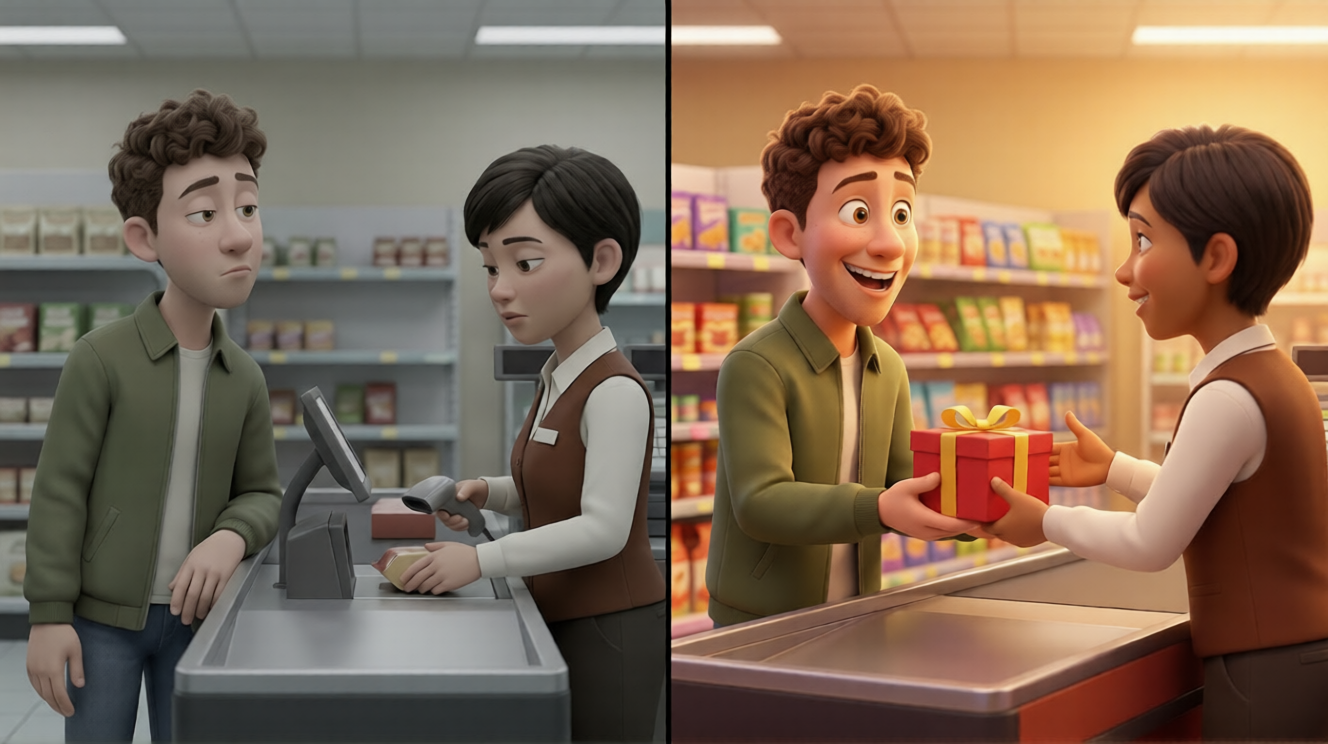
In my book, Walt's Way, I dedicate considerable space to Disney's service recovery methods because they represent perhaps the purest expression of Walt Disney's famous principle: "Do what you do so well that they will want to see it again and bring their friends."
Notice he didn't say "do what you do so perfectly that nothing ever goes wrong." Even Walt knew that perfection is impossible. What's possible—and what separates magical businesses from mediocre ones—is perfecting your response when things inevitably fall apart.
So let's get into it, shall we? Time to transform you from a complaint-dreading business owner into a complaint-welcoming customer loyalty wizard. 🪄
Key Takeaways From This Article:
- H.E.A.R.D. stands for Hear, Empathise, Apologise, Resolve, Diagnose—Disney's five-step framework for turning complaints into loyalty.
- The "Service Recovery Paradox" is real: Customers who experience excellent complaint resolution often become MORE loyal than those who never had a problem.
- Hearing means actually listening—no interrupting, no defending, no mentally composing your rebuttal while they're still talking.
- Empathy must be genuine—customers can smell fake concern from three car parks away.
- Apologise without conditions: "I'm sorry that happened" beats "I'm sorry you feel that way" every single time.
- Resolution requires empowerment: Your frontline team needs authority to fix problems on the spot, without managerial approval for every decision.
- Diagnosis prevents repetition: After the customer leaves happy, figure out WHY the problem happened and stop it from happening again.
- Most complaints cost nothing to resolve: People want to feel heard more than they want freebies.
- Speed matters: A problem resolved in minutes creates loyalty. The same problem dragging on for days creates resentment.
- Every complaint is market research: Your unhappy customers are telling you exactly how to improve your business—for free.
- Disney's approach works in ANY industry: From dentists to plumbers to accountants, the principles translate perfectly.
The Dropped Mickey Bar Incident (A Personal Tale of Disney Magic)
It was October 2019, and my wife and I were at Magic Kingdom for what we'd officially declared "the trip where we eat everything."
After approximately 150 visits to Disney parks, you'd think we'd have learned to pace ourselves. You'd be wrong.
I was carrying a Mickey Premium Ice Cream Bar—you know the ones, shaped like Mickey's head, dipped in chocolate, roughly the size of a small football. It's basically a religious experience on a stick.
And then, as we were walking past the Haunted Mansion queue, dodging a double-wide pushchair and trying not to collide with a family who had apparently stopped dead in the middle of the path to consult a map from 1987, it happened.
The Mickey Bar slipped from my hand.
In slow motion—or at least that's how I remember it—I watched this chocolate-covered masterpiece tumble through the humid Florida air and land face-down on the pavement.
Face. Down.
I stood there, frozen, staring at what used to be my afternoon snack and was now just a crime scene. My wife, because she knows me, wisely said nothing.
A Cast Member—a young woman working the Haunted Mansion entrance—had apparently witnessed my tragedy from about fifteen feet away. She walked over, looked at the deceased Mickey Bar, looked at me, and said with complete sincerity:
"Oh no! That's heartbreaking. Are you okay?"
Now, I'm a grown man. It's an ice cream bar. I was fine. But something about the way she said it—not performative, not scripted, just genuinely concerned—made me feel like my tiny loss actually mattered.
"Let me get you another one," she said. "Stay right here."
She disappeared, spoke briefly into her radio, and within three minutes—THREE MINUTES—another Cast Member appeared with a fresh Mickey Bar, still frozen, still perfect.
No forms. No manager approval. No "well, technically it was your fault for dropping it." Just a replacement, a smile, and a "enjoy the rest of your day!"
Now, here's what's remarkable. The ice cream bar cost maybe six dollars. Nothing, in the grand scheme of things. But I've told this story approximately four hundred times. I'm telling it to you right now. I've probably generated thousands of dollars in positive Disney word-of-mouth from a six-dollar recovery.
That Cast Member, whether she knew it or not, was executing Disney's H.E.A.R.D. framework to perfection. She heard my problem (even though I hadn't complained). She empathised ("that's heartbreaking"). She apologised (implicitly, through concern). She resolved it (new ice cream, immediately). And somewhere, I'm certain, someone diagnosed why guests keep dropping slippery ice cream bars near crowded attractions.
The whole interaction took less than five minutes. The loyalty it created will last a lifetime.
What's the most recent complaint you received, and how did you handle it? Be honest—would you tell that story with pride, or would you rather forget it happened?
The H.E.A.R.D. Framework:
Disney's 5 Steps to Complaint Recovery Magic
You're standing behind the service counter when it happens. A customer approaches with that particular walk—the one that suggests their next words will not be "I just wanted to say how wonderful everything is."
Your stomach tightens. Your brain starts composing defences. You catch yourself preparing the phrase, "Well, actually, our policy states..."
Stop. Right there. That instinct—the defensive crouch, the policy-citing, the "well, technically..."—is precisely what Disney has trained out of its 75,000+ Cast Members.
Disney doesn't treat complaints as attacks to be survived. They treat them as opportunities to create stories like my Mickey Bar incident. Stories people tell forever.
The Disney Institute—which has trained executives from hundreds of Fortune 500 companies—calls this approach "service recovery," and at its core is a framework so simple you'll wonder why every business doesn't use it.
H.E.A.R.D.
Let me walk you through each step, because the magic isn't in knowing the acronym—it's in understanding why each letter matters.
H — Hear
This sounds obvious, doesn't it? Listen to the customer. Revolutionary stuff.
Except most businesses don't actually do it.
When a customer starts complaining, most employees are already mentally drafting their response. They're waiting for a pause where they can jump in with a correction, a justification, or a policy citation. They're hearing words but not listening to the person.
Disney's approach is different: Let them finish completely. No interruptions. No "mm-hmms" designed to hurry them along. No visible eye-rolls (especially those).
Think of Dory from Finding Nemo—not her forgetfulness, but her genuine openness. She doesn't judge, she doesn't interrupt, she just accepts what she's being told. That's the energy.
There's fascinating psychology here. Researchers have found that when people feel truly heard, their emotional state shifts. The anger starts to dissipate simply because it's been acknowledged. You're not fixing anything yet—you're just giving the complaint space to exist.
My wife, who has infinitely more patience than I do, is brilliant at this. When I come home frustrated about some business problem, she doesn't immediately try to solve it. She just lets me vent until I run out of steam. By the time I'm done, half the time I've figured out the solution myself, and the other half I'm no longer quite so catastrophically annoyed.
Same principle. Different context.
E — Empathise
Here's where most businesses go horribly wrong. They hear the complaint and immediately jump to solution mode. Or worse, defence mode.
But before any of that, you need to connect.
Empathy isn't saying "I understand." That phrase has become so hollowed out by corporate scripts that it barely registers as human anymore.
Empathy is saying: "That must have been really frustrating" or "I can see why that upset you" or even just "Oh no, that's not what should have happened."
You're acknowledging their feelings as legitimate. You're not debating whether they should feel that way—you're accepting that they do feel that way.
Maya Angelou said it perfectly: "People will forget what you said, people will forget what you did, but people will never forget how you made them feel."
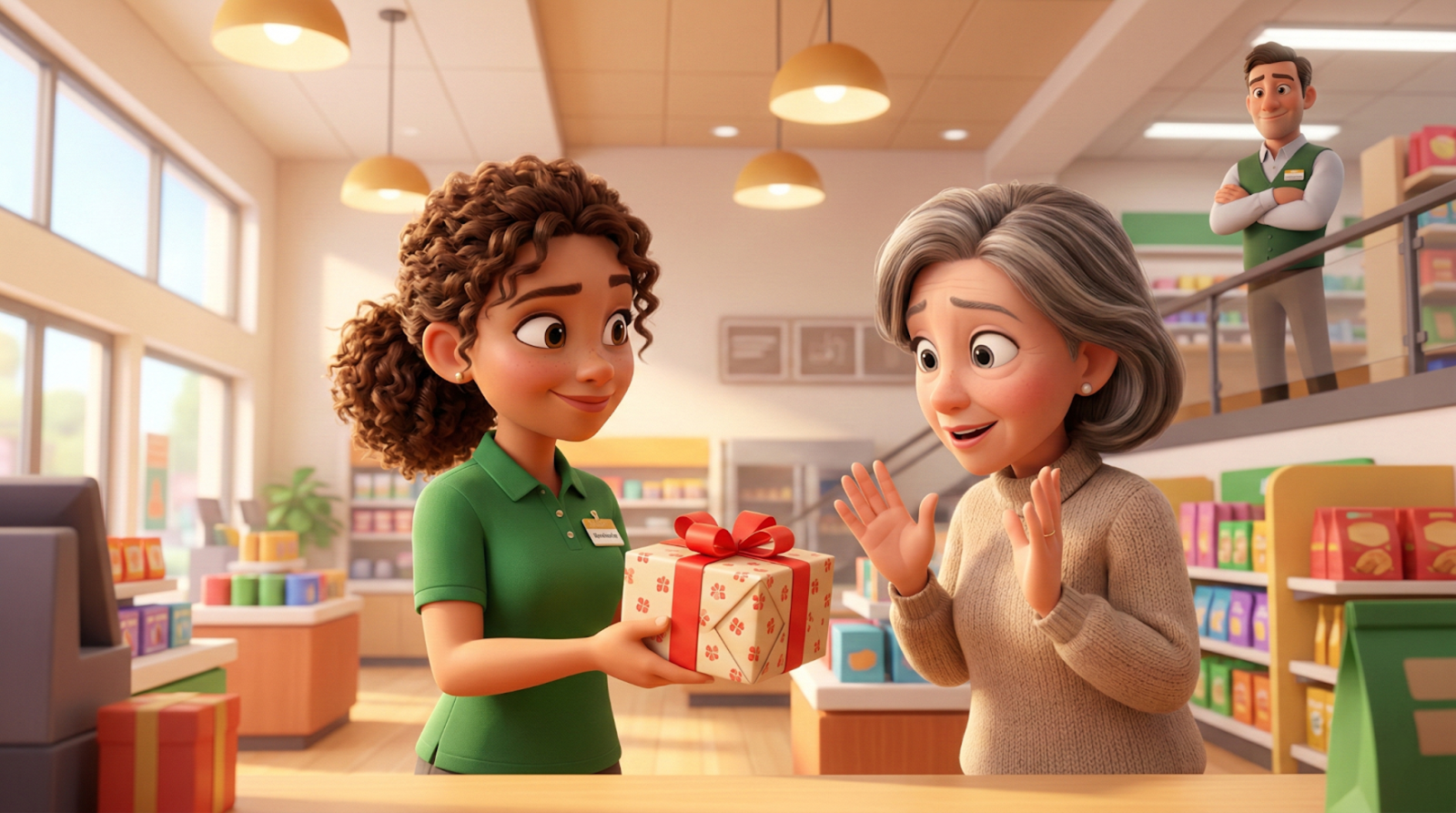
Disney Cast Members are trained to imagine themselves in the guest's shoes. Not "how would I feel if I were a Disney employee dealing with this?"—but "how would I feel if I'd saved for two years to bring my family to Disney World, and this was happening to me?"
That shift in perspective changes everything.
A — Apologise
A proper apology is harder than it sounds. Most businesses manage a kind of mealy-mouthed non-apology that satisfies legal concerns but connects with exactly no one.
"I'm sorry you feel that way."
"I apologise if there was any misunderstanding."
"We regret any inconvenience this may have caused."
These are not apologies. These are corporate haikus of deflection.
A real apology says: "I'm sorry this happened to you." Full stop. No qualifications. No blame-shifting. No weasel words.
You're not admitting fault necessarily (the lawyers can relax). You're expressing genuine regret that this person had a negative experience. You're being human.
Disney trains Cast Members to apologise sincerely even when the problem isn't Disney's fault. Even when the guest did something silly. Because the apology isn't about liability—it's about relationship.
There's something almost Eeyore-ish about the way many businesses apologise—sad and pessimistic, as if saying sorry is some terrible burden they must endure. The Disney way is more Winnie the Pooh: warm, genuine, and focused entirely on making the friend in front of them feel better.
R — Resolve
Now—and only now—do we fix the problem.
Notice the order here. We didn't lead with resolution. We didn't immediately offer a refund or a discount to make the complaint go away. We heard, we empathised, we apologised—and THEN we resolve.
This sequence matters because often, by the time you reach "Resolve," the customer's emotional state has already shifted. They feel heard. They feel understood. They feel that their complaint was legitimate.
Now the resolution can be received as genuine help rather than as a corporate pay-off to make them shut up.
And here's where Disney does something radical: they empower frontline Cast Members to resolve problems without manager approval.
Lee Cockerell, who ran Walt Disney World operations for over a decade (roughly 65,000 employees, 12 resort hotels, and more moving parts than a Swiss watch factory), writes extensively about this in his book Creating Magic. Cast Members are given clear guidelines and then trusted to make decisions within those guidelines.
The Cast Member who replaced my Mickey Bar didn't need to call a supervisor. She didn't need to fill out a form. She had the authority to solve the problem in the moment—which meant the problem was solved in minutes, not days.
For your business, this means deciding: What are your frontline team members empowered to do without asking permission?
D — Diagnose
After the guest walks away happy (or at least happier), there's one more step—and it's the one most businesses skip entirely.
Diagnose. Figure out why this happened.
Not to assign blame. Not to write someone up. But to prevent it from happening to the next customer.
Disney calls this "Guestology"—the study of guest behaviour, expectations, and experiences. Every complaint is data. Every problem is a process that can be improved.
The question isn't "whose fault was this?" but "what systemic issue allowed this to happen, and how do we fix it?"
If three guests complain about the same thing in a week, that's not three problems—it's one problem wearing three disguises. Diagnose the root cause, fix the system, and prevent the fourth, fifth, and fiftieth complaint from ever happening.
Walt Disney himself was obsessive about this. He would walk through Disneyland constantly, looking for friction points, asking staff about guest complaints, testing the experience from the guest's perspective. He wasn't looking to punish—he was looking to perfect.
Quick quiz time:
A customer calls, furious about a delayed delivery. You:
A) Immediately explain that the delay was caused by the shipping company and provide their customer service number
B) Offer a 10% discount before they finish describing the problem, hoping they'll accept and hang up
C) Let them explain fully, acknowledge how frustrating the wait must have been, apologise sincerely, then resolve the issue while making notes to diagnose why deliveries are being delayed
If you chose A, congratulations on achieving maximum blame-deflection efficiency. Your customers will be thrilled to know whose fault it is while still not having their problem solved.
If you chose B, you've just taught your customers that complaining gets discounts, which is a fantastic way to guarantee more complaints forever.
C. The answer is always C.
Why This Actually Works: The Science Behind H.E.A.R.D.
So there you are, sitting in your office thinking: "Right, Andrew, this all sounds very nice, but is there actual evidence this works, or is it just Disney fairy dust?"
Fair question. I'm a skeptic myself. (My wife would say "cynic," but she's clearly wrong.)
Here's the thing: there's a genuinely surprising phenomenon called the Service Recovery Paradox, and it's one of the most counterintuitive findings in customer service research.
Research by Sunita Tax and Stephen Brown, published in the Journal of Marketing, found something that seems almost impossible: customers who experience a service failure followed by excellent recovery often end up MORE loyal than customers who never experienced a problem at all.
Read that again. Let it sink in.
The customer who had a problem—and saw you handle it brilliantly—becomes a bigger fan than the customer for whom everything went smoothly.
Why? Because anyone can deliver good service when everything goes right. But when things go wrong, customers get to see who you really are. They get to see if you actually care, or if your "customer-first" values were just marketing fluff.
As I explore in Walt's Way, Disney understands this intuitively. They don't fear complaints—they see them as opportunities to demonstrate their values in action.
But There Are Five Conditions
The Service Recovery Paradox doesn't work automatically. Research shows it only kicks in when certain conditions are met:
1. The failure can't be too severe. Drop someone's ice cream? Recoverable. Ruin their wedding? That's going to need more than a replacement dessert.
2. The customer hasn't experienced repeated failures. The paradox works once, maybe twice. After the third problem, customers start to question whether you're actually competent.
3. The recovery must be swift. A problem resolved in minutes is an opportunity. The same problem dragging on for weeks is a disaster.
4. The customer must perceive the recovery as genuine. Scripted, robotic "recovery" doesn't trigger the paradox. Genuine human connection does.
5. The resolution must match the magnitude of the problem. Tiny gesture for big problem = insult. Appropriate gesture for problem = loyalty. (Oddly, too BIG a gesture can also backfire—it signals that you know you really messed up.)
Now, you might be thinking: "But Andrew, my business isn't a theme park! I don't have Disney's resources!"
Right. Let's talk about that.
Most Complaints Cost Nothing to Fix
Here's a statistic that should change how you think about complaints entirely:
According to research by TARP (Technical Assistance Research Programs), the majority of customer complaints can be resolved satisfactorily without any monetary compensation at all.
People don't want free stuff. They want to feel heard, understood, and respected.
The H.E.A.R.D. framework is mostly free to implement. Hearing costs nothing. Empathising costs nothing. Apologising costs nothing. Diagnosing costs nothing. Only "Resolve" sometimes involves expense—and often, by the time you've done the first three letters properly, the resolution required is far smaller than what you would have offered if you'd led with "here's a refund to make this go away."
My Mickey Bar replacement cost Disney maybe six dollars. But if the Cast Member had handled it poorly—or ignored me entirely—I might have spent the rest of my (expensive) vacation feeling irritated. The lifetime value of a Disney guest runs into thousands of dollars. Six dollars was nothing.
The Real Cost of Getting It Wrong
Research from the White House Office of Consumer Affairs (yes, they studied this) found that unhappy customers typically tell 9-15 people about their experience. In the age of social media, that number can be exponentially higher.
Meanwhile, Bain & Company's famous research shows that increasing customer retention by just 5% can increase profits by 25-95%.
Put those together: every bungled complaint potentially costs you not just that customer, but everyone they tell. And every well-handled complaint potentially creates a storytelling advocate who brings you new business for years.
Disney doesn't do H.E.A.R.D. because they're nice (though they are). They do it because it's extraordinarily profitable.
Quiz time again:
According to the Service Recovery Paradox, a customer who experiences a problem that's handled brilliantly will:
A) Be satisfied, but slightly less loyal than before because the problem reminded them things can go wrong
B) Eventually forget about both the problem and the recovery, returning to baseline loyalty
C) Often become MORE loyal than customers who never experienced a problem at all
If you chose A or B, you're thinking like a pessimist. Understandable—we've all had bad experiences that coloured our view of businesses forever. But the research is clear: done right, recovery doesn't just restore loyalty, it amplifies it.
The answer is C. 🌟
Disney vs. The Real World: Why Most Businesses Get Complaints Catastrophically Wrong
It's a Wednesday afternoon. You've just received an email from an unhappy customer. Something went wrong with their order, and they're not pleased about it.
Now, let's observe two different responses.
The Traditional Business Response:
Step 1: Mild panic. Someone reads the email and forwards it to someone else with "thoughts??"
Step 2: The email sits in a queue while people debate whose fault this is.
Step 3: A carefully crafted response is drafted, reviewed by three people, edited to remove anything that might accidentally constitute an admission of liability, and finally sent approximately 48 hours later.
Step 4: The response explains the company's policies, provides some context about why the problem occurred, and offers perhaps a 10% discount on a future purchase.
Step 5: The customer, who has now been stewing for two days, responds with increased fury. Or simply never returns and tells everyone they know.
Step 6: No one investigates why the problem happened in the first place. Until it happens again next week.
The Disney Response:
Step 1: The frontline Cast Member who receives the complaint is empowered to handle it immediately.
Step 2: H.E.A.R.D. is deployed. The customer is heard fully, empathised with genuinely, apologised to sincerely.
Step 3: The problem is resolved on the spot, within the Cast Member's authority to do so.
Step 4: If the issue exceeds that authority, it's immediately escalated to someone who CAN resolve it—and "immediately" means minutes, not days.
Step 5: After resolution, the root cause is diagnosed and fed back into operational improvements.
Step 6: The customer leaves telling everyone about the amazing recovery experience.
The difference isn't complicated. It's not expensive to implement. It's a choice about how you want to handle these situations.
Four Action Steps to Implement H.E.A.R.D. in Your Business
1. Define your empowerment boundaries.
Decide specifically what your frontline team can do without asking permission. Can they issue refunds under £50? Replace products? Offer complimentary services? Write it down. Make it clear. Train everyone on it.
2. Create a response time standard.
Complaints acknowledged within 2 hours. Resolved within 24. Or whatever makes sense for your business. The point is to have a STANDARD that everyone knows and is measured against.
3. Train the sequence: H, then E, then A, then R, then D.
Role-play complaints with your team. Have them practice NOT jumping to solutions. Have them practice genuine empathy (it's a skill, not just a personality trait). Make the sequence muscle memory.
4. Build a complaint diagnosis system.
Every complaint gets logged. Categories tracked. Patterns identified. Monthly reviews of "what went wrong and why" become standard. Turn complaints into your free consultancy service.
You don't need a castle. You don't need a talking mouse. You need mindset and process.
Quiz time:
The key difference between Disney's complaint handling and most businesses' complaint handling is:
A) Disney has more money to throw at problems
B) Disney customers are inherently less demanding because they're on holiday
C) Disney empowers frontline staff to resolve issues immediately using a systematic approach
If you chose A, consider that many small businesses with far fewer resources than Disney achieve excellent complaint recovery. It's not about the budget.
If you chose B, you have clearly never witnessed a family of five after six hours in the Florida humidity discovering that the ride they queued 90 minutes for is closed for maintenance. Disney customers can be EXTREMELY demanding. The parks are pressure cookers of high expectations.
C. Always C.
The Dentist Who Fixed a Filling and Won a Patient for Life
I worked with a dental practice in Birmingham last year—let's call them Parkview Dental—who were struggling with negative reviews. Not many, but enough to hurt. And almost all of them followed the same pattern: something went wrong, the patient complained, and the response felt... clinical. Defensive. Corporate.
Dr. Patterson, the practice owner, was frustrated. "We're actually very good at what we do," she told me. "But you wouldn't know it from these reviews."
I asked her to walk me through a recent complaint. A patient had come in for a filling, and within a week, the filling had cracked. The patient was upset—understandably—and had called the practice to complain.
"What did your receptionist say?" I asked.
"She explained that fillings can sometimes fail due to factors outside our control, offered to book a repair appointment at our next available slot, and mentioned that there would be a charge for the materials."
I winced. "And the patient's response?"
"They hung up and left us a one-star review."
Classic. The receptionist had technically handled the complaint. She'd offered a solution. But she'd missed entirely the emotional reality of what that patient was experiencing: pain, inconvenience, worry about what this meant for their dental health, frustration at having to make ANOTHER appointment.
We implemented H.E.A.R.D. across the practice.
Three months later, another filling cracked. Same situation. Different response.
The receptionist let the patient explain fully—even though the explanation included some criticism of the dentist's work. She didn't interrupt. She didn't defend.
Then: "That sounds really uncomfortable. I'm so sorry you're dealing with this—no one wants to have a filling done twice."
Then: "Let me get you in today. We'll get this fixed properly, and of course there's no charge."
The patient—who had called angry—arrived at the appointment almost apologetic. "I'm sorry I was short with your receptionist on the phone. I was just frustrated."
The repair was done. A follow-up card was sent. And a week later, without being asked, the patient posted a five-star review specifically praising how the practice handled "a minor setback."
Same problem. Different handling. Completely opposite outcome.
Key Lessons from Parkview Dental:
1. The emotional response comes before the practical solution. H, E, A before R. Always.
2. Empowerment must be explicit. The receptionist needed to KNOW she could offer a same-day appointment and waive the fee without checking with the dentist first.
3. Follow-up matters. The card wasn't expensive. But it signalled that the patient was valued as a person, not just a billing code.
4. One good recovery generates more positive word-of-mouth than ten perfect experiences. That five-star review was specific and detailed in a way that "everything went fine" reviews never are.
H.E.A.R.D. Across Industries: Because Every Business Has Complaints
Now, you might be thinking: "Right, Andrew, this works for theme parks and dentists, but my business is different."
Is it though?
Every business that deals with humans will eventually deal with unhappy humans. The specific complaints differ; the psychology of complainers remains remarkably consistent.
Let me show you how H.E.A.R.D. translates across industries:
Retail: Customer returns a product that doesn't work. Instead of immediately explaining the returns policy (the instinct), hear why they're frustrated, acknowledge that receiving a faulty product is maddening, apologise that this happened, then offer the refund/replacement/store credit. After they leave, diagnose: Was this a one-off defect or a batch problem?
Professional Services (Accountants, Lawyers, Consultants): Client upset about a bill or an outcome. The temptation is to justify the bill with itemised explanations. Instead: hear their concern completely, empathise with the confusion or sticker shock, apologise that the billing wasn't clearer (even if it was clear), then resolve—perhaps with a line-item review or a payment plan. Diagnose: Should your proposals be clearer upfront about potential cost variations?
Hospitality: Guest complains about noise from the room next door. Don't explain that it's a busy hotel (they know). Hear, empathise ("I'm so sorry your sleep was disturbed"), apologise, resolve (room upgrade? complimentary breakfast? late checkout?), diagnose (is room 204 always problematic?).
Trades (Plumbers, Electricians, Builders): Customer unhappy that a repair didn't hold. The instinct is to explain why it failed (age of pipes, previous bodge job, etc.). Instead: hear them out, acknowledge how frustrating it is to have a problem return, apologise that they're dealing with this again, resolve it with a return visit ASAP and no additional call-out fee. Diagnose: Was your original fix insufficient, or is there a bigger underlying issue you should have spotted?
Online/E-commerce: Customer's order arrived late or damaged. Don't lead with "the courier company..." Hear, empathise, apologise, resolve (replacement shipped immediately, original doesn't need returning), diagnose (is this courier reliable? is the packaging sufficient?).
Healthcare/Wellness: Patient unhappy with treatment results or experience. This one's sensitive—you can't promise outcomes. But you CAN hear their concerns fully, empathise with their hopes and frustrations, apologise that their experience wasn't what they'd hoped, and resolve with additional consultation time or adjusted treatment plans. Diagnose: Were expectations set correctly at the beginning?
As Walt Disney said: "It's kind of fun to do the impossible." Turning an angry customer into an advocate might feel impossible. But with the right framework, it's surprisingly achievable.
Quiz:
A plumber completes a repair. Three days later, the customer calls because the same pipe is leaking again. The plumber should:
A) Explain that the pipe's overall age is the real problem and recommend a full replacement at the customer's expense
B) Offer to return in about a week when there's an opening in the schedule
C) Hear the customer's frustration, acknowledge how annoying it is to have a leak return, apologise for the inconvenience, offer a same-day or next-day return visit at no extra charge, and afterward diagnose whether the original repair was insufficient
If you chose A, you might be technically correct, but you've just lost a customer who will tell everyone about the plumber who "did a botch job and then tried to charge more."
If you chose B, you've communicated that this customer is not a priority—after you already failed them once.
C. I'm starting to feel like a broken record, but C. Always C.
The Long Game: Why H.E.A.R.D. Pays Compound Interest
Short-term thinking says: complaints are costs. Every refund, every replacement, every free dessert eats into the margin.
Long-term thinking says: complaints are investments. Every brilliant recovery builds loyalty that pays dividends for years.
Consider the mathematics.
Walt Disney World welcomes roughly 58 million visitors per year. With that volume, even a 0.1% service failure rate means 58,000 problems annually. Disney's service recovery systems aren't a nice-to-have—they're essential infrastructure.
But here's what makes them profitable: Disney's repeat visitation rate is estimated at around 70%. Seventy percent of guests come back. And each returning guest represents thousands of dollars in future spending—not to mention the word-of-mouth they generate.
Every well-handled complaint protects that 70%.
For your business, the numbers will be different, but the principle holds. Research from Bain & Company (that famous 5%/25-95% statistic I mentioned earlier) proves that customer retention is absurdly profitable.
And here's the less obvious benefit: team morale.
Nobody likes dealing with angry customers. It's exhausting and demoralising. But when your team has a clear framework—when they know exactly what to do and have the authority to do it—complaint handling becomes manageable. Even satisfying.
There's something deeply rewarding about turning an angry customer into a happy one. Your team gets to be heroes. They get to solve problems. They get to demonstrate skill. That's far better than the alternative: feeling helpless while customers yell at them about things they aren't empowered to fix.
Disney Cast Members don't dread complaints the way most frontline workers do. They're trained, empowered, and supported. The result is lower turnover and higher job satisfaction—which feeds back into better customer service, which feeds back into fewer complaints in the first place.
Virtuous cycle.
Disney magic isn't about deep pockets. It's about deep caring—systematised, trained, and empowered.
Quiz:
The long-term benefit of excellent complaint recovery is:
A) Slightly fewer negative reviews online
B) Customers stop expecting so much, making your job easier
C) Increased customer retention, stronger word-of-mouth, higher team morale, and compound profitability over time
A is technically true but dramatically undersells the impact.
B is wishful thinking. Customers never expect less. That's not how expectations work.
C. The full package. The compound interest. The magic.
The Challenges (Because I'm Not Here to Pretend This Is Easy)
Right, I'm not going to stand here (well, sit here, typing) and pretend that implementing H.E.A.R.D. is all pixie dust and rainbows. There are real challenges, and ignoring them would be doing you a disservice.
Consider me the Mary Poppins of reality checks: a spoonful of sugar helps the medicine go down, but you still have to take the medicine.
Challenge 1: Culture Change Is Hard
If your team has spent years in defensive mode—protecting the company, citing policies, avoiding blame—shifting to a guest-centric recovery model takes time. Old habits don't die easily.
Strategy: Start small. Train one team, one location, one shift. Prove it works. Let success spread. Don't try to revolutionise everything overnight.
Challenge 2: Empowerment Feels Risky
Giving frontline staff authority to issue refunds, comps, or freebies can feel like handing out the keys to the vault. What if they go overboard? What if someone takes advantage?
Strategy: Set clear boundaries. Cast Members at Disney don't have unlimited authority—they have defined guidelines. "You can resolve issues up to £50 without approval" is more useful than "use your judgement."
And here's the reality: abuse is rare. Most employees are MORE conservative with company resources than owners expect. The bigger risk is under-empowerment, not over-generosity.
Challenge 3: Some Customers Are Unreasonable
Let's be honest: a small percentage of complainers are impossible to satisfy. They want more than is reasonable. They want blood. They're working through something that has nothing to do with you.
Strategy: H.E.A.R.D. still applies—you still hear, empathise, apologise, and attempt to resolve. But "Resolve" doesn't mean "give them whatever they demand." It means a fair resolution that addresses the legitimate problem. Sometimes that means saying, kindly but firmly, "This is what we can offer."
Disney doesn't give away entire holidays because someone complained about the queue for Space Mountain. They're generous but not pushovers.
Challenge 4: Consistency Is Everything
H.E.A.R.D. only works if it's applied consistently. One brilliant recovery followed by a defensive brush-off the next time destroys trust.
Strategy: Training. Standards. Role-playing. Measurement. This isn't something you introduce once and forget—it's an ongoing discipline. Disney University isn't a one-day course; it's continuous.
Challenge 5: Disney Isn't Perfect Either
Here's a truth bomb: Disney gets it wrong too. They've had service recovery disasters. Their recent MagicBand+ rollout frustrated plenty of guests. The Genie+ system has generated significant complaints. No company bats 1.000.
What makes Disney different isn't perfection—it's the SYSTEM. When individual Cast Members fail to execute H.E.A.R.D., the system has backup mechanisms. Guest Relations. Manager escalation. Post-visit follow-up.
Strategy: Build layers. Frontline empowerment is level one. Escalation paths are level two. Follow-up systems are level three. No single point of failure.
Setting Realistic Expectations
You will not transform your complaint handling overnight. You will have failures along the way. Some team members will struggle with the approach. Some customers will remain unhappy despite your best efforts.
That's fine. That's normal. The goal isn't perfection—it's progress. Every complaint handled slightly better than before is a win.
Final quiz:
The biggest mistake when implementing H.E.A.R.D. is:
A) Expecting instant perfection and giving up when reality is messier
B) Starting too small—you should transform everything at once
C) Over-training your team—they should figure it out naturally
If you chose B, please don't. Revolutions eat their children. Start small, prove the concept, expand gradually.
If you chose C, you have more faith in human nature than I do. Training matters. Systems matter. "Figure it out naturally" produces wildly inconsistent results.
A is the trap. Expect progress, not perfection. Keep going.
FAQ: Your H.E.A.R.D. Questions Answered
Q: What if we genuinely can't afford to give refunds or freebies?
A: Here's the thing—most complaints don't require money to resolve. They require acknowledgment. The HEAR part of H.E.A.R.D. is free. The EMPATHISE part is free. The APOLOGISE part is free. Often, by the time you've done those three genuinely well, the customer needs far less "compensation" than you feared. A restaurant owner I worked with found that most upset customers were satisfied with a sincere apology and assurance that the problem would be fixed—no free meals required. Start with genuine human connection. You'll be surprised how often that's enough.
Q: What about serial complainers—people who abuse the system?
A: Every business has a few. Track complaint history. If someone complains every single visit and always expects compensation, that's a pattern—and you're allowed to set boundaries. Even Disney has limits. The approach here is: still be kind, still empathise, still apologise for any genuine issue, but "Resolve" can mean "I understand this isn't what you hoped, and here's what we can offer"—which might be less than they want. Most serial complainers move on when they realise you're not an easy mark. The genuine complainers—the ones who rarely speak up—deserve your generosity. Budget for them, not the system-gamers.
Q: My team says they don't have time for all this listening and empathising. We're too busy.
A: I hear this constantly, and I understand—it FEELS slower to do H.E.A.R.D. properly. But here's what actually happens: the defensive approach creates repeat contacts. The customer isn't satisfied, so they call back. They escalate. They demand managers. They post negative reviews that you then have to respond to. Total time spent: enormous. H.E.A.R.D., done right, resolves issues in ONE contact. Customer leaves satisfied, doesn't call back, doesn't escalate. Total time spent: often LESS than the alternative. It's like Goofy trying to take shortcuts and ending up worse off. The "quick" way creates more work.
Q: How do we train staff who just aren't naturally empathetic?
A: Empathy is a skill, not just a personality trait. It can be learned. Role-playing helps enormously—have your team practice complaints with each other, and coach them on specific phrases that demonstrate empathy. Give them scripts as training wheels: "That sounds really frustrating," "I completely understand why you'd feel that way," "I'm so sorry that happened." These phrases become natural with practice. Think of it like teaching someone to cook: they might not be a natural chef, but they can learn to follow a recipe reliably. The recipe is H.E.A.R.D.
Q: How long until we see results?
A: Some improvement is immediate—your very next well-handled complaint will generate better customer response than your last poorly-handled one. But systemic change takes 3-6 months to really embed. You need enough repetitions for the approach to become habit. You need enough recoveries for the word-of-mouth effects to compound. Be patient. Track your recovery outcomes (customer satisfaction post-complaint, review sentiment, repeat purchase rates) so you can measure progress even when it feels slow.
Q: What if the complaint is about something we genuinely can't control—like shipping delays from a third-party courier?
A: Here's the Disney mindset: the customer doesn't care whose "fault" it is. They care about their experience. If you sold them a product and it arrived late, their experience was with YOUR business—not FedEx or Royal Mail. H.E.A.R.D. still applies: hear their frustration, empathise with how annoying it is, apologise that their order didn't arrive when expected, resolve it (reshipping, refund, future discount—whatever's appropriate), and diagnose (is this courier reliable? should you switch? should you under-promise on delivery times?). Blaming the courier might be accurate, but it doesn't help the customer. And it doesn't improve your system.
Putting It All Together: Your Magic Kingdom Moment
We've covered quite a journey, you and I.
From dropped ice cream bars to dental fillings, from the Service Recovery Paradox to the reality that Disney isn't perfect either—all in service of one big idea:
Complaints are not threats. They're opportunities.
Every upset customer who walks through your door (or calls, or emails, or posts a scathing review) is giving you a gift. They're showing you where your business has friction. They're giving you a chance to demonstrate who you really are when things go wrong. They're offering you the raw material for a story they'll tell for years.
Will you make it a story of defensive brush-offs and corporate non-apologies? Or will you make it a story of genuine care, swift resolution, and "wow, I can't believe how well they handled that"?
The framework is simple. Hear. Empathise. Apologise. Resolve. Diagnose.
The execution requires commitment. Training. Empowerment. Consistency. Patience.
But the payoff is extraordinary. Loyalty. Advocacy. Repeat business. A team that feels capable and proud. A reputation that grows through word-of-mouth.
As Walt Disney said: "You can design and create, and build the most wonderful place in the world. But it takes people to make the dream a reality."
Your business is your wonderful place. Your team are your people. And every complaint is a chance to make the dream—the dream of a business that truly cares about its customers—into reality.
So the next time someone approaches with that look—that "I am about to ruin your afternoon" look—take a breath.
Remember: Hear. Empathise. Apologise. Resolve. Diagnose.
And turn that complaint into magic. ✨
About the Author
Andrew Lock is a renowned business coach, consultant, and author with over three decades of experience helping entrepreneurs and business leaders achieve extraordinary success. As the founder of 'Help My Business!', Andrew has empowered thousands of business owners worldwide through his unique coaching, mastermind groups, 10 best-selling books, and engaging keynote presentations.
Known as the "The Yoda of marketing," (without the green pointy ears), Andrew brings a refreshing blend of humor and practical insights to his work. His expertise spans customer experience, pricing, sales, marketing, employee management, and operations, with a special focus on applying Walt Disney's business principles to modern enterprises.
Andrew is the author of ten books, including the popular "Walt's Way" and "Big Lessons from Big Brands." His work has been featured in major media outlets, and he's shared stages with business luminaries like Sir Richard Branson, Donald Trump, Daymond John, Dan Kennedy, The Dalai Lama, and Michael Gerber.
When he's not helping businesses transform their customer service, Andrew enjoys traveling with his family and indulging in his passion for all things Disney and chocolate (though not necessarily in that order).
For more insights and resources, visit www.AndrewLock.com.

Sources & Further Reading
Want to go deeper? Here are a few of the books and resources I referenced (or shamelessly stole ideas from) while writing this:
- Be Our Guest — Disney Institute (the closest thing to a Disney customer service bible, and where H.E.A.R.D. principles are explored)
- Creating Magic — Lee Cockerell (the bloke who ran Walt Disney World operations for a decade—his chapters on empowerment and service recovery are gold)
- Walt's Way — Andrew Lock (yes, that's my book—but I genuinely cover Disney's service recovery philosophy in detail)
- "Zero Defections: Quality Comes to Services" — Frederick Reichheld and Earl Sasser, Harvard Business Review (the original source for that 5%/25-95% retention statistic)
- The Disney Institute: disneyinstitute.com (their professional development programmes are where many of these principles are taught to corporate clients)
