What Disney Knows About Your Customers That You Don't (Yet)
Right, let's start with a confession that might make you question my sanity.
I've visited Disney parks more than 150 times. My wife stopped counting somewhere around visit 87, presumably because she was too busy rolling her eyes at my enthusiasm for yet another trip to study how a theme park handles queue management.
But here's the thing: Disney doesn't call the people who visit their parks "customers." They call them guests. And that's not just marketing fluff designed to make you feel warm and fuzzy while spending £47 on a turkey leg.
It's the foundation of an entire business philosophy called Guestology.
Guestology — and yes, that's a real word they invented — is Disney's systematic approach to understanding the people they serve at a level most businesses never even attempt. It's the reason a cast member (that's Disney-speak for employee) can seemingly read your mind when you're standing in the middle of Fantasyland looking confused. It's why the benches appear exactly when your feet start hurting. It's why the whole experience feels like magic when, in reality, it's science with better branding.
And here's the beautiful bit: you can apply the exact same principles to your business, whether you're running a dental practice in Birmingham, a café in Bristol, or an online shop selling artisanal dog bow ties. (Yes, that's a real thing. No, I don't understand it either.)
As Walt Disney himself put it: "You don't build it for yourself. You know what the people want and you build it for them."
So, let's dive into the wonderful world of Guestology and discover what you've been missing about your own customers. Fair warning: once you see it, you can't unsee it. 🪄
Key Takeaways From This Article:
- Guestology is the art and science of truly understanding your customers — not just what they say they want, but what they actually need, feel, and do.
- Disney uses a "Guest Compass" with four points: Needs, Wants, Stereotypes (preconceptions), and Emotions. You can create one for your business.
- Observation trumps surveys. What customers do often differs from what they say they'll do. Watch more, ask less.
- Anticipation creates magic. When you understand customers deeply enough to solve problems before they arise, you create experiences that feel almost supernatural.
- Every team member can be a "listening post" — gathering insights that improve your understanding of customers.
- Emotional understanding drives loyalty. Research shows emotionally connected customers have 306% higher lifetime value.
- You don't need a research department. Guestology starts with curiosity and attention, not budgets and focus groups.
- The goal is to serve, not to surveil. Understanding customers should always be in service of helping them, never manipulating them.
- Small, consistent observations compound. One insight per day transforms your business within a year.
- Disney's Quality Standards (Safety, Courtesy, Show, Efficiency) are all informed by deep customer understanding — and so should yours be.
The Day Disney Read My Wife's Mind
It was October 2019, and we were at Magic Kingdom for what my wife had been assured would be a "relaxed day" at the parks.
(Reader, it was not relaxed. I had a spreadsheet.)
By mid-afternoon, we'd been walking for roughly six hours. My wife — a woman of remarkable patience who has somehow tolerated my Disney obsession for our entire marriage — finally hit the wall. You know the one. The one where your feet have transformed into throbbing blocks of concrete and your enthusiasm for "just one more ride" has evaporated like morning fog on the Seven Seas Lagoon.
"I need to sit down," she announced, with the tone of someone who was not asking.
Here's the thing: we were in the middle of Tomorrowland. Not exactly known for its abundance of shady rest spots. I braced myself for a marital discussion about the wisdom of my "optimised touring plan."
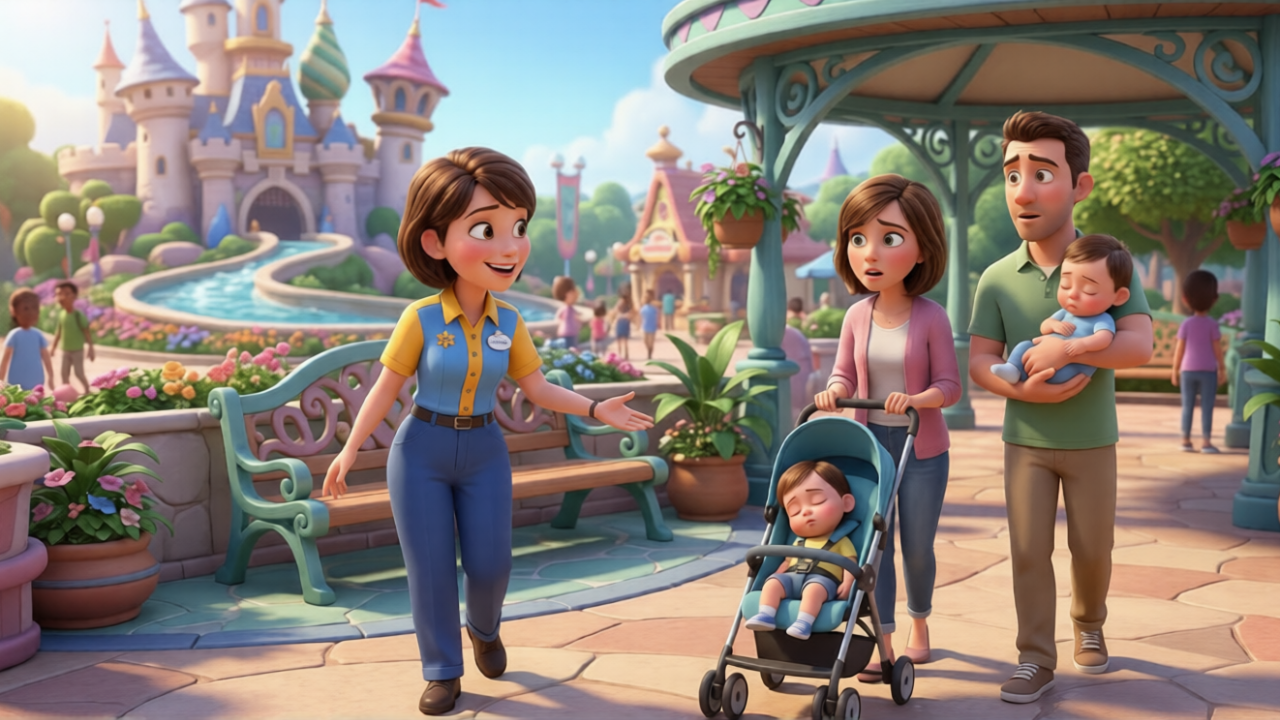
But then — and I'm not exaggerating — within thirty seconds, a cast member appeared. A young woman with a name tag that said "Jessica" and a hometown listed as somewhere in Ohio.
"You folks look like you could use a break," Jessica said, with a smile that suggested she'd seen this exact scenario approximately 4,000 times that week. "There's a lovely shaded area just around that corner with benches and a drinking fountain. And if you're feeling peckish, Auntie Gravity's Galactic Goodies does a really refreshing frozen lemonade."
My wife looked at me. Then at Jessica. Then back at me.
"How did she know?" she whispered, as Jessica cheerfully moved on to help another wilting family.
Here's how she knew: Guestology.
Disney doesn't just train their cast members to be friendly. They train them to observe. To notice the subtle signs of fatigue, confusion, frustration, and overwhelm. Jessica wasn't psychic. She was educated — in the fine art of reading guests before the guests even realise what they need.
The benches weren't randomly placed, either. Disney has studied guest walking patterns for decades. They know exactly when fatigue sets in, and they position rest areas accordingly. Not where guests say they want benches, but where observation shows they actually need them.
That's the difference between traditional market research and Guestology. One asks people what they want. The other watches what they actually do.
And my wife? She got her frozen lemonade, her shady bench, and — crucially — her willingness to continue with my spreadsheet-driven adventure.
When was the last time you observed your customers closely enough to notice what they needed before they asked?
The Guest Compass: Disney's Secret Navigation Tool

You're strolling through Disney's Hollywood Studios on a Saturday morning. The park is heaving with families, couples, Star Wars fanatics in full costume, and one confused-looking chap who appears to have wandered in thinking this was a real working film studio.
Behind the scenes — or "backstage," as Disney calls it — something remarkable is happening. Every cast member interaction, every queue time adjustment, every decision about where to deploy a roaming character is being informed by something Disney calls the Guest Compass.
The Guest Compass has four points, and if you understand them, you'll understand your customers better than 95% of your competitors:
1. Needs
What must your customers have? These are non-negotiables. At Disney, this includes safety, cleanliness, basic directions, and somewhere to use the toilet without queueing for forty-five minutes.
For your business, needs might be: a product that actually works, clear pricing, someone who answers the phone, a reliable delivery. The boring stuff. The stuff that, when it's missing, creates genuine problems.
2. Wants
What would your customers like to have? These are the desires — the things that would delight them if present but might not trigger a complaint if absent.
At Disney, wants include meeting a favourite character, getting a good view of the fireworks, finding a table at that restaurant everyone's raving about.
For your business, wants might be: a personal follow-up, a little extra thrown in, being remembered from their last visit.
3. Stereotypes
This one's fascinating. What preconceptions do your customers bring with them? What have they heard? What do they expect based on your industry, your competitors, or their past experiences?
Disney knows that first-time guests often expect everything to be expensive (fair), expect long queues (also fair), and expect the parks to be overwhelming (extremely fair). So they design experiences that acknowledge and often subvert these expectations.
Your customers have stereotypes too. If you're a lawyer, they expect you to be expensive and jargon-heavy. If you're a plumber, they expect you to be late and leave a mess. If you're an accountant, they expect you to be about as exciting as watching paint dry in a grey room during a tax seminar.
Know the stereotypes. Then decide: confirm or defy them?
4. Emotions
What is your customer feeling? Not thinking — feeling.
At Disney, the emotional range is vast: excitement, anticipation, overwhelm, exhaustion, joy, frustration (especially at the Finding Nemo queue), nostalgia, and occasionally the particular despair of a parent who just discovered their child doesn't like rides.
The Disney Institute — which trains thousands of executives every year in these principles — puts it this way: "The emotional state of your guest affects every interaction. You can't serve someone well if you don't know where they are emotionally."
Think about your customers. Someone calling your IT support line is probably frustrated. Someone booking a spa treatment is seeking relaxation. Someone visiting your car dealership might be anxious about making a big financial decision. The emotion shapes what they need from you.
Maya Angelou — who was wise about many things — put it perfectly: "People will forget what you said, people will forget what you did, but people will never forget how you made them feel."
Disney knows this in their bones. Do you?
Quick Quiz Time!
A customer walks into your shop looking confused and slightly overwhelmed. According to Guestology principles, you should:
A) Immediately launch into your sales pitch because confused people are easy targets
B) Ignore them — they'll figure it out or leave, either way it's their problem
C) Approach warmly, acknowledge their potential overwhelm, and offer to help them navigate what they're looking for
If you chose A or B, I have serious concerns about your future in customer service. Might I suggest a career in something that doesn't involve human interaction? Lighthouse keeping, perhaps.
The Five Principles of Practical Guestology
Now, you might be thinking, "But Andrew, my business isn't a magical kingdom with 77,000 employees and a castle! How am I supposed to implement this?"
Fair point. Let me break it down into principles that work whether you're running Walt Disney World or a one-person consultancy from your spare bedroom.
Principle 1: Watch More, Ask Less
Traditional market research asks customers what they want. The problem? Customers often don't know what they want. Or they tell you what they think you want to hear. Or they say one thing and do another.
Henry Ford (allegedly) said, "If I had asked people what they wanted, they would have said faster horses."
Disney discovered through observation — not surveys — that guests consistently underestimated how much they'd walk in the parks. Guests didn't ask for more benches. But Disney watched them getting tired at predictable points and positioned rest areas accordingly.
In your business: When did you last simply observe your customers? Watch where they hesitate on your website. Notice what questions they ask repeatedly. Pay attention to the moment in your service when their body language changes.
This is like being Dory from Finding Nemo — but instead of forgetting everything, you're remembering everything. Just keep watching. Just keep watching.
Principle 2: Every Team Member Is a Listening Post
At Disney, cast members in every role — from ride operators to custodians to restaurant servers — are encouraged to notice and report guest reactions. This creates thousands of "listening posts" throughout the parks, all feeding insights back into operations.
The custodians at Disney parks are famous for being some of the most helpful cast members. Why? Because they're everywhere, they're approachable, and they hear everything. Disney doesn't waste this resource — they train custodians to be information gatherers as well as information givers.
In your business: Does your team share customer insights with you? Do you have a simple system for capturing what they notice? The person answering your phones, the delivery driver, the technician in the field — they're all listening posts. Use them.
Principle 3: Map the Emotional Journey
Disney doesn't just map the physical journey through their parks. They map the emotional journey. They know that guests arrive excited, hit a mid-afternoon slump, potentially have a "what have we spent?" moment, and then (hopefully) end on an emotional high with fireworks and parade magic.
Every touchpoint is designed with emotion in mind.
In your business: What's the emotional journey of your customer? When are they anxious? When are they frustrated? When are they delighted? Map it. Then design your experience around those emotional waypoints.
I worked with a dental practice in Leeds last year that did exactly this. They mapped the patient emotional journey — from the anxiety of booking an appointment through the discomfort of the waiting room to the relief of "it wasn't that bad." Then they redesigned every touchpoint. The result? Patient satisfaction scores went up by 40%. And they didn't change a single clinical procedure — just the experience around it.
Principle 4: Anticipate, Don't Just React
Here's where Guestology becomes genuinely magical.
When you understand your customers deeply enough, you can solve problems before they become complaints. You can meet needs before they're expressed. You can, essentially, read minds.
Disney cast members are trained to notice the early warning signs of guest distress and intervene before it escalates. A confused look. A frazzled expression. A child on the verge of a meltdown. They step in before someone has to ask for help.
This is the difference between good service and magical service. Good service responds to problems. Magical service prevents them.
In your business: What are the predictable pain points? Where do customers always get confused, frustrated, or disappointed? Can you solve those problems before they happen?
Principle 5: Study the Edges, Not Just the Middle
Most businesses focus on their "typical" customer. Disney studies the edges too — the first-time visitors, the annual passholders, the guests with disabilities, the international visitors, the families with very young children, the elderly guests.
Lee Cockerell, who ran Walt Disney World operations for over a decade, writes in his book Creating Magic: "If you design your service for the guests who need the most help, you'll accidentally create a better experience for everyone else too."
When Disney designs for wheelchair accessibility, they create wider paths that benefit pushchair users, tired walkers, and the general flow of crowds. When they create services for guests with autism, they develop communication and sensory accommodation skills that help cast members with all kinds of guests.
In your business: Who are your "edge" customers? The ones who need the most help? Design for them, and watch your service improve for everyone.
Quick Quiz Time!
You notice that customers frequently ask the same question about your product. Using Guestology principles, you should:
A) Get annoyed that people can't read the clearly-labelled instructions that are right there in 6-point font
B) Train your team to give a better answer to the question
C) Fix the root cause so customers don't need to ask the question in the first place
If you chose A, you might want to reconsider your approach to human relationships. If you chose B, you're not wrong — but C is where the magic lives.
The Gap: How Most Businesses Handle Customer Understanding vs. How Disney Does It
There I was, standing in the queue at my local bank. The queue was long. The air was stale. The general atmosphere suggested that joy had left this building sometime around 2003 and hadn't returned since.
I watched as customer after customer shuffled forward, each wearing the expression of someone who had somewhere better to be — which, to be fair, was almost certainly true. The staff, behind their fortified counter positions, processed transactions with the enthusiasm of people counting down the minutes until their tea break.
Not once did anyone look at the queue and think, "How can we make this better?" Not once did anyone observe the fidgeting, the sighing, the checking of phones. The customers were simply obstacles to be processed.
Now, contrast this with Disney.
Disney doesn't just acknowledge that queues exist — they've turned queue management into an art form. They study how long people can wait before frustration sets in (about 10 minutes for most experiences, longer if entertained). They've designed interactive queue experiences that make the wait part of the attraction. They deploy cast members specifically to talk to people in queues, answer questions, and diffuse tension.
The difference?
The bank sees customers as transactions. Disney sees guests as human beings with needs, wants, emotions, and a limited supply of patience.
Here's the uncomfortable truth: most businesses don't really understand their customers. They think they do. They have some data. They've done a survey once. Maybe they have a persona document gathering dust in a shared drive somewhere.
But understanding? Real understanding? The kind that lets you anticipate needs and design experiences around emotional journeys?
That requires effort that most businesses simply don't invest.
Your Four Action Steps:
1. Create Your Guest Compass. Sit down this week and map out the four quadrants for your customers: Needs, Wants, Stereotypes, Emotions. Be honest. Get input from your team. Don't guess — use what you've actually observed.
2. Institute "Observation Hours." Spend one hour per week simply watching your customers interact with your business. Don't intervene. Just watch. Take notes. What do you notice that you've been missing?
3. Create a "Listening Post" System. Give your team a simple way to share customer insights — a shared document, a weekly stand-up, a suggestion box. Make it easy. Then actually use what they tell you.
4. Map One Emotional Journey. Pick your most common customer journey and map the emotional highs and lows. Where do they feel anxious? Frustrated? Delighted? Then fix one low point this month.
You don't need a theme park budget. You don't need a research department. You need curiosity, attention, and the willingness to see your customers as the complex, emotional, often irrational human beings they actually are.
Quick Quiz Time!
Your customer feedback scores are decent but not improving. Using Guestology principles, the best next step is:
A) Celebrate! Decent is good enough. Pop open the champagne and call it a day.
B) Send out more surveys. Clearly you need more data. Drown them in questionnaires.
C) Spend time observing customer interactions directly and look for the gap between what they say and what they experience
Surveys can tell you what customers think. Observation tells you why. C is where improvement lives.
Guestology in the Real World: A Case Study
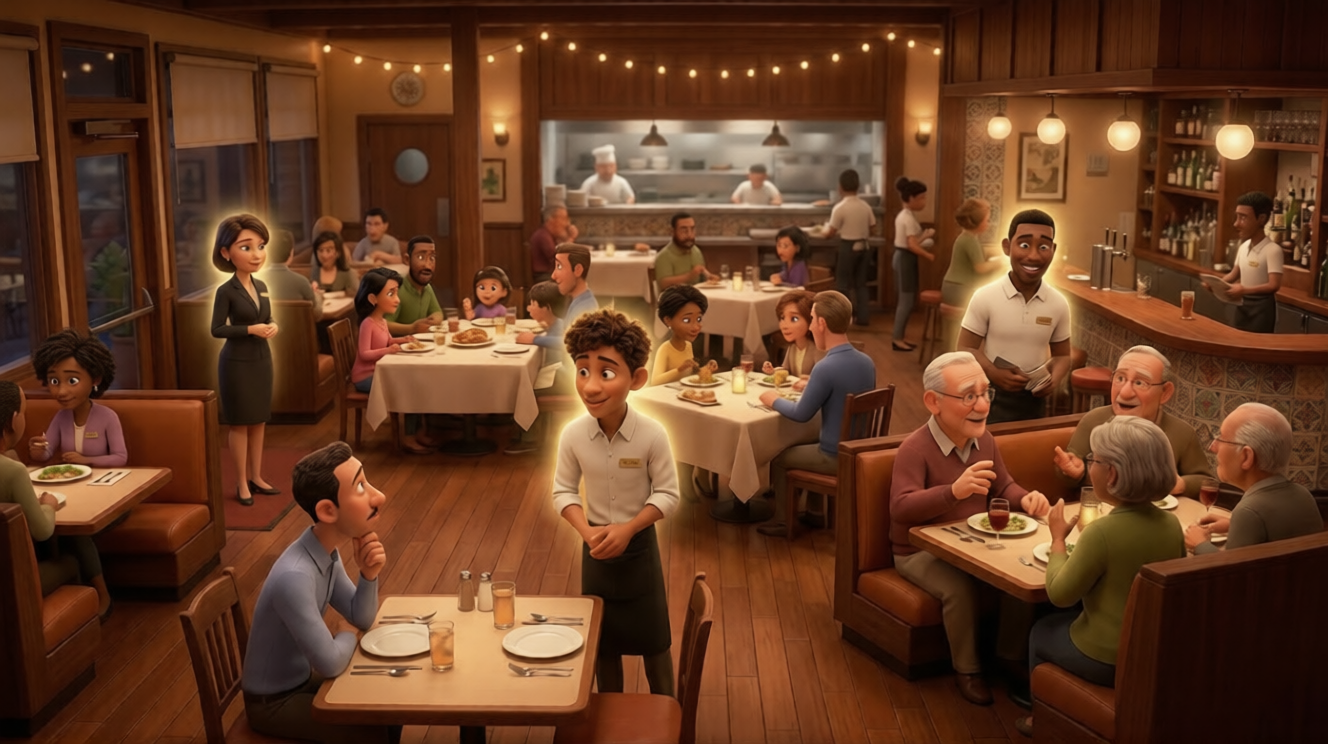
One of my coaching clients — a restaurant owner in Manchester — came to me frustrated.
"Andrew," she said, "our food is great. Our reviews say the food is great. But our repeat customer rate is terrible. People come once and don't come back."
Now, the traditional approach would be to run a survey. Ask customers why they're not returning. Maybe offer a discount to entice them back.
Instead, I asked her to do something uncomfortable: spend an entire week simply observing her restaurant. No managing. No intervening. Just watching.
What she discovered was enlightening.
The food was excellent — but the timing was off. Main courses were arriving while starters were still being eaten. Customers were feeling rushed, overwhelmed, and slightly panicked that their beautiful meals were getting cold while they shovelled down their bruschetta.
The staff were friendly — but they disappeared for long stretches. Customers wanting to order another drink or ask for the bill had to flag down passing servers like they were hailing a taxi in the rain.
The atmosphere was lovely — but the tables were packed too close together. Customers could hear every word of their neighbours' conversations, including one memorable incident involving someone's divorce proceedings and their controversial opinions about their ex's mother.
None of this showed up in surveys. The food was great. The staff were friendly. The atmosphere was nice. But the experience was subtly, persistently uncomfortable.
We applied Guestology principles:
We mapped the emotional journey. Customers arrived excited but left slightly frazzled. The emotional low points were mid-meal (rushed food, disappeared staff) and at the end (difficulty getting the bill).
We observed the stereotypes. Customers expected the meal to feel indulgent and relaxed. Instead, it felt efficient and slightly chaotic.
We addressed the needs. Pace control (solved with new kitchen timing protocols). Staff availability (solved with zone assignments). Privacy (solved by removing two tables and adding acoustic panels).
Six months later? Repeat customer rate up by 35%. Revenue up despite having fewer tables. Staff happier because customers were happier. And not a single survey was sent.
The Lessons:
- What customers say and what they experience can be completely different. The surveys said "great food, nice staff." The experience said "rushed and chaotic."
- Observation reveals what surveys miss. You have to actually watch to see the subtle friction points.
- Small fixes to emotional low points have outsized impact. We didn't change the menu, the décor, or the prices. We changed the timing, the attention, and the spacing.
- Guestology doesn't require a budget — just discipline. One week of observation transformed the business.
As Walt Disney said: "Whatever you do, do it well. Do it so well that when people see you do it, they will want to come back and see you do it again, and they will want to bring others and show them how well you do what you do."
That's the goal. Not just good service — but service so good they can't stay away.
Guestology Across Industries
Let me show you how these principles work in different businesses:
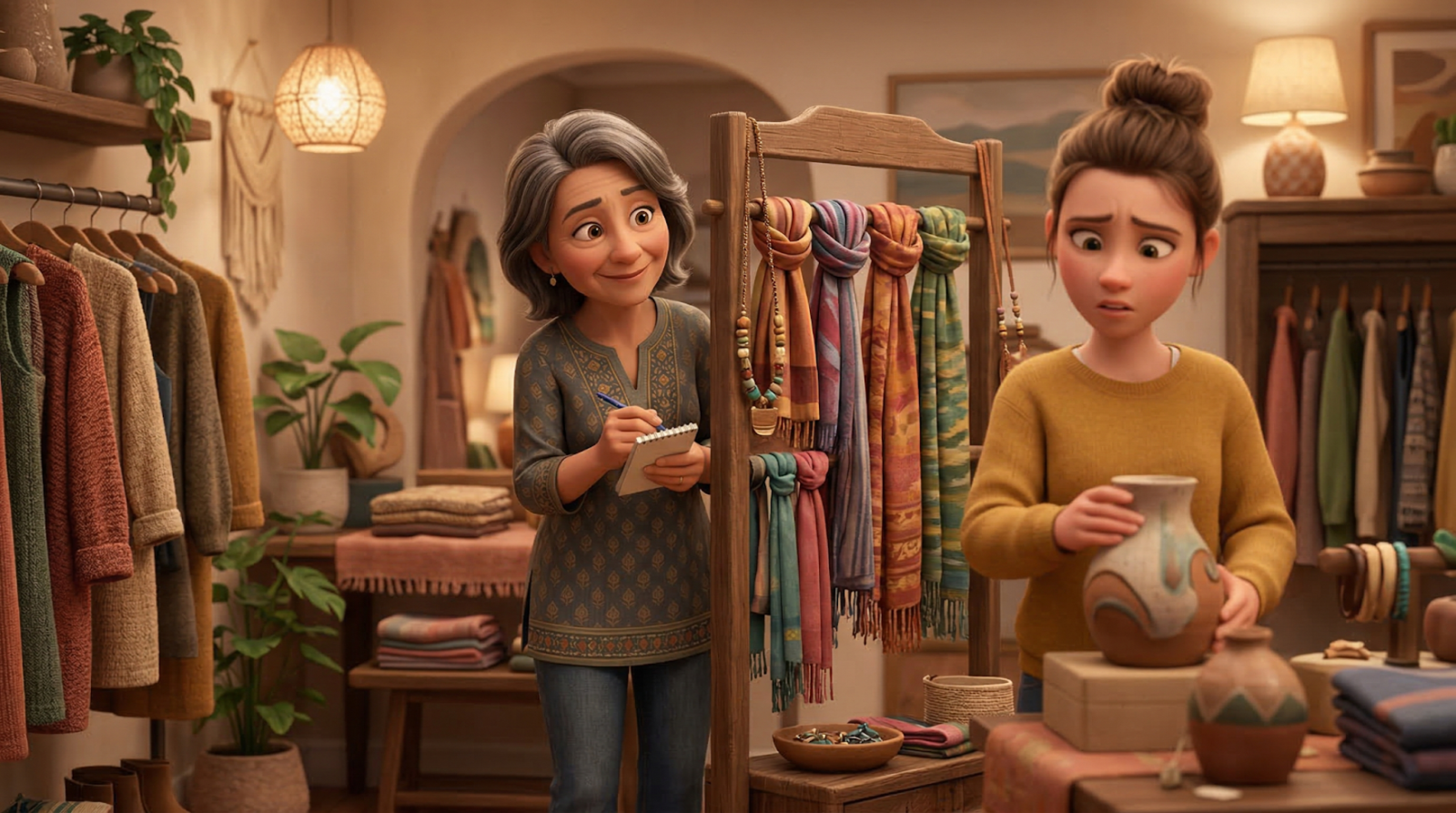
Retail: A boutique clothing shop started observing where customers paused, what they touched but didn't buy, and what questions they asked. They discovered customers were intimidated by the lack of size labels on display items. Adding visible sizing increased sales by 20% — without changing the merchandise or the prices.
Professional Services: An accounting firm mapped the emotional journey of new clients. They found the anxiety peaked when clients had to gather documents. They created a simple, friendly "document checklist" guide with encouraging notes. Client satisfaction scores went up, and document submission time went down by 40%.
Health & Wellness: A physiotherapy clinic noticed patients often looked confused and slightly lost in the reception area. They added a simple "you are here" journey board showing what would happen during the appointment. Anxiety levels dropped measurably, and patients reported feeling more "in control" of their care.
Online Business: An e-commerce site installed session recording software (with consent) to watch how customers actually navigated their site. They discovered people consistently got stuck on the same page, looking for a button that was hidden below the fold. Moving the button increased conversions by 15%.
Hospitality: A bed and breakfast owner started leaving a simple "How was your stay?" journal in each room — not a formal survey, just a lovely notebook for guests to share thoughts. The insights gathered were more honest and useful than any TripAdvisor review, and led to a complete revision of the breakfast menu.
Trades: An electrician started asking one question at the end of every job: "Was there anything about today that was confusing or frustrating?" The answers led to a complete overhaul of how he communicated timelines and pricing — which reduced customer complaints to nearly zero.
As Walt Disney once said: "It's kind of fun to do the impossible."
Understanding your customers this deeply might seem impossible when you're busy running a business. But it's not only possible — it's transformative.
Quick Quiz Time!
You run a small professional services firm. The best first step to applying Guestology is:
A) Hire a market research firm for £50,000 to conduct a comprehensive study
B) Assume you already know what clients want because you've been doing this for years
C) Spend time observing client interactions and asking your team what they've noticed
A is not wrong in principle, but it's expensive and slow. B is the enemy of improvement. C is how you start. You can always get fancier later. 🤔
The Long Game: Why Guestology Pays Off Over Time
There's a famous study from Bain & Company — the one that every customer service consultant loves to quote — showing that holding onto just 5% more of your customers can boost profits by anywhere from 25% to 95%.
That's not a typo. Twenty-five to ninety-five percent.
Disney doesn't need to read that study. They've been living it since 1955.
Walt Disney World welcomes roughly 58 million visitors a year. Industry estimates suggest that over 70% of those visitors are repeat guests — people who've been before and chose to come back. That's not an accident. That's the result of decades of Guestology, of understanding guests so deeply that they can't imagine holidaying anywhere else.
And here's something even more remarkable: Harvard Business Review research found that emotionally connected customers have a 306% higher lifetime value than merely satisfied customers.
Let me say that again. Not customers who are unhappy versus happy. Customers who are satisfied versus customers who are emotionally connected.
The difference is three hundred percent.
Guestology is how you move customers from satisfied to connected. Because when you understand someone — really understand them — you can serve them in ways that feel personal, that feel like magic, that feel like you actually care.
Which, frankly, you should.
The long-term benefits:
Customer Loyalty: When customers feel understood, they stay. They forgive the occasional mistake. They become advocates who bring others.
Word-of-Mouth: Customers don't talk about "satisfactory" experiences. They talk about remarkable ones. Guestology creates stories worth sharing.
Team Morale: Your team enjoys serving customers more when they understand them. Empathy makes the work more meaningful.
Competitive Advantage: Most of your competitors aren't doing this. They're relying on surveys and assumptions. Deep understanding is a moat they can't easily cross.
Pricing Power: Customers pay more for experiences designed around their needs. Disney charges premium prices because they deliver premium understanding.
Disney magic isn't about deep pockets. It's about deep caring. About caring enough to study, to observe, to understand, and to design experiences around what you've learned.
That's available to any business. Including yours.
Quick Quiz Time!
The primary reason to invest in understanding your customers better is:
A) So you can manipulate them into buying more stuff
B) Because your marketing consultant said it's important and you're too tired to argue
C) Because deep understanding enables you to serve them better, which creates loyalty, advocacy, and sustainable business growth
If you chose A, we need to have a conversation about ethics. If you chose B, I appreciate your honesty. C is the answer. Guestology is about service, not manipulation. 🌟
The Challenges (Because I'm Not Here to Sell You Pixie Dust)
Right, I'd be doing you a disservice if I pretended this was all fairy godmothers and happy endings. Implementing Guestology comes with real challenges, and you should know what you're signing up for.
Challenge 1: It Requires Consistent Attention
Guestology isn't a one-time project. It's an ongoing discipline. You can't observe your customers for a week, make some changes, and then go back to ignoring them. Customer needs, expectations, and emotions shift over time. What worked last year might not work next year.
Disney gets this wrong sometimes too. Remember when they introduced the MagicBand system? The technology was impressive, but the initial rollout was rocky — because they hadn't fully anticipated how confused and frustrated some guests would be with a completely new system. They adjusted. But it took time and attention.
Challenge 2: The Data Can Be Uncomfortable
When you start really observing your customers, you might not like what you see. You might discover that your beloved signature product is confusing people. You might learn that your "friendly" staff member is actually making customers uncomfortable. You might find out that something you've been proud of for years... isn't working.
This is uncomfortable. It's also necessary. As Mary Poppins wisely suggested, sometimes you need a spoonful of sugar to help the medicine go down. The medicine of truth about your customer experience can be bitter. But ignoring it doesn't make it go away.
Challenge 3: Your Team Needs to Buy In
Guestology only works if your whole team participates. If you're the only one observing and everyone else is still in "transaction processing" mode, you'll make limited progress. This means training, communicating, and sometimes dealing with resistance from people who think they already know the customers.
Challenge 4: It Takes Time to See Results
This isn't a quick fix. Understanding customers deeply and redesigning experiences around that understanding is a medium-to-long-term investment. You won't see dramatic changes in week one. You might not see them in month one. But by month six, if you've been consistent, the difference will be undeniable.
Challenge 5: You Can't Outsource It Entirely
You can hire consultants. You can use research firms. You can buy software. But the core of Guestology — actually paying attention to your customers — has to come from within your business. No external provider can care about your customers as much as you should.
Practical Strategies for Overcoming These Challenges:
Start Small: Don't try to transform everything at once. Pick one customer touchpoint and observe it deeply for a month. Make one improvement. Then move to the next.
Invest in Your Team: Make customer observation part of everyone's job. Create simple systems for sharing insights. Celebrate when someone notices something useful.
Be Honest About the Data: When observation reveals something uncomfortable, treat it as valuable information, not a personal attack. The goal is improvement, not ego protection.
Set Realistic Expectations: Tell yourself (and any stakeholders) that this is a six-month commitment to see meaningful results. Patience isn't just a virtue here — it's a requirement.
Keep the Long-Term Benefits in Mind: When it gets hard — and it will — remember why you're doing this. Customer loyalty. Repeat business. Competitive advantage. A business that actually serves people well.
Quick Quiz Time!
You've been implementing Guestology for three months and haven't seen dramatic results yet. You should:
A) Abandon it immediately. Clearly it doesn't work. Return to your previous strategy of hoping for the best.
B) Double down and try to change everything at once. Faster! More! Revolution!
C) Stay the course, review what you've learned so far, make adjustments, and trust the process
Transformation takes time. A doesn't give it enough time. B risks chaos and burnout. C is the answer. Keep going. 🎩✨
Frequently Asked Questions
Q: Isn't this basically just spying on customers?
A: I understand the concern, but there's a crucial difference between observation and surveillance. Guestology is about observing behaviour in public spaces or business contexts to serve customers better — not to manipulate or exploit them. Disney cast members watch guests to help them, not to sell them things they don't need. The intent matters. If your observation is always in service of improving the customer experience, you're on the right side of the line. If you're trying to trick people into buying things, you've crossed it. Think of it like Jiminy Cricket sitting on your shoulder — let your conscience be your guide.
Q: We can't afford to hire researchers or buy fancy observation software. How can small businesses do this?
A: The most valuable Guestology is free. It just requires attention. Spend one hour a week watching how customers interact with your business. Ask your team what they've noticed. Keep a simple notebook of observations. You don't need software or consultants for this — you need curiosity. The best insights often come from simply paying attention to what's happening right in front of you. Remy the rat created culinary magic in a Paris restaurant kitchen; you can create customer insight magic with just a notepad and open eyes.
Q: What if my customers won't tell me what they really think?
A: This is exactly why observation matters more than surveys! Customers often don't know what they think, or they tell you what they think you want to hear. But their behaviour doesn't lie. Where they pause, what they touch, when they look confused, what questions they ask repeatedly — these tell you truths that surveys miss. And sometimes the best feedback comes from open-ended conversations, not formal questionnaires. "What was confusing about that?" gets better answers than "Rate your experience 1-10."
Q: How do I get my team on board with this?
A: Start by sharing the why. Explain that understanding customers better makes everyone's job easier and more meaningful. Then make it simple — create an easy way for team members to share observations (a shared document, a weekly five-minute stand-up, a suggestion box). Celebrate when someone notices something useful. And lead by example — when you're paying attention to customers, your team will follow. Like Woody gathering the toys in Toy Story, you're building a team united around a common purpose: serving the humans better.
Q: Does this work for online businesses?
A: Absolutely. In some ways, online businesses have an easier time with Guestology because behaviour is so trackable. Session recordings (with consent) show you exactly where customers click, pause, and abandon. Heatmaps show you what they're looking at. Customer service transcripts reveal common confusions and frustrations. The principles are the same — observe behaviour, understand emotions, anticipate needs — the tools are just different. The digital equivalent of watching guests in the park is watching how they navigate your website.
Q: How long before we see results?
A: Honestly? Some insights will hit you within the first week of serious observation. You'll notice things you've been blind to for years. But translating those insights into meaningful improvements and seeing those improvements reflected in customer behaviour and business results? That's a three-to-six-month journey for most businesses. This isn't a quick fix. It's a fundamental shift in how you relate to your customers. The good news is that the results compound over time. Small improvements in understanding lead to small improvements in experience lead to meaningful improvements in loyalty and revenue.
Putting It All Together: Your Magical Journey Awaits
We've covered a lot of ground together — probably more than my wife and I cover on an average Magic Kingdom day, and that's saying something given my spreadsheet-driven touring style.
Let's bring it home.
Guestology is, at its heart, a simple idea: understand your customers deeply enough to serve them brilliantly. Not just what they say they want. What they actually need. What they feel. What they expect. What would delight them.
Disney does this at an almost absurd scale — 58 million visitors a year, all being studied, understood, and served with intention. But the principles work at any scale. A solo consultant. A local restaurant. A family-run shop. An online business run from a kitchen table.
The Guest Compass — Needs, Wants, Stereotypes, Emotions — is your navigation tool. Map it for your customers. Observation — watching behaviour rather than just collecting survey responses — is your intelligence-gathering method. Anticipation — solving problems before they arise — is how you create the magic.
And the question to carry with you, the one that should echo in your mind every time you interact with a customer, is this:
"How can I make this experience not just satisfactory, but truly magical?"
Disney magic isn't about having a castle or a talking mouse. It's about creating moments of wonder in the everyday. About making people feel seen, understood, and cared for.
That's available to you. Right now. No Imagineers required.
As Walt Disney put it: "Do what you do so well that they will want to see it again and bring their friends."
That's the goal. And Guestology is how you get there.
Now go. Observe. Understand. And sprinkle a little pixie dust on your customer experience.
Your guests are waiting. 🪄
About the Author
Andrew Lock is a renowned business coach, consultant, and author with over three decades of experience helping entrepreneurs and business leaders achieve extraordinary success. As the founder of 'Help My Business!', Andrew has empowered thousands of business owners worldwide through his unique coaching, mastermind groups, 10 best-selling books, and engaging keynote presentations.
Known as the "The Yoda of marketing," (without the green pointy ears), Andrew brings a refreshing blend of humor and practical insights to his work. His expertise spans customer experience, pricing, sales, marketing, employee management, and operations, with a special focus on applying Walt Disney's business principles to modern enterprises.
Andrew is the author of ten books, including the popular "Walt's Way" and "Big Lessons from Big Brands." His work has been featured in major media outlets, and he's shared stages with business luminaries like Sir Richard Branson, Donald Trump, Daymond John, Dan Kennedy, The Dalai Lama, and Michael Gerber.
When he's not helping businesses transform their customer service, Andrew enjoys traveling with his family and indulging in his passion for all things Disney and chocolate (though not necessarily in that order).
For more insights and resources, visit www.AndrewLock.com.
Sources & Further Reading
Want to go deeper? Here are a few of the books and resources I referenced (or shamelessly stole ideas from) while writing this:
- Be Our Guest — Disney Institute (the closest thing to a Disney customer service bible, and where "Guestology" gets its fullest treatment)
- Creating Magic — Lee Cockerell (the bloke who ran Walt Disney World operations for over a decade — his insights on understanding guests are invaluable)
- Walt's Way — Andrew Lock (yes, that's my book — but it genuinely covers Guestology and customer understanding in depth)
- The Disney Institute Blog: disneyinstitute.com (regularly publishes articles on their approach to customer experience)
- Harvard Business Review: "The New Science of Customer Emotions" — Magids, Zorfas, and Leemon (the research behind the 306% lifetime value statistic)
